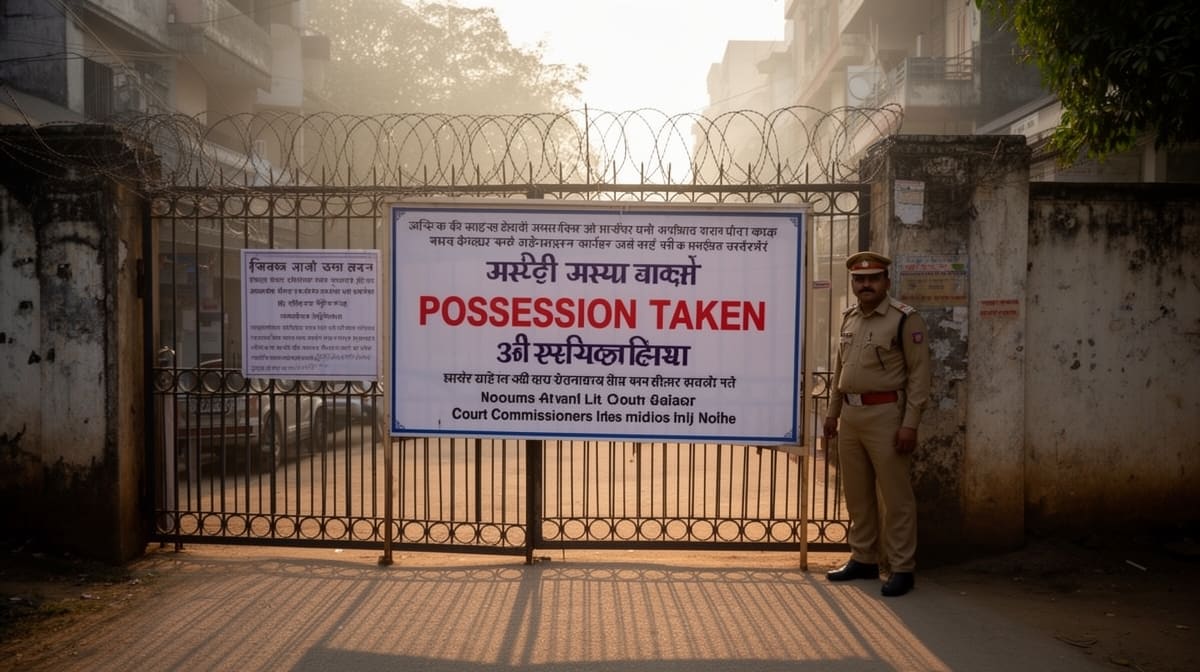
The Bombay High Court has delivered a significant clarification on the limits of the Debt Recovery Tribunal’s powers under the SARFAESI Act, holding that oral directions cannot serve as a legal basis for restoring possession to a borrower after a secured creditor has lawfully taken control of the asset. This ruling reinforces procedural rigour in recovery proceedings and curbs judicial overreach through informal orders.
Background & Facts
The Dispute
The dispute arose under the Securitisation and Reconstruction of Financial Assets and Enforcement of Security Interest Act, 2002 (SARFAESI Act). Godrej Finance Limited, as the secured creditor, initiated recovery proceedings against Ashok Rajkumar Gupta and others, the borrowers and guarantors, for default on a loan secured by a mortgage of immovable property. On 11.02.2026, the petitioner issued a possession notice under Section 13(4) of the SARFAESI Act, fixing 05.03.2026 as the date for taking physical possession of the secured asset.
Key Facts
- The secured asset was a commercial property mortgaged to Godrej Finance Limited under a registered mortgage deed
- The borrowers failed to repay dues despite multiple notices under Section 13(2)
- On 11.02.2026, possession notice was issued, specifying 05.03.2026 for taking possession
- On 04.03.2026, the borrowers filed Interim Application No. 721/2026 seeking stay of possession
- On 05.03.2026, the Court Commissioner took physical possession of the property in accordance with the notice
- On the same day, 05.03.2026, the borrowers withdrew Interim Application No. 721/2026
- Immediately thereafter, the borrowers filed Interim Application No. 785/2026 seeking restoration of possession
- On 09.03.2026, the DRT allowed the restoration application, relying on alleged "oral directions" issued by the Tribunal
- No written ad-interim or interim order restraining possession was recorded in the file
- The DRT’s order dated 09.03.2026 stated that possession was taken "in peculiar circumstances" despite no formal order being passed
Procedural History
- 11.02.2026: Possession notice issued under Section 13(4) of SARFAESI Act
- 04.03.2026: Borrowers file IA No. 721/2026 seeking stay of possession
- 05.03.2026: Court Commissioner takes possession of the asset
- 05.03.2026: Borrowers withdraw IA No. 721/2026
- 05.03.2026: Borrowers file IA No. 785/2026 for restoration of possession
- 09.03.2026: DRT Pune allows restoration application based on alleged oral directions
- 13.03.2026: Writ Petition No. 3374 of 2026 filed before Bombay High Court
Relief Sought
The petitioner seeks quashing of the DRT’s order dated 09.03.2026, setting aside the restoration of possession, and a direction that the secured creditor may proceed with enforcement under Section 13(4) without interference.
The Legal Issue
The central question was whether a Debt Recovery Tribunal can lawfully restore possession to a borrower under the SARFAESI Act based solely on alleged "oral directions" in the absence of any written interim or ad-interim order, and whether such an order constitutes a jurisdictional error.
Arguments Presented
For the Petitioner
The petitioner argued that the DRT’s order was void ab initio because:
- No written order restraining possession was passed on 05.03.2026
- The withdrawal of the stay application negated any basis for interim relief
- The DRT’s reliance on "oral directions" violates principles of natural justice and statutory procedure
- The order was passed beyond jurisdiction, as Section 17 of the SARFAESI Act permits only appeals against written orders
- The Court Commissioner acted lawfully in taking possession after the stay application was withdrawn
- The DRT’s reference to "peculiar circumstances" was vague and unsupported by evidence
For the Respondent
The respondents contended that:
- The petitioner had an alternative remedy under Section 18 to approach the DRAT
- The DRT was merely exercising its inherent powers to prevent abuse of process
- The Court Commissioner acted prematurely despite awareness of pending proceedings
- The restoration order was equitable and should not be interfered with at the interim stage
The Court's Analysis
The Court examined the procedural record and found that the DRT’s order lacked any statutory or procedural foundation. The judgment emphasized that Section 13(4) permits a secured creditor to take possession after compliance with mandatory preconditions, and any interference must be through a formal, recorded order.
"There is nothing in the order dated 05/03/2026 that records any such exercise carried out by the DRT. Instead, the order dated 05/03/2026 records that the interim application No. 721 of 2026... was disposed of as not pressed."
The Court rejected the notion that "oral directions" could substitute for judicial orders. It held that quasi-judicial tribunals like the DRT are bound by the principles of natural justice and must record reasons and orders in writing. The absence of a written order meant there was no valid restraint on the secured creditor’s right to enforce security.
The Court further noted that the DRT’s invocation of "peculiar circumstances" was not substantiated by any factual or legal basis. The withdrawal of the stay application extinguished any pending request for interim relief. The subsequent filing of a restoration application could not revive a withdrawn prayer.
The Court concluded that the DRT’s order was not merely erroneous but jurisdictionally invalid, as it purported to alter the legal position without any procedural basis. This rendered the order susceptible to writ jurisdiction under Article 226 of the Constitution, despite the availability of an appeal to DRAT.
The Verdict
The Bombay High Court granted an ad interim stay of the DRT’s order dated 09.03.2026. The Court directed that the possession taken by Godrej Finance Limited on 05.03.2026 shall remain undisturbed until the next hearing on 30.03.2026. The impugned order is set aside insofar as it purports to restore possession based on unrecorded oral directions. The respondents are directed to file reply affidavits by 30.03.2026.
What This Means For Similar Cases
Oral Directions Are Legally Inoperative
- Practitioners must challenge any DRT order restoring possession based on unrecorded oral directions as jurisdictionally void
- No recovery action can be stayed without a written interim order signed and recorded in the file
- The burden is on the borrower to produce a written order if claiming protection under Section 17
Procedural Compliance Is Non-Negotiable
- Secured creditors may proceed with possession after the expiry of the 60-day notice period under Section 13(2), provided no written stay order exists
- Court Commissioners must be informed of any pending written applications; failure to do so does not invalidate lawful possession
- DRTs must record all orders, even interim ones, in writing to ensure transparency and appealability
Writ Jurisdiction Remains Available for Jurisdictional Errors
- Even where an alternative remedy exists, writ petitions under Article 226 are maintainable when the impugned order is without jurisdiction or suffers from patent illegality
- The doctrine of alternative remedy does not bar writ relief where the order is a nullity
- This judgment reinforces that procedural violations in SARFAESI proceedings are not mere errors but jurisdictional defects