The Bombay High Court has delivered a significant ruling reinforcing the principle that a sanction to prosecute a public servant under the Prevention of Corruption Act cannot be re-issued merely on a change of opinion, absent any new material. This judgment clarifies the limits of administrative review in corruption cases and safeguards public officials from repetitive, arbitrary prosecution attempts.
Background & Facts
The Dispute
The applicant, Devendra Supda Umbarkar, an Executive Engineer with the Maharashtra State Electricity Distribution Company, was named in FIR No. 435/2017 for alleged demand of Rs. 60,000 as a bribe from a contractor, Vikrant Waghmare, in exchange for issuing a work order worth Rs. 5 lakhs. The complainant alleged that the applicant demanded 10% of the contract value as a condition for releasing further work orders. The Anti-Corruption Bureau recorded conversations and conducted a verification panchanama, but the initial trap failed due to the applicant’s absence.
Procedural History
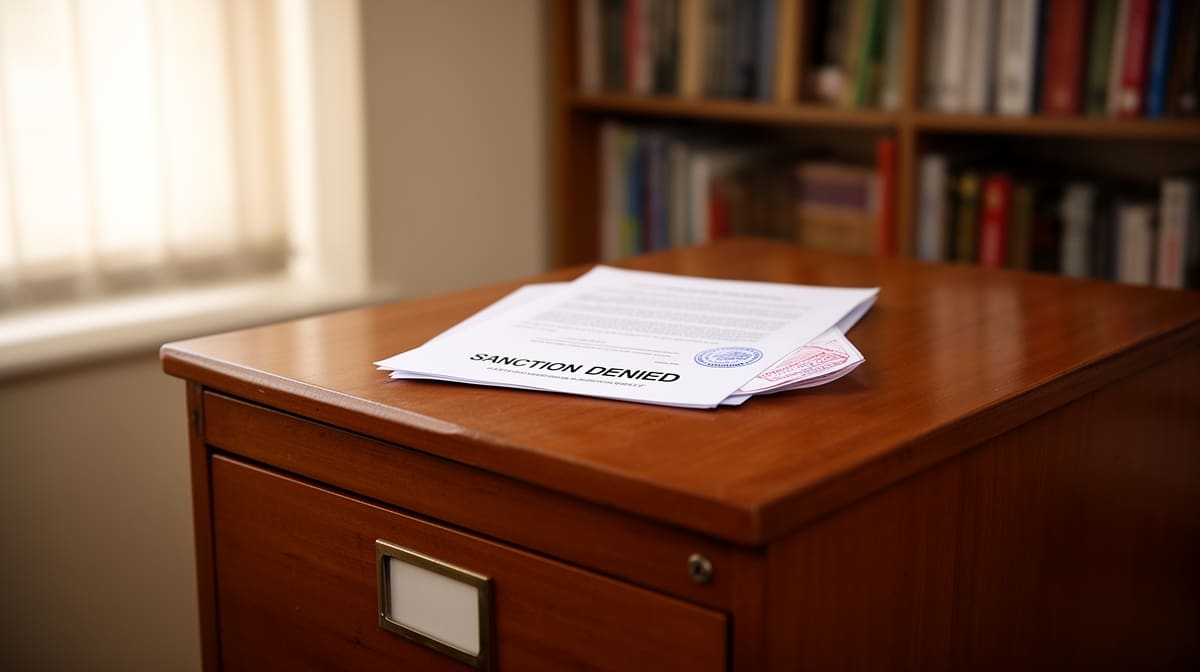
- February 2019: The Sanctioning Authority rejected the initial proposal to prosecute the applicant, concluding that the amount demanded appeared to be a security deposit, not gratification.
- September 2025: Without any new evidence or investigation, the same agency resubmitted the sanction request, and the authority granted sanction based on the identical material.
- 2025: Chargesheet No. 389/2025 was filed against the applicant.
- 2026: The applicant filed a criminal application under Section 482 CrPC seeking quashing of the FIR and chargesheet on grounds of illegal sanction.
Relief Sought
The applicant sought quashing of the FIR and chargesheet, arguing that the subsequent sanction was legally invalid as it was based on the same material previously rejected by the competent authority.
The Legal Issue
The central question was whether the sanctioning authority under Section 19 of the Prevention of Corruption Act, 1988 can review and reverse its earlier order refusing prosecution, solely on the basis of the same evidence, without any fresh material being collected or presented.
Arguments Presented
For the Appellant
Learned counsel for the applicant relied on State of Punjab v. Mohammed Iqbal Bhatti and State of Himachal Pradesh v. Nishant Sareen, both decided by the Supreme Court, to argue that once a sanction is refused, it cannot be reviewed merely because the investigating agency disagrees with the decision. He emphasized that the sanctioning authority must apply independent, reasoned judgment and that a change of opinion on identical facts is legally impermissible. He further contended that the absence of any reference to the prior refusal in the subsequent sanction order rendered it procedurally defective.
For the Respondent/State
The Additional Public Prosecutor argued that the validity of the sanction should be determined at trial, not at the quashing stage. He cited Director, CBI v. Ashok Kumar Aswal to assert that procedural irregularities in sanction can be cured during trial and that the High Court should not interfere at the pre-trial stage. He maintained that the sanction had been granted and therefore the court had jurisdiction to proceed.
The Court's Analysis
The Court undertook a detailed examination of the Supreme Court’s jurisprudence on Section 19 of the Prevention of Corruption Act. It held that the power to grant or refuse sanction is a statutory function requiring serious application of mind. Once a decision is rendered, it attains a degree of finality, especially in the absence of any new evidence.
"Once the Government passes the order under Section 19 of the Act... declining the sanction to prosecute the official concerned, reviewing such an order on the basis of the same material, which already stood considered, would not be appropriate or permissible."
The Court emphasized that the Bhatti and Sareen judgments are binding and establish a clear principle: a change of opinion on the same material is not a valid ground for review. The sanctioning authority must either act on fresh evidence or challenge the refusal in court - neither of which occurred here.
The Court noted that the subsequent sanction order dated 16.9.2025 was a mere replica of the earlier one, with no reference to the prior refusal, no explanation for reconsideration, and no indication that the authority had applied its mind anew. The silence on these critical points rendered the sanction legally unsustainable.
The Court also rejected the State’s reliance on CBI v. Ashok Kumar Aswal, distinguishing that case as one involving procedural defects like typographical errors, not a wholesale re-issuance of sanction on identical facts. Here, the issue was not a technical flaw but a fundamental violation of statutory finality.
The Verdict
The applicant succeeded. The Court held that the subsequent sanction granted on 16.9.2025 was illegal and invalid because it was based solely on the same material previously rejected. Consequently, the FIR and chargesheet against the applicant were quashed. The Court affirmed that sanction under Section 19 PC Act cannot be reviewed without fresh evidence.
What This Means For Similar Cases
Sanction Review Requires Fresh Evidence
- Practitioners must now insist that any re-application for sanction be accompanied by a sworn affidavit detailing new material collected after the initial refusal.
- Courts will not entertain applications for quashing based on procedural defects alone - only where the sanction is fundamentally void due to lack of fresh evidence.
Silence in Sanction Orders Is Fatal
- Sanction orders must explicitly address prior refusals and state reasons for reconsideration.
- Failure to record reasons or reference the earlier decision renders the order vulnerable to quashing under Section 482 CrPC.
Prosecution Cannot Proceed Without Valid Sanction
- Any trial commenced without a legally valid sanction is a nullity.
- Defense counsel should raise the sanction defect as a preliminary objection, even if the prosecution claims it can be cured at trial.