The Bombay High Court has reaffirmed a foundational principle in corruption jurisprudence: recovery of tainted currency is not sufficient to secure conviction under the Prevention of Corruption Act without proof of a clear, credible, and independently verifiable demand for illegal gratification. This judgment underscores the necessity of corroborative evidence and strict adherence to procedural safeguards in bribery cases involving public servants.
Background & Facts
The Dispute
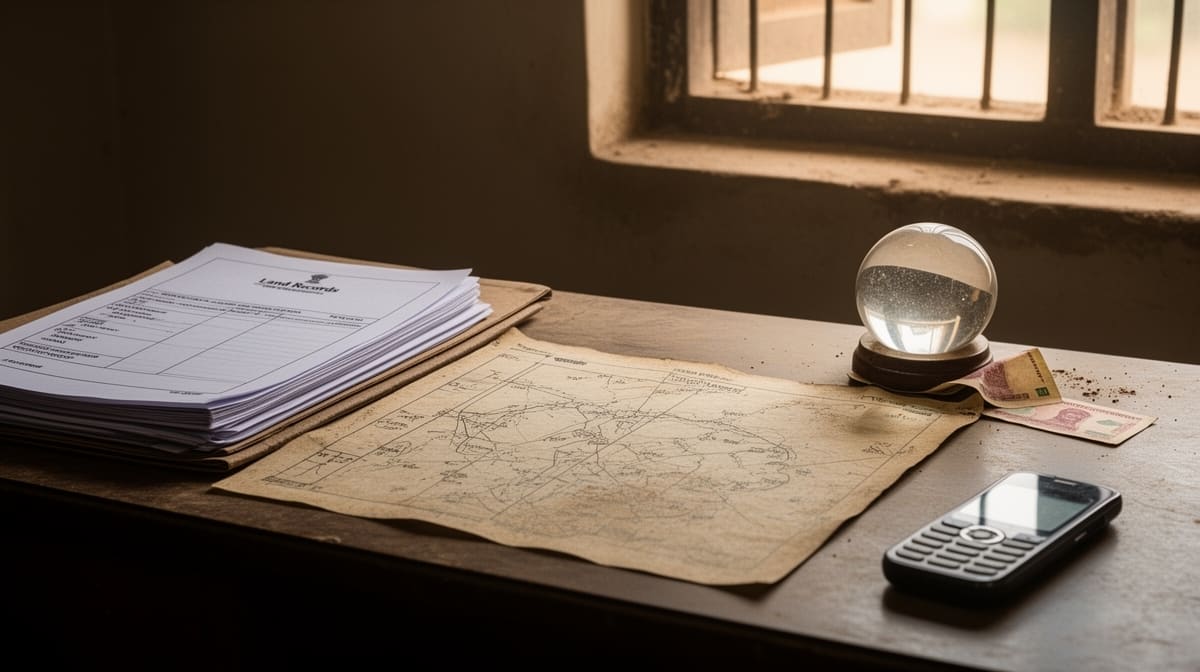
The case arose from an alleged demand for Rs. 5,000 by Gauram Sandu Bhalerao, a clerk in the Taluka Inspector of Land Records (TILR) office at Phulambri, in exchange for providing a certified copy of a land measurement map. The complainant, Samadhan, claimed that after the actual survey was completed by surveyor Kolte, he was directed to approach Bhalerao for the certified copy, and that Bhalerao demanded a bribe. The Anti-Corruption Bureau (ACB) conducted a trap, recovered tainted currency from Bhalerao, and filed charges under Sections 7 and 13(1)(d) read with Section 13(2) of the Prevention of Corruption Act.
Procedural History
- 2009: Complaint filed by complainant with ACB Aurangabad (Exhibit 20)
- 2009: Trap conducted at Sillod TILR office; Rs. 4,000 recovered from accused
- 2009: Chargesheet filed against accused
- 2014: Special Judge acquitted accused, holding prosecution failed to prove demand beyond reasonable doubt
- 2015: State filed criminal appeal before Bombay High Court
The Parties' Positions
- Prosecution: Relied on testimony of PW1 (complainant) and PW2 (shadow panch), recovery of tainted currency, and anthracene powder traces to establish demand and acceptance.
- Defense: Argued accused was a mere record clerk with no authority to issue measurement maps; complainant had already received the map; no verifiable telephonic demand; PW2 was a habitual ACB panch with no independent credibility.
Relief Sought
The State sought to set aside the acquittal and convict the accused under the Prevention of Corruption Act. The accused sought confirmation of the acquittal.
The Legal Issue
The central question was whether recovery of tainted currency alone, without credible evidence of an initial demand by the public servant, is sufficient to establish guilt under Section 13(1)(d) of the Prevention of Corruption Act, particularly when the complainant’s testimony is inconsistent and the crucial witness is unreliable.
Arguments Presented
For the Appellant/State
The State contended that the recovery of Rs. 4,000 from the accused’s possession, coupled with anthracene powder traces and consistent testimony of PW1 and PW2, established a prima facie case of demand and acceptance. It argued that Section 20 of the Indian Evidence Act should have been invoked to raise a presumption of guilt once the bribe was recovered. The State emphasized that the trap was properly planned, the sanction was valid, and the Trial Court erred in disbelieving the prosecution’s version despite corroborative physical evidence.
For the Respondent/Accused
The defense argued that the prosecution failed to prove the foundational element of demand. The accused, a record clerk, had no authority to issue measurement maps - a function exclusively performed by the surveyor Kolte. The complainant had already received the map, rendering the alleged demand motiveless. The testimony of PW2, the sole independent witness, was impeached by his history as a recurring ACB panch in multiple cases. Crucially, no telephonic conversations were recorded, no CDRs were produced, and the complainant himself initiated the bribe offer on multiple occasions before any demand was allegedly made.
The Court's Analysis
The Court undertook a meticulous review of the evidence, emphasizing that mere recovery is not conclusive proof of corruption. It cited State of Maharashtra v. K. R. Patil and CBI v. S. R. Raju to reaffirm that the prosecution must establish a clear demand by the public servant, and that the accused must have accepted it with criminal intent.
"The law does not permit conviction on suspicion or on the basis of recovery alone. The demand must be proved beyond reasonable doubt, and the accused must be shown to have been approached for illegal gratification, not the other way around."
The Court found that the complainant’s testimony was riddled with contradictions: he admitted receiving the map before the trap, failed to apply for a certified copy, and initiated the bribe offer during multiple phone calls. The shadow panch, PW2, was shown to have acted as a panch in four to five prior ACB cases, undermining his claim to impartiality. The absence of recorded conversations or CDRs rendered the alleged demand unverifiable.
The Court further noted that the prosecution’s own evidence, including the testimony of defense witness Mansub Bhingare, confirmed that the accused had no role in measurement or map issuance. The sanctioning authority also admitted this. Thus, the motive for the alleged demand was inherently implausible.
The Court held that the Trial Court correctly appreciated the evidence and rightly rejected the prosecution’s case. The failure to prove the initial demand rendered the recovery irrelevant. The presumption under Section 20 could not be invoked because the foundational facts of demand and acceptance were not established.
The Verdict
The accused won. The Bombay High Court upheld the acquittal, holding that recovery of tainted currency without proof of a credible demand by the public servant is insufficient for conviction under the Prevention of Corruption Act. The prosecution’s case collapsed due to inconsistent testimony, lack of corroboration, and the unreliability of the sole independent witness.
What This Means For Similar Cases
Demand Must Be Proven, Not Assumed
- Practitioners must now establish that the public servant initiated or explicitly demanded the bribe - not merely that the complainant offered it.
- Prosecution must document and corroborate verbal demands through recordings, CDRs, or credible third-party witnesses.
- Absence of such evidence renders recovery meaningless, regardless of the nature of the offense.
Shadow Panch Testimony Requires Scrutiny
- Witnesses who repeatedly act as ACB panches are presumed biased unless proven otherwise.
- Courts will discount their testimony if they lack independent credibility or have a pattern of involvement in multiple ACB cases.
- Defense counsel should routinely cross-examine panches on their history and financial ties to enforcement agencies.
Procedural Gaps Invalidate Corruption Cases
- Failure to record telephonic conversations or produce CDRs is fatal to prosecution.
- The burden remains on the State to prove every element of the offense - including the timing, context, and content of the demand.
- Prosecutors must avoid relying on mechanical traps; each step must be documented and logically connected to the alleged offense.