The Supreme Court has clarified that the withholding of gratuity under Rule 69(1)(c) of the Central Civil Services (Pension) Rules, 1972 is not triggered by the conclusion of either departmental or judicial proceedings alone, but requires the final resolution of both. This ruling reinforces the statutory embargo on terminal benefits pending the outcome of any parallel proceeding, regardless of acquittal or exoneration in one forum.
Background & Facts
The Dispute
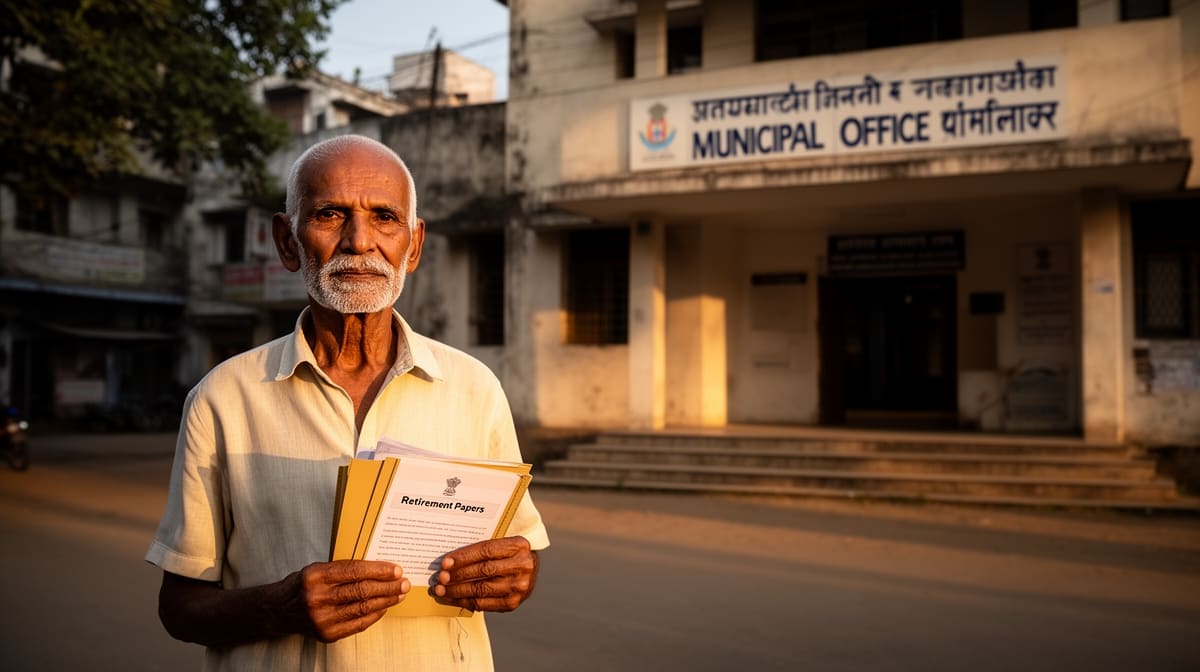
The appellant, Bikram Chand Rana, served as a Clerk with the Himachal Pradesh Road Transport Corporation from 1979 and was promoted to Senior Assistant in 2000. He retired upon superannuation on 28.02.2009. While his provisional pension was released, his gratuity and other terminal benefits were withheld due to pending criminal and departmental proceedings arising from allegations of involvement in the 2006 Combined Pre-Medical Test (CPMT) question paper leak.
Key Facts
- The appellant was arrested on 24.11.2006 and released on bail on 25.11.2006 in connection with FIR No. 140/2006 registered under Sections 406, 418, 420 and 120B of the IPC
- A charge-sheet was issued on 19.01.2007 under Rule 14 of the Central Civil Services (Classification, Control and Appeal) Rules, 1965
- The departmental inquiry, concluded on 26.02.2009, found no material evidence establishing misconduct; the Inquiry Officer noted the matter was sub judice and no definitive conclusion could be drawn pending the criminal trial
- The appellant retired on 28.02.2009 without receiving gratuity or final pensionary benefits
- On 07.12.2010, he submitted a representation highlighting that co-accused officers in the CPMT case from other departments had been reinstated or promoted
- On 18.12.2013, he requested a copy of the inquiry report; it was not provided until 28.05.2015, when charges were formally found "not proved"
- On 04.06.2015, he filed Original Application No. 1594/2015 before the Himachal Pradesh State Administrative Tribunal, which was later transferred to the High Court as Civil Writ Petition Original Application No. 5144/2019
- The Single Judge dismissed the writ on 19.07.2021; the Division Bench upheld the dismissal on 23.04.2022
Procedural History
- 24.11.2006: Appellant arrested in connection with FIR No. 140/2006
- 25.11.2006: Released on bail
- 19.01.2007: Charge-sheet issued under Rule 14 of CCS (CCA) Rules, 1965
- 26.02.2009: Departmental Inquiry Report submitted; charges found not proved
- 28.02.2009: Appellant retired; gratuity withheld
- 07.12.2010: First formal representation to Managing Director
- 18.12.2013: Request for inquiry report
- 23.12.2013: Divisional Manager requested copy from Managing Director
- 09.02.2015: Second representation seeking release of benefits
- 28.05.2015: Charges formally found "not proved"; inquiry report supplied
- 04.06.2015: Original Application filed before State Administrative Tribunal
- 19.07.2021: Single Judge, High Court of Himachal Pradesh, dismissed writ petition
- 23.04.2022: Division Bench dismissed Letters Patent Appeal No. 188/2021
- 07.04.2026: Supreme Court dismissed Civil Appeal No. 14669 of 2025
Relief Sought
The appellant sought release of withheld gratuity, regular pension with consequential benefits, and interest on delayed payments. He contended that since departmental proceedings concluded in his favour, the statutory bar under Rule 69(1)(c) should have been lifted.
The Legal Issue
The central question was whether Rule 69(1)(c) of the Central Civil Services (Pension) Rules, 1972 permits release of gratuity upon conclusion of either departmental or judicial proceedings, or whether it requires the final conclusion of both.
Arguments Presented
For the Appellant
The appellant argued that the word "or" in Rule 69(1)(c) should be interpreted disjunctively, meaning gratuity becomes payable once either the departmental or judicial proceedings conclude. He relied on Babu Manmohan Das Shah v. Bishun Das to support literal construction of statutory language. He emphasized that the departmental inquiry had already found the charges not proved, and the criminal case, though pending, had no bearing on his entitlement. He further cited Rule 9(1) to argue that the State retained recourse to recover any benefits if a future conviction occurred.
For the Respondent
The Corporation contended that Rule 69(1)(c) operates as a statutory embargo designed to protect public funds. It argued that the disjunctive "or" expands the scope of the bar, meaning gratuity remains withheld as long as either proceeding is pending. It relied on the principle that the provision is protective in nature and must be interpreted to prevent premature disbursement. It also noted that the Inquiry Officer had explicitly deferred judgment pending the outcome of the criminal trial.
The Court's Analysis
The Court rejected the appellant’s interpretation as contrary to the statutory purpose. It held that Rule 69(1)(c) is not an enabling provision but a statutory embargo, intended to safeguard the financial interests of the State until all proceedings - departmental and judicial - are finally concluded. The Court emphasized that the ordinary meaning of "or" in this context does not permit selective lifting of the bar.
"The use of the ordinary disjunctive ‘or’ expands the scope of this bar, indicating that gratuity shall not be paid so long as either departmental or judicial proceedings are pending."
The Court further clarified that the appellant’s reliance on Rule 9(1) was misplaced. While Rule 9(1) permits recovery of benefits upon subsequent conviction, it is a downstream remedy and cannot justify release of gratuity during the pendency of proceedings. The Court observed:
"The provision is downstream in its operation and cannot be invoked to justify the release of gratuity during the interregnum when proceedings are admittedly pending, on the premise that recovery could be effected at a later stage."
The Court acknowledged the appellant’s exoneration in departmental proceedings and the acquittal of co-accused in the criminal case, but held that these factual circumstances cannot override the clear statutory mandate. The distinction between criminal standards (beyond reasonable doubt) and departmental standards (preponderance of probability) was underscored, noting that an acquittal does not preclude liability in departmental proceedings.
The Verdict
The appeal was dismissed. The Supreme Court upheld the withholding of gratuity under Rule 69(1)(c) of the CCS (Pension) Rules, 1972 until both the departmental and judicial proceedings are finally concluded. No monetary relief was granted. The Court reiterated the High Court’s direction to the Trial Court to expedite the trial arising from FIR No. 140/2006.
What This Means For Similar Cases
Gratuity Cannot Be Released on Partial Resolution
- Practitioners must advise clients that even if departmental proceedings conclude in favour of the employee, gratuity remains withheld if criminal proceedings are pending
- The statutory bar under Rule 69(1)(c) is absolute and non-discretionary until both proceedings are fully concluded
- Representation to the employer for early release on grounds of exoneration in one forum will not succeed unless both proceedings are closed
Rule 9(1) Is Not a Substitute for Rule 69(1)(c)
- The power to recover benefits under Rule 9(1) applies only after a finding of guilt, not as a justification for premature disbursement
- Employers cannot rely on Rule 9(1) to rationalize withholding; the bar under Rule 69(1)(c) operates independently
- Legal strategy must focus on expediting pending criminal proceedings, not on invoking recovery mechanisms prematurely
Procedural Delays Do Not Override Statutory Bars
- Lengthy pendency of criminal trials, even if unreasonable, does not trigger an implied right to release gratuity
- Employees must exhaust remedies to expedite criminal trials, but cannot bypass the statutory condition
- Administrative delays in concluding departmental proceedings do not alter the requirement for finality in both forums