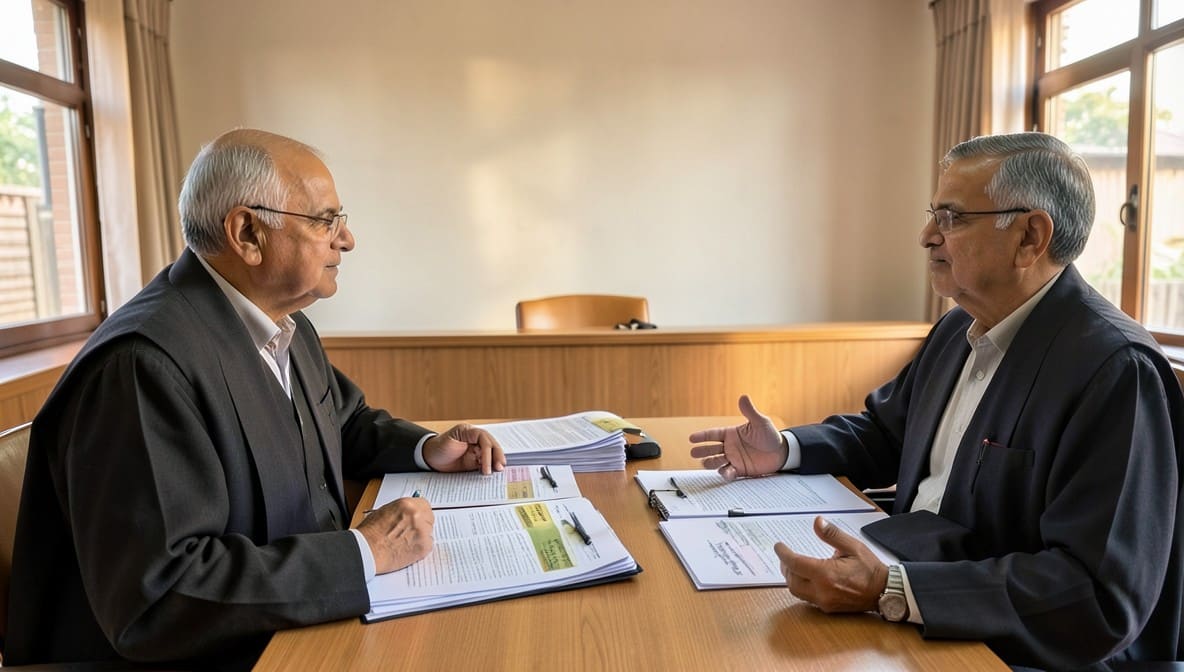
The Customs, Excise & Service Tax Appellate Tribunal, Chennai, has clarified a critical principle in indirect taxation: where VAT has been paid on a deemed percentage of a works contract value, service tax cannot be levied on the same portion. This ruling resolves a long-standing conflict between state and central tax regimes in composite contracts involving transfer of goods and provision of services.
Background & Facts
The Dispute
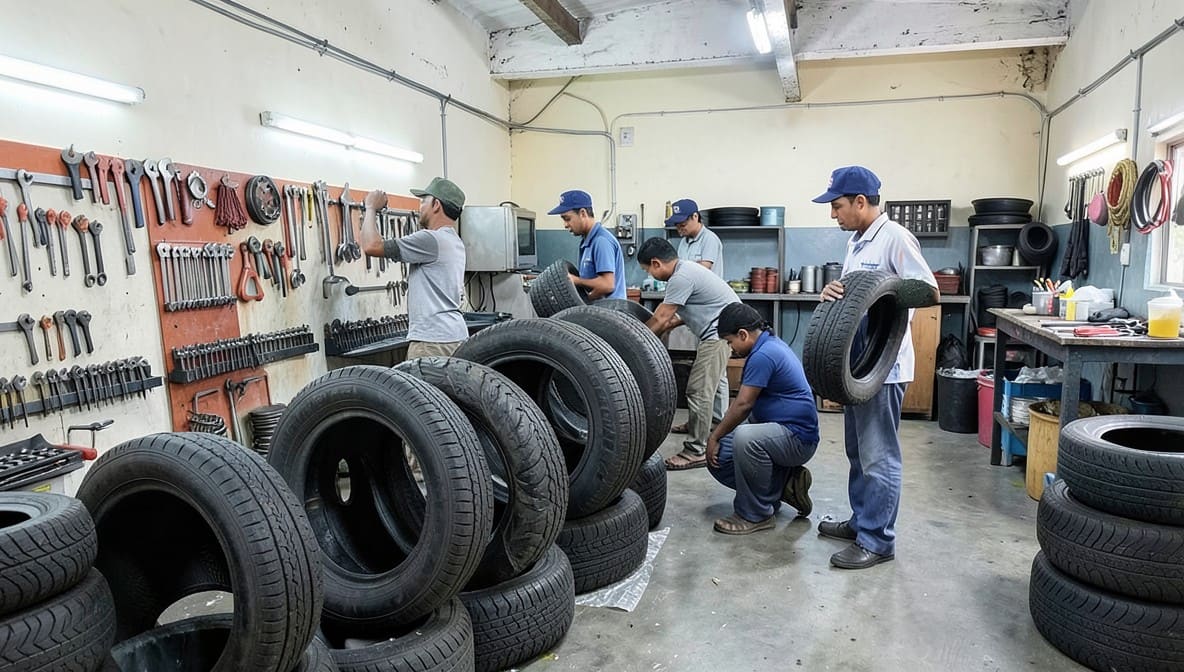
The appellant, M/s. Super Transports (P) Ltd., engages in tyre retreading services at its units in Madurai, Dindigul, and Paramakudi. Customers supply worn-out tyres, which the appellant retreads using materials such as tread rubber, bonding gum, and vulcanizing cement. Upon completion, the retreaded tyres are returned to customers, with transfer of property in goods occurring simultaneously with the provision of labour and technical services. The activity is undisputedly classified as a works contract under the Finance Act, 1994.
Key Facts
- The appellant provided tyre retreading services from August 2011 to March 2014.
- Prior to 01.07.2012, the appellant classified the service as 'Maintenance & Repair Service' and paid service tax on gross value after availing CENVAT credit.
- From 01.07.2012, the appellant shifted to 'Works Contract Service' and claimed benefit under Notification No. 24/2012 dated 06.06.2012.
- The appellant’s invoices separately disclosed material cost and labour charges.
- For VAT purposes under the Tamil Nadu Value Added Tax Act, 2006, the appellant adopted Rule 8(5)(d) of the TNVAT Rules, 2007, paying VAT on 70% of the total contract value, as actual labour charges were not ascertainable.
- The Department audited the appellant’s ST-3 returns and issued a Show Cause Notice (SCN) on 29.06.2016, demanding differential service tax of ₹1,07,24,022/- for the period July 2012 to September 2014.
- The Commissioner confirmed the demand under Rule 2A(ii)(B) of the Service Tax (Determination of Value) Rules, 2006, applying 70% of total contract value for service tax, despite VAT having already been paid on the same 70%.
Procedural History
- 01.07.2012: Appellant commenced classification of tyre retreading as 'Works Contract Service' under Notification No. 24/2012.
- August 2011 - March 2014: Period under audit for service tax compliance.
- 29.06.2016: Commissioner of Central Excise, Madurai, passed Order-in-Original (MDU-ST-COM-06-2016) confirming service tax demand of ₹1,07,24,022/- and penalties under Sections 77(2) and 78 of the Finance Act, 1994.
- 41763/2016: Appeal filed by the appellant before CESTAT Chennai on 15.07.2016.
- 07.11.2025: Final hearing held before CESTAT Chennai.
- 18.03.2026: Final Order passed by CESTAT Chennai.
The Parties' Positions
For the Appellant
- Argued that Rule 2A(i) of the Valuation Rules, 2006, applies because material cost and labour charges are separately ascertainable from invoices.
- Contended that since VAT was paid on 70% of the contract value under TNVAT Rules, service tax cannot be levied on the same 70%.
- Relied on Wipro GE Medical Systems v. CESTAT and Safety Retreading Co. v. CCE to establish that double taxation on the same value is impermissible.
- Submitted that even if Rule 2A(ii) applied, the maximum service tax liability would be on 30% of the contract value, which the appellant had already discharged.
For the Respondent
- Argued that Rule 2A(ii)(B) applies because the appellant could not ascertain actual labour charges for VAT purposes, thereby disqualifying Rule 2A(i).
- Maintained that the appellant’s adoption of the percentage method for VAT meant the labour component was not determinable, triggering Rule 2A(ii).
- Relied on Interarch Building Products v. Commissioner to assert that Rule 2A is mandatory for works contracts.
- Claimed that the extended period of limitation was rightly invoked due to mis-declaration in ST-3 returns.
Relief Sought
The appellant sought:
- Setting aside of the impugned order dated 29.06.2016.
- Cancellation of the service tax demand of ₹1,07,24,022/-.
- Refund of any service tax already paid on the 70% portion, if any.
- Cancellation of penalties under Sections 77(2) and 78.
The Legal Issue
The central question was whether Rule 2A(i) of the Service Tax (Determination of Value) Rules, 2006, can be applied to a works contract where the value of property in goods transferred has been determined for VAT purposes at 70% of the contract value, and whether service tax can be levied on the same 70% under Rule 2A(ii)(B), thereby resulting in double taxation.
Arguments Presented
For the Appellant
The appellant relied on Wipro GE Medical Systems v. Commissioner of Service Tax and its affirmation by the Supreme Court in Commissioner v. Wipro GE Medical Systems, to argue that where VAT has been paid on the value of goods transferred, service tax cannot be levied on the same component. The appellant emphasized that the invoices clearly bifurcated material and labour costs, satisfying the precondition for Rule 2A(i). It further submitted that the Supreme Court in S. Appukutan v. Thundiyil Janaki Amma established that statutory fictions must be carried to their logical conclusion - here, the constitutional fiction under Article 366(29A) permitting dual taxation must not result in actual double taxation on the same value. The appellant also cited Johnson Lifts Pvt. Ltd. and Touchstone Infrastructure to reinforce that consistent application of valuation rules across tax regimes is mandatory.
For the Respondent
The respondent contended that Rule 2A(i) was inapplicable because the appellant had not ascertained actual labour charges for VAT purposes, as required under Rule 8(5)(d) of the TNVAT Rules, 2007. Since the appellant adopted the deemed percentage method (70%) for VAT, the labour component was deemed unascertainable, thereby triggering Rule 2A(ii)(B). The respondent relied on Interarch Building Products v. Commissioner to argue that Rule 2A is the exclusive method for valuation and that the appellant could not opt out of it. It further argued that the Wipro judgment was rendered prior to the 2012 amendments and was therefore not applicable.
The Court's Analysis
The Tribunal began by affirming that the classification of tyre retreading as a works contract was not in dispute. The sole issue was valuation. It noted that the appellant’s invoices clearly separated material cost and labour charges, a fact not denied by the Department. The Tribunal then examined the interplay between the TNVAT Rules and the Service Tax Valuation Rules.
"The constitutional fiction under Article 366(29A) permits separate taxation of goods and services in composite contracts, but it does not permit double taxation on the same value."
The Court emphasized that the Supreme Court in S. Appukutan and Birla Corporation Ltd. had consistently held that where a statutory fiction is created, its corollaries must be fully accepted - including the logical consequence that if VAT is paid on 70% of the contract value, service tax cannot be levied on the same 70%. The Tribunal rejected the respondent’s reliance on Interarch, noting that it addressed the mandatory application of Rule 2A, not the conflict between Rule 2A(i) and Rule 2A(ii) in the context of VAT payment.
The Tribunal further held that the Wipro GE judgment, though pre-2012, laid down a foundational principle - that service tax cannot be levied on the portion of the contract value on which VAT has already been paid. This principle, the Court found, was not abrogated by subsequent amendments but reinforced by the statutory scheme of non-duplication.
The Court observed that the Department’s position was internally inconsistent: it accepted the appellant’s VAT payment on 70% as valid, yet sought to impose service tax on the same 70%. This violated the doctrine of harmonious construction and the principle of estoppel in tax matters.
The Verdict
The appeal was allowed. The Tribunal set aside the impugned order dated 29.06.2016 and cancelled the service tax demand of ₹1,07,24,022/-. The appellant’s service tax liability, if any, is limited to 30% of the total contract value for the period July 2012 to September 2014. The Tribunal directed the respondent to refund any service tax already paid on the 70% portion, along with interest at the rate of 9% per annum from the date of payment until refund. Penalties under Sections 77(2) and 78 of the Finance Act, 1994, were cancelled. Compliance with this order is to be completed within 6 weeks.
What This Means For Similar Cases
Double Taxation on Composite Contracts Is Prohibited
- Practitioners must now argue that where VAT or sales tax has been paid on a deemed percentage of a works contract value, service tax cannot be levied on the same portion.
- Any demand for service tax on the same 70% (or any other percentage) used for VAT purposes is legally unsustainable.
- This applies to all industries: tyre retreading, construction, maintenance, and repair services.
Rule 2A(i) Applies If Invoices Clearly Bifurcate Costs
- Even if a taxpayer uses the percentage method for VAT, if invoices separately show material and labour costs, Rule 2A(i) remains applicable.
- The mere fact that VAT was paid on a deemed percentage does not automatically disqualify Rule 2A(i) - the key is whether the values are ascertainable from records, not whether they were used for VAT.
- Taxpayers should maintain clear, itemized invoices to preserve the right to apply Rule 2A(i).
Harmonious Construction of Tax Laws Is Mandatory
- Tax authorities cannot adopt inconsistent positions across state and central regimes.
- The principle of estoppel applies: if the state accepts a valuation method for VAT, the Centre cannot later challenge it for service tax.
- This judgment reinforces that statutory fictions must be interpreted to avoid absurd or oppressive outcomes.