A landmark ruling by the Central Administrative Tribunal has affirmed that an employee’s right to forego a promotion is an inherent and alienable fundamental right, grounded in personal autonomy and protected under Article 21 of the Constitution. This decision redefines the boundaries of administrative power in personnel decisions and sets a critical precedent for service law practitioners.
Background & Facts
The Dispute
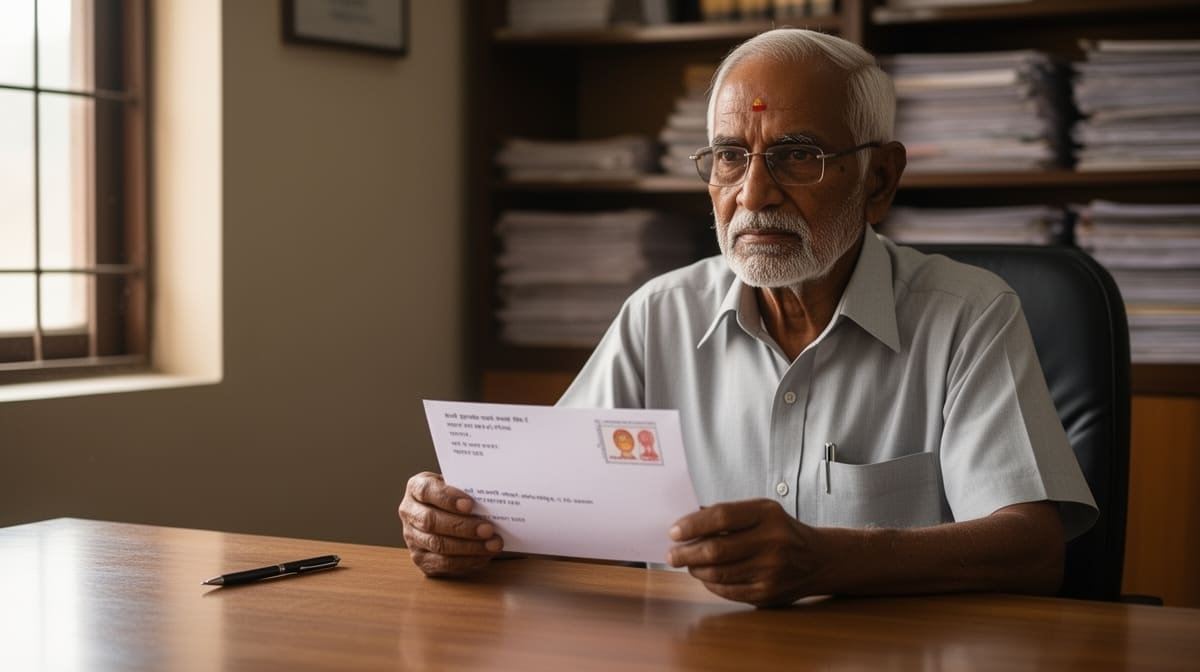
The applicant, Dr. Amarjeet Kumar Prasad, a Junior Engineer (Quality Assurance) in the Directorate of Quality Assurance (Armament), was promoted to the post of Assistant Engineer (Quality Assurance) by order dated 12.12.2025 and posted to Varangaon, Jalgaon, Maharashtra. The applicant, citing compelling personal circumstances, submitted multiple representations seeking to forego the promotion and remain in his current posting in Kanpur. His requests were rejected by the respondents through non-speaking orders dated 16.01.2026 and 31.12.2025. The applicant challenged these orders before the Central Administrative Tribunal, Allahabad Bench.
Key Facts
- The applicant has been serving as Junior Engineer (Quality Assurance) at the Senior Quality Assurance Establishment (Armaments), Armapur, Kanpur since his initial appointment.
- He was promoted to Assistant Engineer (Quality Assurance) by order dated 12.12.2025.
- The promotion order mandated reporting to Varangaon, Jalgaon, Maharashtra, effective 11.01.2026.
- The applicant’s wife is a central government servant posted in Lucknow, with a non-transferable position.
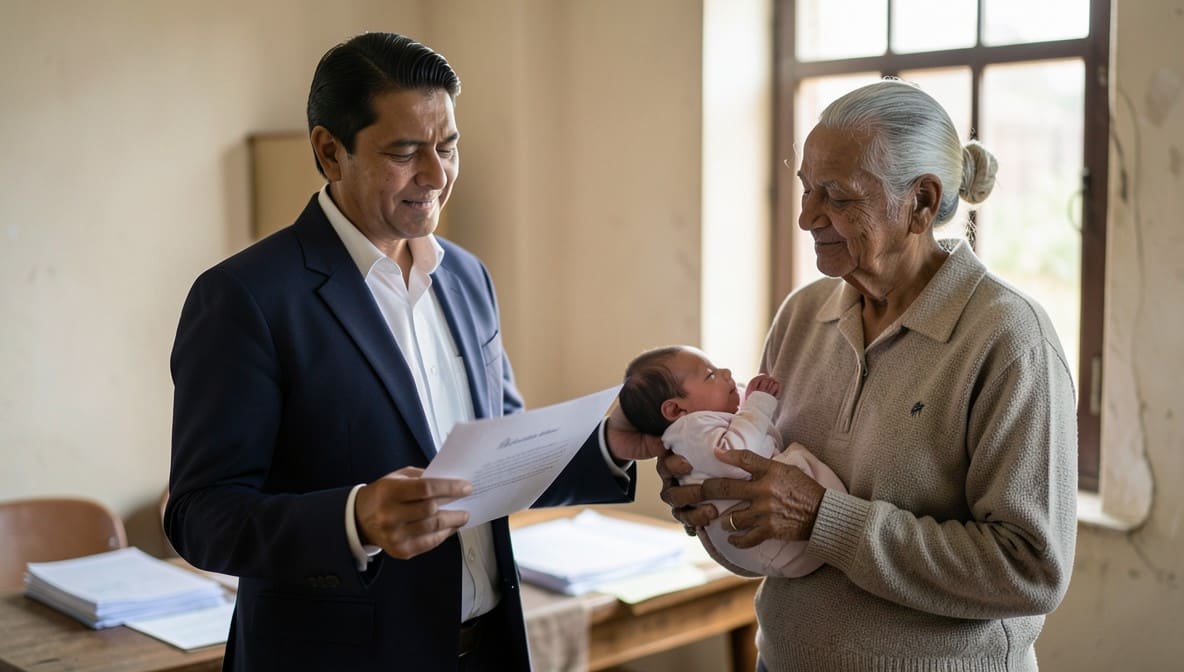
- The applicant’s wife gave birth to a newborn child on 02.12.2025.
- The applicant is the sole caregiver for his wife, newborn child, and elderly, ailing parents.
- The applicant submitted a representation on 15.12.2025 requesting to forego the promotion and remain in Kanpur.
- A second representation was submitted on 01.01.2026, specifically invoking Para 17 of Department of Personnel & Training O.M. dated 22.07.2024.
- Additional reminders were sent on 15.01.2026 and 21.01.2026.
- The respondents rejected all representations through cryptic, non-reasoned orders.
- The respondents’ counsel admitted in writing (letter dated 30.01.2026) that the matter was under sub judice before the Tribunal, and no action was recommended pending the outcome.
Procedural History
- 12.12.2025: Promotion and posting order issued by Respondent No. 2.
- 15.12.2025: First representation by applicant seeking to forego promotion.
- 31.12.2025: Rejection order issued (served on 02.01.2026).
- 01.01.2026: Second representation submitted, invoking DoPT O.M. dated 22.07.2024.
- 02.01.2026: Service movement order issued.
- 08.01.2026: Tribunal granted interim protection, directed respondents to seek instructions within two weeks.
- 16.01.2026: Respondents issued a non-speaking rejection of the applicant’s request.
- 21.01.2026: Final reminder submitted by applicant.
- 30.01.2026: Respondents’ letter confirming matter is under sub judice and no action recommended.
- 07.04.2026: Final order passed by the Tribunal.
The Parties' Positions
For the Applicant
- Argued that the right to forego promotion is an inherent personal right protected under Article 21 of the Constitution.
- Relied on Hausilal v. State of U.P. (Writ A No. 3935/2023, decided 06.11.2023) and K.S. Puttaswamy v. Union of India (2017) 10 SCC 1 to establish that personal autonomy in service matters is a fundamental right.
- Contended that administrative exigency cannot override compelling family circumstances, especially where the employee is the sole caregiver.
- Asserted that the rejection orders were non-speaking, arbitrary, and violated principles of natural justice.
For the Respondents
- Argued that promotion and posting are incidents of service governed by service rules.
- Claimed that no rule permits an employee to unilaterally forego a promotion.
- Maintained that administrative exigency justifies transfer, and the applicant must join the new posting before seeking relief.
- Asserted that the applicant’s representations were not binding on the administration.
Relief Sought
The applicant sought:
- Quashing of the promotion and posting order dated 12.12.2025.
- Quashing of the rejection orders dated 16.01.2026 and 31.12.2025.
- Direction to the respondents to consider his request to forego promotion and retain him in his current posting in Kanpur.
- Continuation of interim protection against coercive action.
The Legal Issue
Is the right of a government servant to forego a promotion a fundamental right protected under Article 21 of the Constitution, even in the absence of an explicit provision in service rules?
Arguments Presented
For the Appellant/Petitioner
The applicant’s counsel relied on the judgment in Hausilal v. State of U.P., which held that the right to forego promotion is an inherent natural right falling within the ambit of personal autonomy under Article 21. The counsel emphasized that K.S. Puttaswamy established that personal choices relating to family, marriage, and caregiving are integral to the right to life and dignity. The applicant’s situation - caring for a newborn, an ailing spouse, and elderly parents - constituted a compelling personal circumstance that the administration was obligated to consider. The counsel argued that administrative rules cannot override fundamental rights, and the absence of a specific rule permitting foregoal does not imply prohibition.
For the Respondent/State
The respondents’ counsel contended that service conditions are contractual and governed by statutory rules. Promotion is an administrative decision, and once conferred, the employee is bound to accept the posting. The counsel argued that allowing employees to refuse promotions would disrupt administrative efficiency and create precedents undermining departmental discipline. No rule, they asserted, permits unilateral refusal of promotion, and the applicant’s remedy lay in seeking transfer after joining, not in rejecting promotion outright.
The Court's Analysis
The Tribunal undertook a detailed analysis of the constitutional dimensions of service rights. It observed that while promotion is a privilege conferred by the state, the decision to accept or decline it is a personal choice. The Court held that the right to make such a choice is not contingent upon the existence of a specific rule permitting it. The absence of a rule does not equate to a prohibition.
"Upon applicability of aforesaid judgments in the present facts and circumstances of the case, a conclusion thus is inevitable that the right to forego promotion by an employee falls within the realm of an inherent natural right of such a person and any restriction imposed thereupon has to comply with the conditions indicated in the judgments referred to herein above, particularly in K. S. Puttaswamy (supra). In the present facts and circumstances of the case, it is evident that the opposite parties have not been able to indicate any law whereby the fundamental right of an employee to forego promotion has been restrained. Even otherwise, no such restrictions as indicated would fall within the zone of reasonableness."
The Tribunal rejected the respondents’ argument that administrative exigency overrides personal hardship. It noted that the respondents had themselves acknowledged the matter was sub judice and had refrained from taking coercive action, thereby implicitly recognizing the gravity of the applicant’s claim. The Court emphasized that the rejection orders were non-speaking, arbitrary, and failed to engage with the applicant’s compelling personal circumstances.
The Tribunal further held that the right to forego promotion is not a privilege to be granted by the administration but a liberty to be recognized. It drew a parallel with the right to refuse a transfer or to seek compassionate posting, both of which are routinely accepted in service jurisprudence.
The Verdict
The applicant succeeded. The Tribunal set aside the rejection orders dated 16.01.2026 and 31.12.2025, and directed the respondents to reconsider the applicant’s request to forego promotion as Assistant Engineer (Quality Assurance). The respondents were ordered to pass a reasoned and speaking order within six weeks, in accordance with the principles laid down in K.S. Puttaswamy and Hausilal. The interim protection against coercive action was continued until the decision is communicated. No costs were awarded.
What This Means For Similar Cases
Foregoing Promotion Is a Fundamental Right
- Practitioners can now invoke K.S. Puttaswamy and Hausilal to argue that refusal of promotion is protected under Article 21, irrespective of service rules.
- Administrative bodies must now treat such requests as rights-based, not discretionary favors.
- Non-speaking rejections of such requests are now legally unsustainable.
Compassionate Grounds Override Administrative Convenience
- Cases involving caregiving responsibilities for newborns, disabled spouses, or elderly parents now carry heightened constitutional weight.
- Departments must document and analyze personal hardship with specificity, not dismiss it as "inconvenient."
- Requests under DoPT O.M. dated 22.07.2024, Para 17, are now legally enforceable as expressions of fundamental rights.
Procedural Compliance Is Mandatory
- Any decision rejecting a request to forego promotion must be reasoned, documented, and communicated.
- Pending litigation cannot be used as a pretext to delay substantive consideration.
- The Tribunal’s observation that the respondents themselves stayed action due to sub judice status reinforces the principle that administrative discretion must yield to constitutional rights.