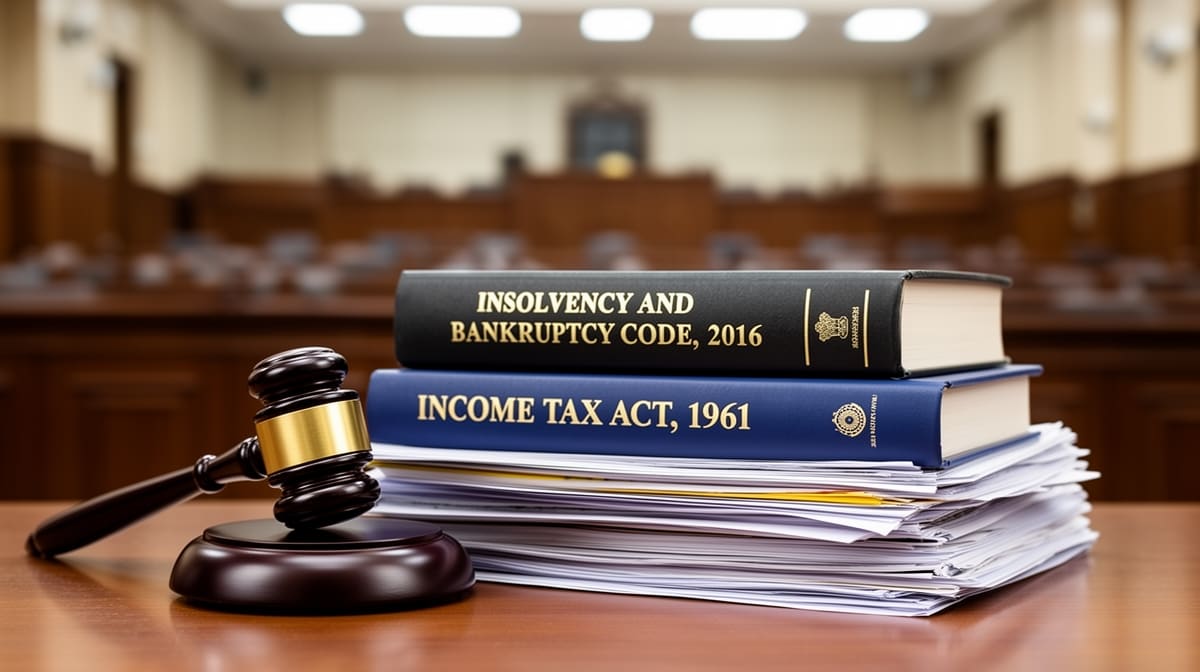
The approval of a resolution plan under the Insolvency and Bankruptcy Code (IBC) extinguishes all statutory dues not expressly included therein, rendering pending tax appeals functus officio. This landmark ruling by the Customs, Excise and Service Tax Appellate Tribunal clarifies the supremacy of the IBC over fiscal statutes and establishes a binding precedent for all tax authorities and appellate forums.
Background & Facts
The Dispute
The appellant, Aircel Limited, faced a service tax demand raised by the Commissioner of GST and Central Excise for periods prior to the initiation of corporate insolvency proceedings. The demand was challenged before the Appellate Tribunal, which was seized of the appeal at the time the corporate debtor entered the insolvency resolution process under the IBC.
Procedural History
- 2018: Corporate Insolvency Resolution Process (CIRP) initiated against Aircel Limited under Section 7 of the IBC
- 2019: Common Resolution Professional filed Interlocutory Application No. 1864/2019 before NCLT, Mumbai, seeking approval of the Resolution Plan
- 2020: NCLT approved the Resolution Plan dated 09.06.2020, which did not explicitly provide for continuation of pending tax appeals
- 2026: Appeal pending before the Customs, Excise and Service Tax Appellate Tribunal was heard after the NCLT’s approval
Relief Sought
The appellant sought disposal of the appeal on the ground that the approved Resolution Plan under Section 31(1) of the IBC had extinguished all pre-insolvency claims not included therein, including the disputed service tax dues.
The Legal Issue
The central question was whether statutory dues owed to the Central Government, not included in a resolution plan approved under Section 31(1) of the IBC, remain enforceable through pending tax appeals, or whether such claims are extinguished upon approval of the plan.
Arguments Presented
For the Appellant
The appellant’s counsel relied on the Supreme Court’s decision in Ghanashyam Mishra and Sons Pvt. Ltd. v. Edelweiss Asset Reconstruction Company Ltd. to argue that once a resolution plan is approved, all claims not included therein - whether financial, statutory, or otherwise - are extinguished. He further cited Section 238 of the IBC, which provides for the overriding effect of the Code over inconsistent laws, including the Central Excise Act and Finance Act. The appellant emphasized that the Tribunal, as a statutory forum, cannot override the legislative mandate of the IBC.
For the Respondent
The Respondent contended that statutory dues such as service tax are not merely claims but obligations arising from sovereign authority, and therefore cannot be extinguished without explicit provision. He argued that the Tribunal retains jurisdiction under Section 35C of the Central Excise Act, 1944 to adjudicate tax disputes irrespective of insolvency proceedings, and that the NCLT’s approval does not automatically terminate appellate jurisdiction.
The Court's Analysis
The Tribunal undertook a comprehensive analysis of the IBC’s structure and its interaction with tax laws. It emphasized that Section 31(1) of the IBC renders the approved resolution plan binding on all stakeholders, including the Central Government, State Governments, and local authorities. The Court quoted the Supreme Court in Ghanashyam Mishra:
"The Central Government, any State Government or any local authority to whom a debt is owed, including the statutory dues, would be covered by the term 'creditor' and in any case, by the term 'other stakeholders' as provided in sub-section (1) of Section 31 of the I&B Code."
The Tribunal further held that Section 238 of the IBC operates as a non-obstante clause, explicitly overriding any inconsistent provisions in the Central Excise Act, Customs Act, or Finance Act. It noted that the Supreme Court in Sundresh Bhatt v. CBIC had already affirmed that the IBC prevails over the Customs Act, and by extension, over the Central Excise Act.
The Tribunal rejected the Respondent’s argument that tax appeals are sui generis. It held that the IBC is a comprehensive code designed to consolidate all claims against a corporate debtor. Once the resolution plan is approved, the Tribunal becomes functus officio unless the plan explicitly permits continuation of the appeal. The absence of any such provision in the approved plan meant that the appeal could not proceed.
The Verdict
The appellant succeeded. The Tribunal held that statutory dues not included in an approved resolution plan under Section 31(1) of the IBC are extinguished, and any pending tax appeal concerning such dues must be disposed of. The Tribunal confirmed that Section 238 of the IBC overrides conflicting provisions in tax statutes, and that appellate forums lose jurisdiction unless the resolution plan expressly permits continuation.
What This Means For Similar Cases
Statutory Dues Are Not Exempt from IBC
- Practitioners must now treat all statutory dues - including GST, service tax, customs duties, and cess - as claims subject to the resolution plan
- Tax authorities cannot initiate or continue recovery proceedings for pre-insolvency dues not listed in the approved plan
- Any demand notice issued post-approval for such dues is legally unsustainable
Tribunal Jurisdiction Is Conditional on the Plan
- Appellate Tribunals must examine the approved resolution plan before proceeding with any pending tax appeal
- If the plan is silent, the appeal must be dismissed as functus officio
- Advocates should advise clients to explicitly address pending tax appeals in the resolution plan if continuation is desired
IBC Supremacy Is Absolute
- The IBC is not merely a procedural code but a substantive override of fiscal laws
- Any attempt to invoke tax statutes to circumvent the IBC’s finality mechanism will be struck down
- Practitioners must integrate tax liability assessments into the CIRP stage, not rely on post-approval litigation