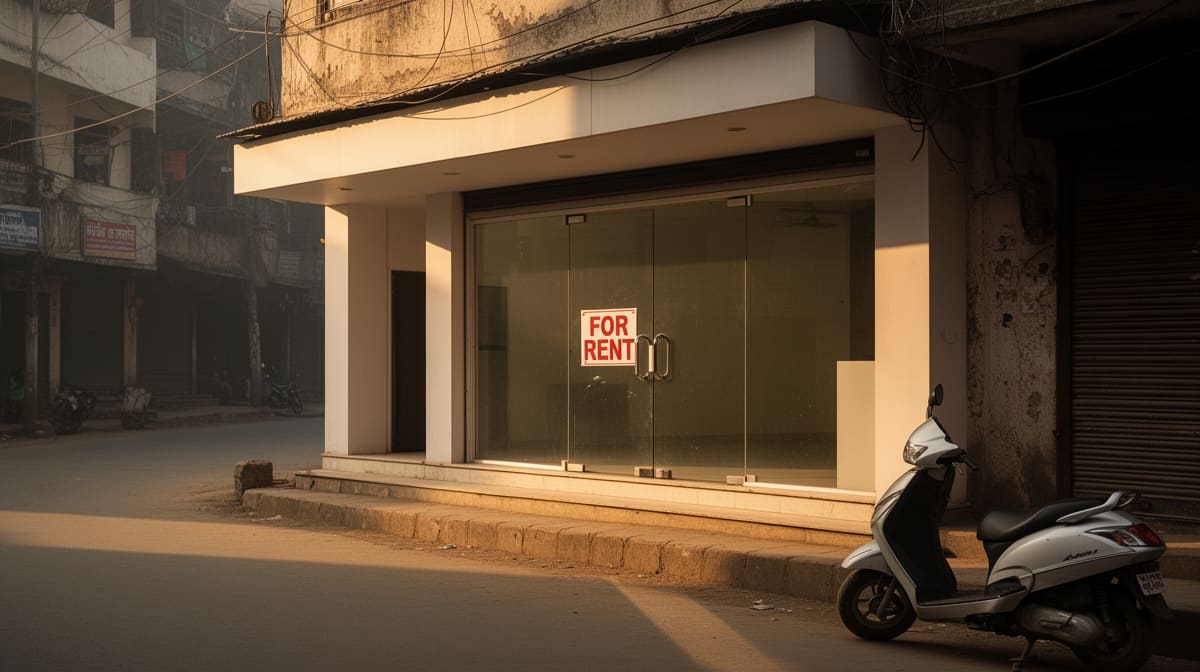
In a significant ruling balancing landlord rights with tenant welfare, the Kerala High Court has affirmed that even where a landlord’s reasonable requirement is established, courts may grant equitable relief to long-term tenants facing displacement. The judgment underscores that procedural fairness and humanitarian considerations remain integral to rent control jurisprudence.
Background & Facts
The Dispute
The dispute arose from a petition filed by the landlord, Viruthikkara Souda and N.P. Salem, seeking eviction of the tenant, Kizhakkeparambath Ibrahim, from a commercial property located in Kadameri, Vatakara Taluk, Kozhikode District. The landlord alleged a reasonable requirement for the premises to operate a supermarket, invoking provisions under the Kerala Buildings (Lease and Rent Control) Act, 1965. The tenant, who had occupied the premises for over two decades, resisted eviction on grounds of hardship and lack of alternative accommodation.
Key Facts
- The tenant, Kizhakkeparambath Ibrahim, aged 65, has been in continuous possession of the premises since approximately 2001, making his tenancy over 23 years at the time of the judgment.
- The landlord filed the Rent Control Petition (RCP No. 6 of 2021) on 15.01.2021 before the Sub-Magistrate Court, Payyoli.
- The tenant contested the petition, denying the genuineness of the landlord’s requirement and asserting long-standing tenancy.
- The Rent Control Court, by order dated 29.06.2024, found the landlord’s requirement to be reasonable and ordered eviction.
- The tenant appealed to the Rent Control Appellate Authority, which, by order dated 31.01.2026, affirmed the findings of the Rent Control Court.
- The tenant filed the present revision petition before the Kerala High Court on 15.03.2026.
- The landlord’s stated purpose for eviction was to establish a supermarket in the premises, requiring vacant possession to obtain statutory approvals and commence operations.
Procedural History
- 15.01.2021: Rent Control Petition (RCP No. 6 of 2021) filed by respondents before Sub-Magistrate Court, Payyoli.
- 29.06.2024: Rent Control Court passed order granting eviction on grounds of reasonable requirement.
- 31.01.2026: Rent Control Appellate Authority dismissed the appeal and affirmed the Rent Control Court’s order.
- 15.03.2026: Revision Petition (RCRev. No. 96 of 2026) filed before the Kerala High Court.
- 16.06.2026: Hearing and judgment delivered by the Division Bench.
Relief Sought
The petitioner sought quashing of the eviction order, arguing that his long tenancy and advanced age warranted protection. The respondents sought enforcement of the eviction order to commence their supermarket business without delay.
The Legal Issue
The central question was whether, in cases where concurrent findings of reasonable requirement by the Rent Control Court and Appellate Authority are upheld, a revisional court may still grant equitable relief in the form of extended time to vacate, even in the absence of legal error or perversity in the findings.
Arguments Presented
For the Petitioner
The petitioner’s counsel acknowledged the validity of the concurrent findings on reasonable requirement but emphasized the tenant’s 23-year tenancy, advanced age (65 years), and the absence of viable alternative commercial space. He argued that immediate eviction would cause undue hardship and that the court, under its inherent equitable powers, should grant a reasonable time to relocate. He cited principles of natural justice and the humanitarian intent behind rent control legislation.
For the Respondent
The respondents’ counsel conceded that the tenant had been in possession for a long time but stressed that the landlord’s need for the premises was genuine and urgent. They submitted that the petition had been pending since 2021 and that the proposed supermarket project was stalled due to the tenant’s continued occupation. They requested that the tenant be given a short, fixed period - no more than six months - to vacate, to enable the landlord to obtain statutory clearances and commence business.
The Court's Analysis
The Court began by acknowledging the well-established principle that revisional jurisdiction under the Kerala Rent Control Act is limited and cannot be invoked merely to re-appreciate evidence where concurrent findings exist. The Bench noted that the Rent Control Court and Appellate Authority had independently examined the landlord’s need and found it reasonable, with no perversity or illegality in their reasoning.
"Merely because the revisional court may have a different view on the same set of facts, would not justify interference with such concurrent findings in the absence of any perversity."
However, the Court departed from a purely technical application of the law by invoking its equitable jurisdiction under Article 227 of the Constitution. It recognized that while the landlord’s right to reclaim premises for personal use is legally valid, the tenant’s prolonged occupation and age created a situation of exceptional hardship.
The Court emphasized that rent control laws are not merely procedural but are rooted in social welfare objectives. It held that the judiciary, even while upholding statutory rights, must temper its orders with compassion where the consequences of strict enforcement would be disproportionate.
The Court also noted that the landlord’s business plans were not impeded by the tenant’s continued presence if the tenant cooperated with necessary formalities, such as signing documents for building plans and statutory licenses.
The Verdict
The revision petition was disposed of with the following directions: the tenant shall vacate and surrender vacant possession of the premises by 31st March 2027, subject to payment of monthly occupation charges from the date of judgment until surrender. The tenant must file a written undertaking before the Executing Court confirming compliance. The landlord may proceed with obtaining statutory permissions and building plans, provided the tenant’s possession is not disturbed and the tenant cooperates by signing necessary documents. The tenant’s continued occupation shall not be construed as obstruction to the landlord’s lawful preparations.
What This Means For Similar Cases
Equitable Relief Is Available Even Without Legal Error
- Practitioners must now argue that equitable relief under Article 227 can be invoked in rent control cases even when concurrent findings are valid, if hardship is demonstrable.
- Long tenancy (15+ years), age of tenant, and absence of alternative accommodation are now recognized as material factors for extending vacating timelines.
- Courts may impose conditions such as payment of occupation charges and cooperation with statutory processes as part of equitable orders.
Cooperation, Not Obstruction, Is the Standard
- Landlords may proceed with pre-construction formalities (plans, licenses, approvals) even while the tenant remains in possession, provided there is no physical interference.
- Tenants are now under a duty to reasonably cooperate with landlord’s lawful requirements for statutory compliance, failing which future relief may be denied.
- This creates a new norm: possession is protected, but obstruction of lawful preparation is not.
Procedural Delay Does Not Invalidate Reasonable Requirement
- The pendency of litigation since 2021 does not negate the landlord’s requirement, but it does not preclude the court from granting time to the tenant.
- The judgment clarifies that delay in filing or adjudication is not a ground to deny equitable relief to tenants.