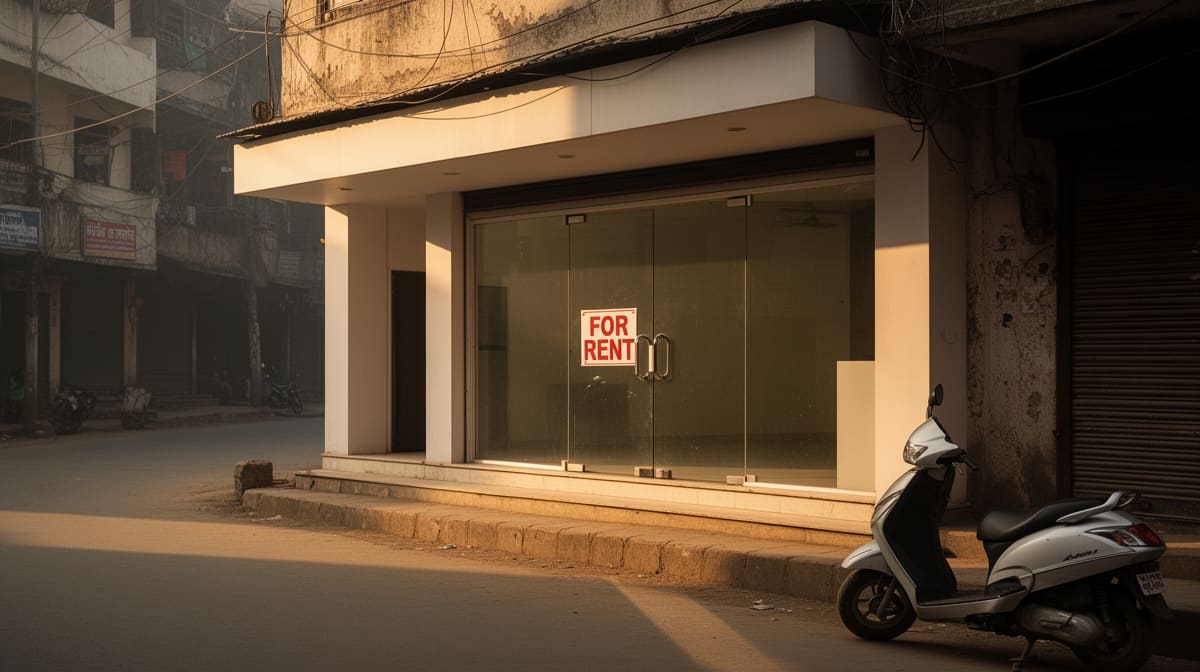
A significant relaxation in eviction enforcement has emerged from the Punjab & Haryana High Court, which granted a tenant six additional months to vacate premises despite prior breach of a court-recorded mediation undertaking. The judgment underscores judicial discretion in balancing procedural defaults with equitable relief in rent control matters.
Background & Facts
The Dispute
The petitioner, a tenant, was ordered by the Rent Controller of Rupnagar to vacate the demised premises within two months, a direction upheld by the Appellate Authority. The landlord sought eviction on grounds of non-payment of rent and breach of an earlier mediation settlement.
Procedural History
The case progressed through the following stages:
- 18.03.2024: Parties entered into a mediated settlement recorded by the Rent Controller, wherein the tenant undertook to vacate by 13.06.2024
- 18.11.2024: Rent Controller passed an order noting the tenant’s failure to comply with the undertaking
- 18.11.2025: Rent Controller directed eviction within two months
- 02.02.2026: Appellate Authority dismissed the tenant’s appeal, affirming the eviction order
- 09.03.2026: Petition filed before the High Court seeking relief from eviction
Relief Sought
The petitioner sought modification of the eviction order, requesting additional time to vacate the premises. The landlord opposed any extension, insisting on strict enforcement of the mediation undertaking and the eviction decree.
The Legal Issue
The central question was whether a tenant’s failure to honor a court-recorded mediation undertaking automatically forfeits the right to any equitable relief, or whether courts retain discretion to grant reasonable time for vacating premises under the Rent Control Act.
Arguments Presented
For the Petitioner
Counsel for the tenant argued that while the mediation undertaking was breached, the tenant had not acted in bad faith and was genuinely unable to relocate due to financial hardship. Reliance was placed on the principle of equity in tenancy matters and the court’s inherent power to avoid harsh outcomes under Section 13 of the Punjab Urban Rent Control Act. It was submitted that the court’s role is not merely to enforce procedural compliance but to ensure justice in individual circumstances.
For the Respondent
The landlord’s counsel contended that the mediation undertaking was a solemn judicial record, and its breach amounted to contempt of court’s authority. Citing State of Punjab v. Baldev Singh, they argued that courts must not encourage non-compliance by granting extensions after clear defaults. The landlord’s right to possession, they asserted, was absolute once the statutory conditions for eviction were met.
The Court's Analysis
The Court acknowledged the tenant’s breach of the mediation undertaking but declined to treat it as an irrevocable waiver of equitable relief. It emphasized that rent control statutes are protective in nature, designed to prevent homelessness and ensure stability for tenants, particularly in urban settings.
"The object of rent control legislation is not to penalize tenants for temporary hardship but to balance the rights of both parties with a view to social justice."
The Court distinguished between procedural non-compliance and malicious defiance. It noted that the tenant had not denied liability for rent, nor had he sublet or caused damage to the premises. The court also observed that the landlord had not demonstrated immediate necessity for possession beyond financial gain.
The Court further held that while the mediation undertaking carried weight, it was not a final decree. The court retained the power to modify its own orders in light of changed circumstances, especially where eviction would result in disproportionate hardship.
The judgment reflects a purposive interpretation of Section 13, prioritizing the spirit of the law over rigid adherence to procedural defaults.
The Verdict
The petitioner succeeded. The High Court held that a breach of a mediation undertaking does not automatically justify immediate eviction. It granted the tenant six months to vacate, subject to strict conditions including payment of arrears, monthly rent, and a binding affidavit undertaking.
What This Means For Similar Cases
Equitable Relief Remains Available Despite Mediation Breach
- Practitioners must now argue that equity overrides strict procedural compliance in tenancy matters
- Courts may grant time even after breach if the tenant shows no malafide intent and is willing to comply with new conditions
- The burden shifts to the landlord to prove immediate, compelling need for possession
Affidavit Undertakings Are Enforceable but Not Absolute
- Tenants must file a sworn affidavit within stipulated time (here, two weeks)
- Failure to file the undertaking triggers automatic execution of eviction order
- This creates a clear, enforceable trigger mechanism without requiring fresh litigation
Monthly Payment Conditions Are Now Standard
- Future orders in similar cases will likely include:
- Payment of arrears within one month
- Monthly rent/mesne profits by the 7th of each month
- Liability for utilities during occupation
- Automatic eviction on single default
- These conditions create a structured pathway for compliance, reducing judicial intervention