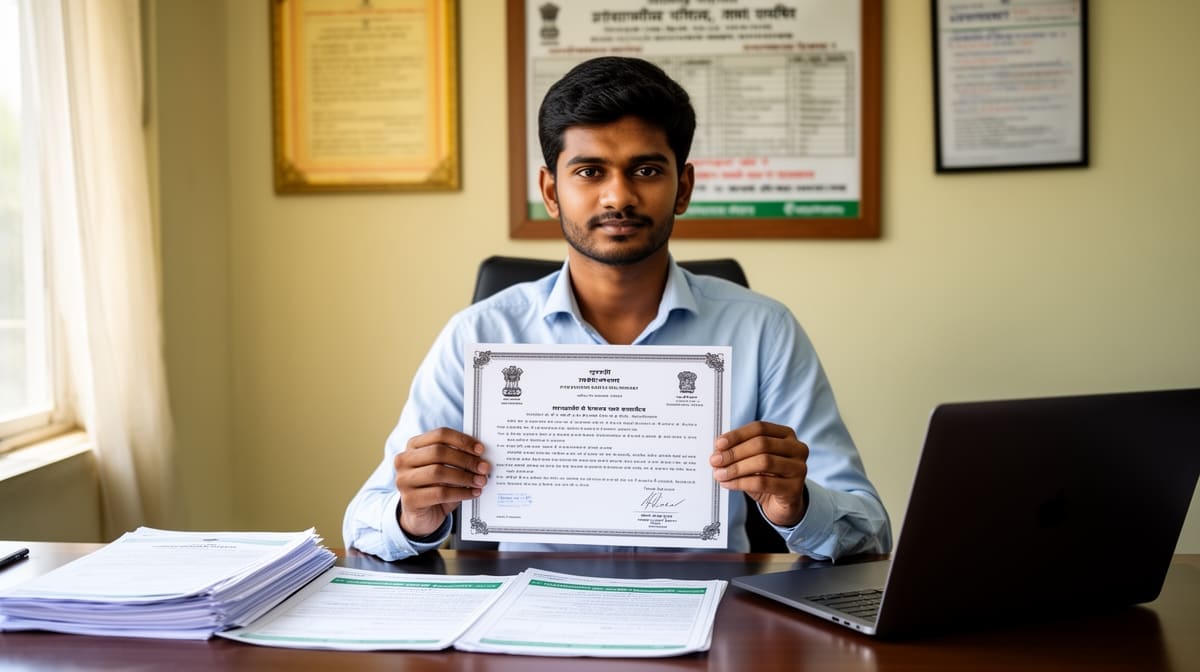
The Bombay High Court has granted interim relief to a petitioner whose admission to a B.B.A. course under the Scheduled Tribes category was threatened due to a delayed submission of a caste validity certificate, issued only after a court order set aside its initial rejection. The judgment underscores that procedural deadlines must yield to judicial remedies when the delay stems from state machinery’s failure, not petitioner’s negligence.
Background & Facts
The Dispute
The petitioner, Jayesh Subhash Koli, sought admission to a B.B.A. course under the Scheduled Tribes (ST) category through the Centralized Admission Process (CAP) at a college governed by respondent no.3. He was provisionally admitted in CAP Round-II, subject to submission of a valid caste validity certificate by 04.10.2025 - the last date of CAP Round-IV. The petitioner acknowledged this condition in writing.
Key Facts
- The petitioner applied for a caste validity certificate under the "Tokre Koli" Scheduled Tribe category.
- The Caste Scrutiny Committee refused to issue the certificate on grounds of insufficient documentation.
- The petitioner filed Writ Petition No. 12148 of 2025 challenging the refusal.
- On 06.10.2025, the High Court partly allowed the petition, setting aside the Committee’s refusal and directing it to issue the certificate forthwith.
- The Committee issued the caste validity certificate on or about 15.10.2025.
- The petitioner submitted the certificate to the institute on 16.10.2025, one day after the 15.10.2025 issuance.
- Respondent no.2 (State authority) reclassified the petitioner’s admission from ST category to Open Category.
- Respondent no.3 (institute) now demands payment of full fees applicable to Open Category candidates and has refused to issue a hall ticket for the upcoming first-year B.B.A. examinations scheduled from 11.05.2026.
Procedural History
- 04.10.2025: Deadline for submission of caste validity certificate under CAP Round-IV.
- Before 04.10.2025: Caste Scrutiny Committee refused to issue certificate.
- 06.10.2025: High Court orders issuance of caste certificate in Writ Petition No. 12148 of 2025.
- 15.10.2025: Caste Scrutiny Committee issues the certificate.
- 16.10.2025: Petitioner submits certificate to institute.
- Late October 2025: Institute reclassifies admission to Open Category.
- April 2026: Institute refuses to issue hall ticket for exams.
- 23.04.2026: Institute issues formal order refusing restoration of ST admission.
- 08.05.2026: Present writ petition filed and heard by Division Bench.
The Parties' Positions
Petitioner: Argues that the delay in submission was not due to his fault but because the caste certificate was only issued after a court order. He contends that the institute’s refusal to grant him ST benefits and deny exam access is arbitrary and violates his right to education.
Respondent no.2 (State): Contends that the certificate was submitted after the stipulated deadline and that the petitioner cannot be granted relaxation unless explicitly permitted by policy.
Respondent no.3 (Institute): Insists on strict adherence to CAP guidelines and demands full Open Category fees before issuing hall tickets.
Relief Sought
The petitioner seeks:
- Restoration of his admission under the ST category.
- Immediate issuance of hall ticket for the B.B.A. first-year examinations commencing 11.05.2026.
- Waiver of differential fees applicable to Open Category candidates.
The Legal Issue
The central question was whether a petitioner who obtains a caste validity certificate only after a court order, and submits it immediately thereafter, can be denied admission benefits and examination access solely on the ground of missing a procedural deadline that was rendered impossible to meet prior to judicial intervention.
Arguments Presented
For the Petitioner
The petitioner’s counsel argued that the delay was not attributable to him but to the state’s own failure to issue the certificate in time. He relied on the principle that courts must interpret procedural rules with equity when the delay arises from state inaction or judicial process. He emphasized that the petitioner acted promptly upon receipt of the certificate and that denying him exam access would cause irreparable harm to his academic progress.
For the Respondent/State
The State and Institute contended that CAP guidelines are mandatory and non-negotiable. They argued that allowing relaxation in one case would open floodgates for similar claims and undermine the integrity of the reservation system. They maintained that the petitioner had been duly informed of the deadline and could have pursued the certificate earlier.
The Court's Analysis
The Court acknowledged that the petitioner had indeed missed the 04.10.2025 deadline. However, it emphasized that the delay was not due to laches or negligence but because the caste certificate was initially denied by the state authority and only issued after a judicial directive. The Court observed:
"...the petitioner had approached this Court and by order dated 06.10.2025, the said Writ Petition came to be partly allowed as aforesaid and then, the certificate has been issued. Accordingly, all these acts are required to be considered..."
The Court held that the petitioner acted with due diligence once the certificate became available. It noted that the state’s own failure to timely adjudicate the certificate application created the very condition that led to the delay. To penalize the petitioner for this state-caused delay would be unjust and violate the principles of natural justice and equitable relief.
The Court further observed that denying the petitioner the opportunity to appear for the examination would cause irreparable academic harm, especially as the exams were imminent. The Court distinguished this case from those where petitioners deliberately delay submission without any external impediment.
The Verdict
The Court granted interim relief. It directed respondent no.3 to issue the hall ticket to the petitioner for the B.B.A. first-year examinations scheduled from 11.05.2026 without insisting upon payment of fees applicable to Open Category candidates. The petitioner was directed to file an undertaking on or before 09.06.2026, undertaking to deposit the full Open Category fees if the petition is ultimately dismissed. Notice to respondent no.3 is returnable on 17.06.2026.
What This Means For Similar Cases
Judicial Orders Excuse Procedural Delays
- Practitioners may now argue that delays caused by state authorities’ refusal to issue legally required documents - later overturned by court order - constitute valid grounds for relaxation of deadlines.
- Institutions cannot rigidly enforce timelines when the delay stems from their own administrative failure or judicial intervention.
Examination Access Is a Fundamental Right
- Denial of hall tickets for imminent examinations, especially when the petitioner has otherwise met eligibility criteria, constitutes undue hardship.
- Courts are likely to intervene to preserve academic continuity where the delay is not attributable to the student.
Equity Over Rigidity in Reservation Processes
-
Reservation policies must be implemented with fairness, not mechanical compliance.
-
Petitioners who act promptly upon receipt of a court-ordered document should not be penalized for delays caused by the state’s prior inaction.
-
Always document all communications with state authorities regarding certificate applications.
-
File writ petitions promptly if caste or category certificates are wrongfully denied.
-
Seek interim relief for examination access even if final relief is pending.