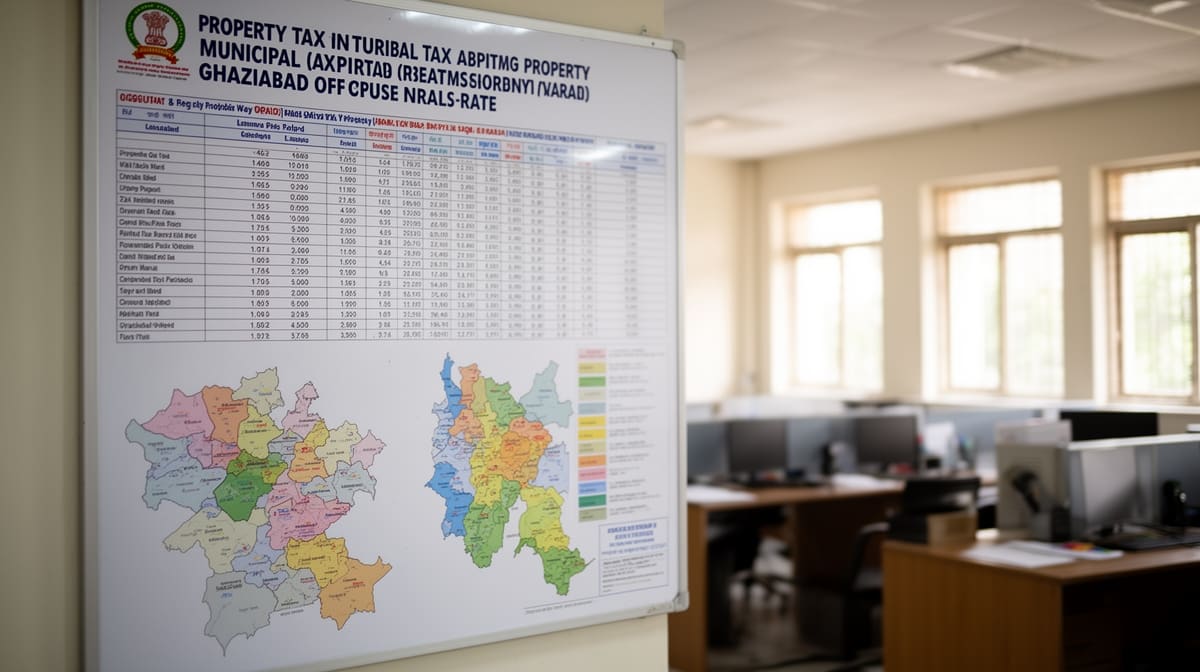
The Allahabad High Court has affirmed the statutory authority of Municipal Commissioners to revise property tax rates based on comprehensive surveys and categorization criteria, including road width, under the U.P. Municipal Corporations Act, 1959. This judgment clarifies the limits of judicial review in economic policy matters involving municipal taxation and reinforces procedural compliance over subjective objections.
Background & Facts
The Dispute
The petitioners, three current or former Corporators of the Ghaziabad Municipal Corporation, challenged a series of resolutions and notices issued between 2022 and 2025 that revised the Minimum Monthly Rent Rate (MMRR) for property tax assessment. They alleged that the revision - effective from 01.04.2025 - was procedurally flawed, substantively arbitrary, and violated Section 174 of the U.P. Municipal Corporations Act, 1959. The core contention was that the Corporation had not followed mandatory statutory timelines and had improperly included non-road features like green belts and parking areas in determining road width for tax calculation.
Procedural History
- 2001: Last statutory exercise to determine MMRR under Section 174(1)(b) and Rule 4-A.
- 2015 - 2023: Periodic, non-statutory increases in MMRR (5 - 15%) based on Board resolutions, not formal surveys.
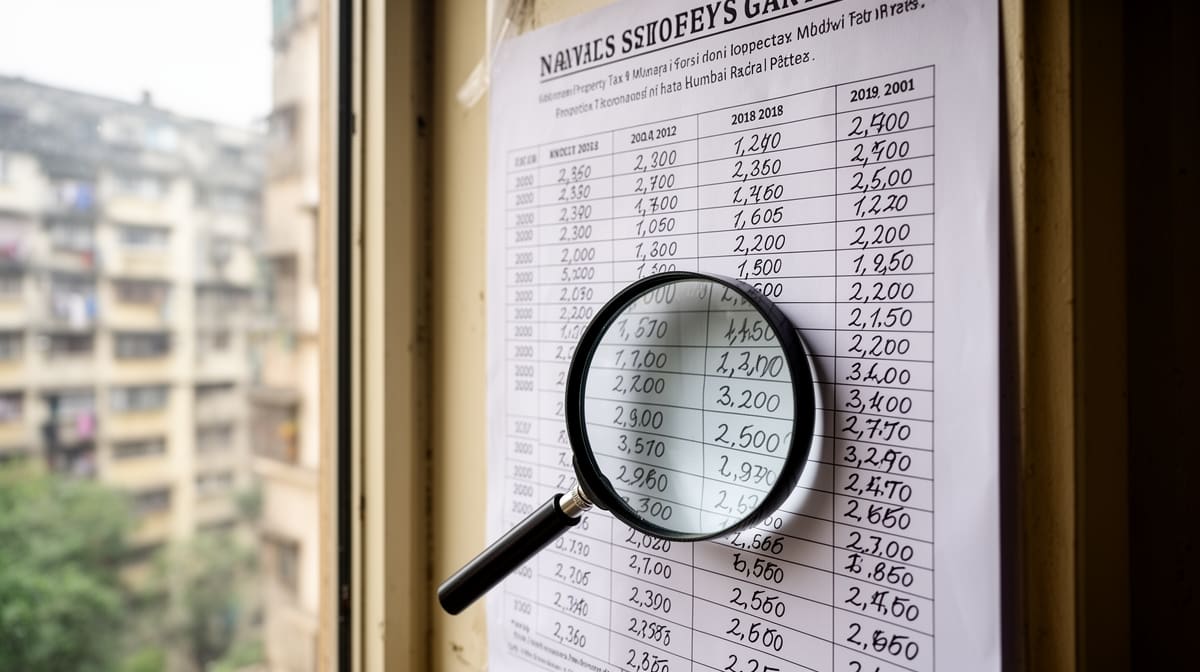
- 2020 - 2022: Municipal Commissioner conducted a ward-wise survey of rental values across 100 wards, categorizing properties into Developed (A), Normally Developed (B), and Backward/Slum (C) zones based on DM circle rates.
- 09.01.2024: Public notice published in two newspapers inviting objections to proposed MMRR; 318 objections received and disposed of.
- 07.03.2025: Board passed Resolution No. 139 approving use of road width (as per Master Plan or sanctioned maps) to determine MMRR.
- 03.05.2025: Final order issued implementing revised tax rates effective 01.04.2025.
- 30.06.2025: Board convened again and rejected the revised MMRR, but the Corporation proceeded with implementation.
Relief Sought
The petitioners sought quashing of the 03.05.2025 order and 09.01.2024 notice, a direction to restore the previous rebate structure (20% for deposits till September), and restraint on implementation of revised rates. They also challenged the inclusion of parking, drains, and green belts in road width calculations.
The Legal Issue
The central question was whether the Municipal Commissioner, under Section 174(1)(b) and Rule 4-A of the U.P. Municipal Corporations Act, 1959, is empowered to determine the Minimum Monthly Rent Rate (MMRR) by factoring in the width of the road adjacent to a property - even if that width includes adjacent infrastructure like footpaths, green belts, or drains - and whether such determination must be made strictly once every two years.
Arguments Presented
For the Petitioner
The petitioners argued that:
- The last statutory MMRR revision was in 2001; any revision within one year (2023 to 2024) violated the mandatory two-year interval under Section 174(1)(b).
- The term "road" is not defined in the Act; only "street" is defined under Section 2(74), and the Commissioner cannot expand the scope of "street" to include non-road features.
- Including parking, drains, and green belts in road width inflated property values unfairly, particularly in slum areas, violating Article 14.
- The rebate policy (20% till September) was unilaterally withdrawn by the Executive Committee without Board approval, rendering it illegal.
- Reliance was placed on Dipak Babaria v. State of Gujarat and Anjum M.H. Ghaswala v. CIT to argue that statutory mandates must be strictly followed.
For the Respondent/Corporation
The Corporation contended that:
- The MMRR had remained unchanged since 2001, and all prior revisions (2015 - 2023) were informal percentage hikes, not statutory exercises.
- The 2024 revision was the first full statutory exercise under Section 174(1)(b) and Rule 4-A, making the two-year rule inapplicable.
- Section 2(74) defines "street" to include "road," thereby authorizing use of road width for MMRR determination.
- The inclusion of adjacent infrastructure (footpaths, green belts) in road width was based on the Master Plan and sanctioned maps, not arbitrary discretion.
- The State Government, under Section 116(2), had directed the Commissioner to proceed, validating the process.
- The rebate policy was a discretionary administrative decision, not a statutory right, and could be modified.
- Reliance was placed on Akola Municipal Corporation v. Zishan Hussain and Shiv Sewak Singh v. State of U.P. to argue against judicial overreach in municipal policy.
The Court's Analysis
The Court undertook a meticulous review of the statutory framework under Section 174 and Rules 4-A, 4-B, and 4-C. It emphasized that the determination of MMRR is a technical, quasi-administrative function entrusted to the Municipal Commissioner, not a political decision subject to judicial scrutiny on merits.
"The Municipal Commissioner had exercised his power under the proviso to Section 174(1)(b) which provides that where the annual value of any building would, by reason of exceptional circumstances, be excessive, the Corporation may fix the annual value at any less amount which appears to be equitable."
The Court found that the Commissioner had not merely relied on DM circle rates, as alleged, but had conducted a comprehensive survey across 100 wards, categorized properties into three tiers, and applied a conservative multiplier (reducing average MMRR from Rs.13 to Rs.4 for Category A) to ensure equity. The reduction below average values was deemed a deliberate exercise of discretion to prevent undue burden on taxpayers.
Regarding the inclusion of green belts and parking areas in road width, the Court held that Section 2(74)’s inclusive definition of "street" encompasses "road," and the use of sanctioned Master Plan maps - approved by the Development Authority - provided a legitimate, objective standard. The resolution dated 07.03.2025 merely standardized the methodology, not created new authority.
The Court also rejected the two-year argument, noting that the prior increases (2015 - 2023) were not statutory exercises under Section 174(1)(b) but informal adjustments. The 2024 revision was the first full compliance with the statutory mandate after over two decades, rendering the challenge baseless.
On the rebate issue, the Court observed that Rule 4-C(3) permits rebates only "as prescribed in the Act," and no such provision mandates a fixed rebate schedule. The 20% rebate was a past administrative concession, not a statutory right, and its modification did not violate any legal obligation.
Finally, the Court examined the petitioners’ locus standi. It held that Corporators, absent any authorization from the public or evidence of representing broader public interest, cannot file PILs to settle internal political disputes. The judgment cited Akola Municipal Corporation to affirm that judicial review in economic policy matters is confined to procedural compliance, not wisdom or policy choice.
The Verdict
The petitioners lost. The Court held that the Municipal Commissioner’s determination of MMRR under Section 174(1)(b) and Rule 4-A was lawful, procedurally compliant, and not arbitrary. The revision of property tax rates effective 01.04.2025 was upheld. The challenge to the rebate policy was dismissed as non-statutory. The PIL was dismissed with costs.
What This Means For Similar Cases
Municipal Commissioners Have Broad Discretion in MMRR Determination
- Practitioners must recognize that MMRR revisions based on surveys, categorization, and objective criteria (e.g., road width from Master Plans) are presumptively valid.
- Courts will not substitute their judgment for technical assessments unless the process is ex-facie arbitrary or violates statutory mandates.
- Any challenge must focus on procedural lapses - not the reasonableness of the outcome.
Road Width Can Include Adjacent Infrastructure for Tax Purposes
- "Road" under Section 2(74) includes all elements forming the public right-of-way, including footpaths, drains, and green belts, if they are part of the sanctioned plan.
- Municipalities may use Development Authority-approved maps to define road width for tax assessment without additional legislative approval.
- Challenges based on "road" vs. "street" terminology are legally untenable.
Corporators Cannot Use PILs to Challenge Municipal Policy
-
Elected representatives filing PILs against tax revisions must demonstrate public representation, not personal grievance.
-
Courts will dismiss such petitions as abuse of process if the real motive is political conflict.
-
Practitioners should advise clients to pursue remedies through internal municipal forums before approaching courts.
-
Municipalities must document surveys, objections, and disposal mechanisms to withstand judicial scrutiny.
-
Rebates are administrative, not statutory, unless explicitly mandated by law.
-
The two-year rule under Section 174(1)(b) applies only to statutory exercises - not to prior informal adjustments.