The Delhi High Court set aside a lower court decree that permitted a regional newspaper to use a name similar to a national news channel, holding that the appellant’s prior use and goodwill entitled it to a permanent injunction.
Background & Facts
The Dispute
The appellant, TV Today Network Ltd., a subsidiary of the India Today Group, operates the Hindi news channel “Aaj Tak”. The respondent publishes a Gujarati-language newspaper titled “Saurashtra Aaj Tak” in Rajkot, Gujarat. The appellant alleged that the respondent’s use of the mark exploits its goodwill and is likely to mislead the public.
Key Facts
- 1995: TV Today Network launched the news programme “Aaj Tak” on Doordarshan.
- 2000: “Aaj Tak” became India’s first 24-hour Hindi news channel.
- 27 Jan 2003: Appellant served a legal notice on the respondent demanding cessation of the use of “Saurashtra Aaj Tak”.
- 09 Apr 2003: Suit filed (C.S. 838/2003) titled M/s TV Today Network Ltd. v. M/s Saurashtra Aaj Tak & Another seeking permanent injunction and a mandatory injunction to change the newspaper’s name.
- 14 Oct 2003: Suit transferred to the District Court and renumbered TM 08/2011.
- 20 Aug 2008: Trial Court recorded that the respondent stopped participating in the proceedings; the case proceeded ex-parte.
- 07 Oct 2005: Trade mark “Aaj Tak” (Class 41) registered in the name of Living Media India Ltd., Trade Mark No. 1242921.
- 23 Nov 2005: Trade mark “Aaj Tak” (Class 38) registered, Trade Mark No. 1242922.
- 04 Feb 2012: Trial Court noted the above registrations during the pendency of the suit.
- 29 Feb 2012: Trial Court issued a decree granting a mandatory injunction with a disclaimer - “‘Saurashtra Aaj Tak’ has no connection or association with ‘Aaj Tak’ of TV Today Network” - but did not grant a permanent injunction restraining the use of the mark.
- 16 Jul 2013: Delhi High Court admitted the present Regular First Appeal (RFA 320/2012) under Section 96 CPC.
- 02 May 2025: Counsel informed the Court that “Aaj Tak” had been declared a Well-Known trademark by the Registrar of Trade Marks.
- 19 Dec 2025: Court took on record additional trademark registration certificates and status pages.
- 28 Mar 2026: Appeal reserved.
- 30 Jul 2026: Judgment pronounced.
Procedural History
- 09 Apr 2003: Original suit filed before the Additional District Judge, Central, 12, Tis Hazari Courts.
- 14 Oct 2003: Suit transferred to District Court, renumbered TM 08/2011.
- 20 Aug 2008: Respondent proceeded ex-parte; no evidence led.
- 29 Feb 2012: Trial Court decree (mandatory injunction with disclaimer) issued.
- 16 Jul 2013: High Court admitted the appeal.
- 28 Mar 2026: Appeal reserved.
- 30 Jul 2026: High Court judgment delivered, setting aside the 2012 decree and granting permanent injunction.
Relief Sought
The appellant sought:
- A permanent injunction restraining the respondent from using the name “Saurashtra Aaj Tak” or publishing any newspaper under that title.
- A mandatory injunction directing the respondent to change the newspaper’s name to one that is not deceptively similar to “Aaj Tak”.
The Legal Issue
- Does the appellant have locus standi to sue for passing off despite not being the registered proprietor of the “Aaj Tak” trademark?
- Have the three essential elements of passing off - goodwill, misrepresentation, and likelihood of damage - been established?
- Does Section 34 of the Trade Marks Act, which protects prior users, apply to the respondent’s defence?
- Is a disclaimer sufficient relief, or must the court grant a permanent injunction restraining the use of “Saurashtra Aaj Tak”?
Arguments Presented
For the Appellant
- The appellant is the prior user of “Aaj Tak” since 1995 and has acquired secondary meaning and a well-known status, as evidenced by trademark registrations (2005) and viewership of over twenty million.
- The respondent’s adoption of “Saurashtra Aaj Tak” in 2002 is later, not prior, and therefore Section 34 does not protect it.
- No evidence was produced to show bona-fide use or goodwill on the part of the respondent; the written statement is not evidence.
- The disclaimer does not eliminate the likelihood of confusion because the dominant part of the mark (“Aaj Tak”) remains identical and the prefix does not negate association.
- Under Section 27(2) of the Trade Marks Act, a passing-off action is available to a prior user even without registration; the appellant’s suit is maintainable.
For the Respondent
- The appellant is not the registered proprietor; the trademark is held by Living Media India Ltd., a separate legal entity, so the appellant lacks standing.
- The respondent’s use of “Saurashtra Aaj Tak” predates any use of the mark in print media by the appellant and is protected under Section 34 as a prior user.
- The newspaper is published in Gujarati, limited to the Saurashtra region; there is no overlap with the appellant’s national Hindi news channel, reducing the likelihood of confusion.
- The RNI registration under the Press and Registration of Books Act validates the title and shows no deceptive similarity at the time of registration.
- The disclaimer imposed by the trial court adequately protects the appellant’s interests.
The Court's Analysis
The Court began by interpreting the statutory framework governing trademarks and passing off. It noted that Section 27(2) of the Trade Marks Act expressly preserves the common-law right of action for passing off, irrespective of registration status. Consequently, a party that is the prior user of a mark may institute a passing-off suit even if it is not the registered proprietor.
"The suit in question was filed for passing off, and not infringement of the mark ‘Aaj Tak’, ... the relevant provisions, i.e., Section 27 and Section 28 of the Trade Marks Act, that are invoked in a suit for passing off, are as follows…"
The Court then examined the three-fold test for passing off as articulated in Reckitt & Colman Products Ltd. v. Borden Inc. and reiterated that proof of fraudulent intent is not required; the plaintiff must establish (i) goodwill attached to the mark, (ii) a misrepresentation likely to deceive, and (iii) a likelihood of damage.
Goodwill and Reputation - Evidence from the trial court record, including the testimony of PW-1 (Mr. Ashok Kumar Vermani), demonstrated that “Aaj Tak” had become synonymous with the appellant’s news channel, enjoying a viewership of more than twenty-million and acquiring secondary meaning in the field of news dissemination. The Court held that this established the first element of passing off.
Misrepresentation and Likelihood of Confusion - The Court rejected the respondent’s argument that the Gujarati language and regional circulation negated confusion. It emphasized that the dominant component of the mark (“Aaj Tak”) is identical, the prefix “Saurashtra” merely suggests a regional arm, and both parties operate in the same news-dissemination business. The Court cited Playboy Enterprises Inc. v. Bharat Malik to underscore that adding a prefix or suffix does not eliminate deceptive similarity. Accordingly, the second and third elements of passing off were satisfied.
Section 34 Defence - The Court observed that the respondent’s use began in 2002, whereas the appellant’s prior use dates back to 1995 (programme) and 2000 (channel). Because the respondent’s use does not pre-date the appellant’s, Section 34 cannot be invoked. The Court also noted that the respondent never pleaded the prior-user defence in its written statement, and no evidence was adduced to prove continuous use prior to the appellant’s adoption.
Adequacy of the Remedy - The trial court’s mandatory injunction with a disclaimer was deemed insufficient. The Court held that where the elements of passing off are established, equity demands a full permanent injunction to prevent ongoing deception. The disclaimer, while informative, does not prevent the public from associating the two publications.
In sum, the Court concluded that the trial court erred in both allowing the respondent to continue using the mark and in limiting the injunction to a disclaimer. The appeal was allowed, and a decree of permanent and mandatory injunction was granted in favour of the appellant.
The Verdict
The Delhi High Court allowed the appeal, set aside the 29 Feb 2012 decree, and passed a permanent and mandatory injunction restraining the respondent and its agents from using the name “Saurashtra Aaj Tak” in any manner. The respondent was ordered to change the newspaper’s name to one that is not similar or deceptively similar to “Aaj Tak”. Costs were awarded as per the court’s discretion.
What This Means For Similar Cases
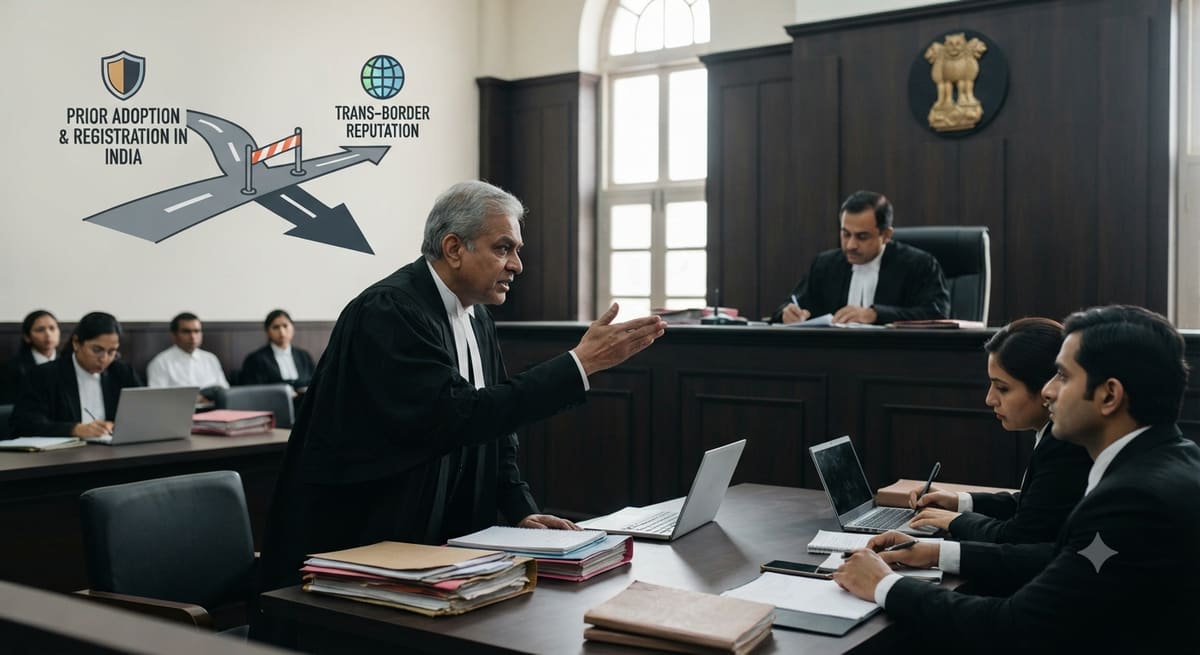
Prior User Rights in Passing Off
- A party that has been using a mark prior to any competing use can sue for passing off even if it is not the registered proprietor of the trademark.
- Section 27(2) of the Trade Marks Act preserves this common-law right, making the lack of registration irrelevant for passing-off actions.
Limitations of the Section 34 Defence
- The prior-user defence under Section 34 applies only when the defendant’s use predates the senior user’s use or registration.
- In cases where the senior user’s use is earlier, the defence cannot shield the defendant, even if the defendant later registers the mark.
Disclaimer Is Not Sufficient Relief
- Courts will not consider a disclaimer adequate where the dominant part of the mark is identical and the likelihood of confusion is established.
- A permanent injunction is the appropriate equitable remedy to prevent ongoing deception and protect goodwill.
Practical Takeaways for Practitioners
- When drafting a passing-off suit, ensure that the plaintiff’s prior use and secondary meaning are well documented with viewership data, advertising spend, and trademark registrations.
- Anticipate the defendant’s reliance on Section 34 and be prepared to demonstrate that the defendant’s use is subsequent.
- Do not rely on a disclaimer as the sole remedy; argue for a permanent injunction where confusion is likely.
- Verify the chain of authority for any trademark registrations and be ready to show that the plaintiff’s mark is well-known or has acquired distinctiveness.