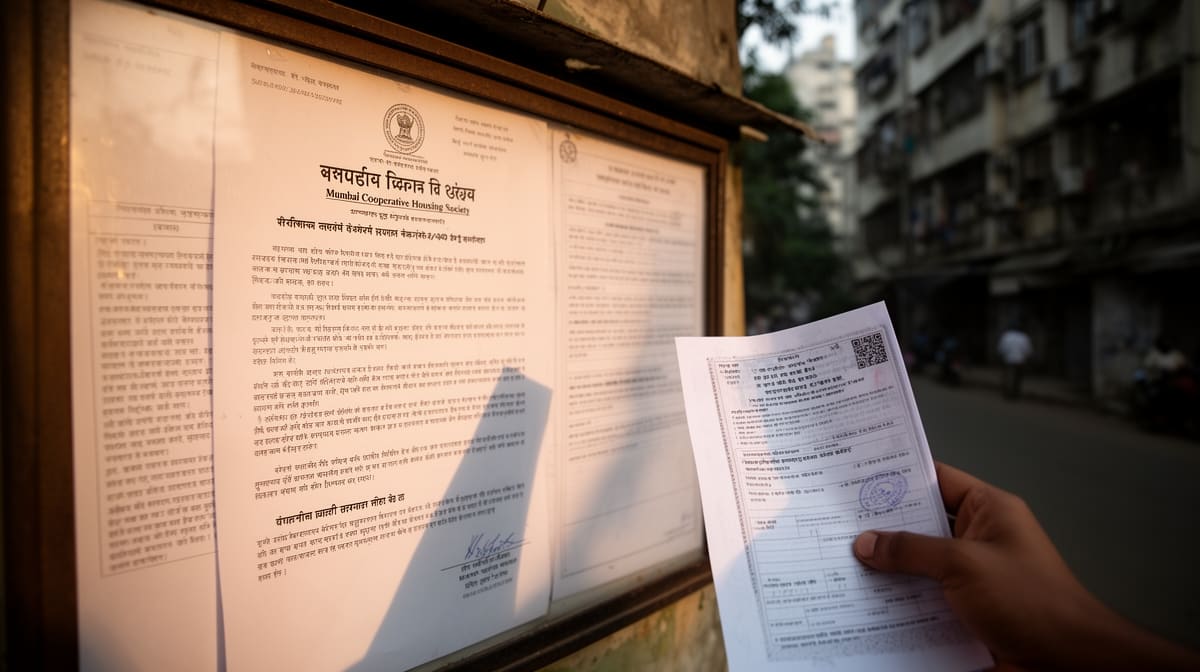
The Bombay High Court has established a critical protection for bona fide property purchasers, holding that recovery proceedings under the Maharashtra Cooperative Societies Act cannot override prior lawful transfers. The judgment clarifies that attachment orders cannot defeat completed sales where the property was free from encumbrances at the time of transfer, reinforcing the principle that recovery actions must be confined to the defaulter's assets.
Background & Facts
The Property Transaction
The petitioner, Bhalchandra Baburao Kanade, purchased a property on 24 June 2010 through a registered sale deed. Crucially, the property was free from encumbrances at the time of purchase, as the mortgage in favour of the cooperative society had been released in 2004. The petitioner thus acquired clear title to the property six years before any recovery proceedings were initiated.
The Recovery Proceedings
The dispute arose when the Special Recovery Officer of Nashik Jilha Girana Sahakari Bank Ltd issued an attachment order on 25 November 2012 under Rule 107 of the Maharashtra Cooperative Societies Act. The attachment was sought against the original borrower's assets, but the property in question had already been lawfully transferred to the petitioner. The petitioner filed an objection under Rule 107(19), arguing that the property could not be attached as it no longer belonged to the defaulter.
Procedural History
The timeline of key events is as follows:
- 2004: Mortgage in favour of the cooperative society released
- 24 June 2010: Petitioner purchases the property through registered sale deed
- 25 November 2012: Attachment order issued under Rule 107
- 2013: Petitioner files objection under Rule 107(19), which is rejected
- 6 December 2013: Writ petition filed before Bombay High Court
- 9 February 2026: Judgment delivered
Relief Sought
The petitioner sought quashing of the attachment order and the rejection of his objection under Rule 107(19). He contended that the recovery authorities had exceeded their jurisdiction by proceeding against property that no longer belonged to the defaulter at the time of attachment.
The Legal Issue
The central question before the Court was whether Rule 107 of the Maharashtra Cooperative Societies Act permits recovery proceedings to override a prior lawful transfer of property, where the transfer occurred before the attachment order and the property was free from encumbrances at the time of sale.
Arguments Presented
For the Petitioner
The petitioner's counsel argued that:
- The property was purchased through a registered sale deed in 2010, well before the attachment order in 2012
- The mortgage had been released in 2004, making the property free from encumbrances at the time of purchase
- Rule 107 empowers recovery proceedings only against the defaulter's assets, not against property lawfully transferred to a third party
- The rejection of the objection under Rule 107(19) failed to consider the admitted timeline and legal effect of the completed sale
- No finding of fraud or sham transaction was recorded, which would be necessary to invalidate the transfer
For the Respondents
The respondents, despite being served, chose not to appear. The Court proceeded on the basis of the available record, noting the absence of any challenge to the petitioner's contentions.
The Court's Analysis
The Court conducted a meticulous examination of the statutory framework and the factual matrix. Key aspects of the analysis included:
-
Statutory Interpretation of Rule 107: The Court emphasized that Rule 107 is designed to secure recovery from the property of the defaulter. It does not confer power to proceed against property that has lawfully passed to a third party. The provision cannot be exercised mechanically against property that has already changed hands.
-
Timing of Transfer and Attachment: The Court noted that the petitioner's purchase in 2010 preceded the attachment order in 2012 by two years. The mortgage had been released in 2004, ensuring the property was free from encumbrances at the time of sale. This timeline was critical, as it established that the property no longer belonged to the defaulter when the attachment was sought.
-
Legal Effect of Attachment: The Court reiterated the settled principle that attachment does not create title. It merely operates against the property of the defaulter. Once ownership had passed to the petitioner prior to the attachment, the authorities could not treat the property as if it still belonged to the original borrower.
-
Bona Fide Purchaser Protection: The Court underscored that recovery proceedings cannot defeat a prior lawful transfer unless the transfer is shown to be sham, fraudulent, or intended to defeat recovery. No such finding was recorded in this case, and the respondents did not contest the petitioner's status as a bona fide purchaser.
"A recovery proceeding cannot travel beyond the assets of the defaulter. It cannot defeat a prior lawful transfer, unless the transfer is shown to be sham, fraudulent, or intended to defeat recovery. There is no such finding in the present case."
- Jurisdictional Limits: The Court held that the rejection of the petitioner's objection under Rule 107(19) reflected a non-consideration of the admitted timeline and the legal effect of the completed sale. The authorities had failed to examine whether the property could at all be proceeded against, given its prior transfer.
The Verdict
The Court allowed the writ petition and made the Rule absolute in terms of prayer clause 'b'. The judgment held that the attachment order and the rejection of the petitioner's objection under Rule 107(19) could not be sustained. The Court clarified that recovery proceedings under the Maharashtra Cooperative Societies Act cannot override a prior lawful transfer of property, where the transfer occurred before the attachment and the property was free from encumbrances at the time of sale.
What This Means For Similar Cases
Attachment Orders Cannot Override Prior Lawful Transfers
This judgment establishes a clear precedent that recovery authorities cannot proceed against property that has been lawfully transferred to a third party before the attachment order. Practitioners should:
- Verify the timeline of transfers and encumbrances before advising clients on recovery proceedings
- Challenge attachment orders where the property was sold prior to the attachment and was free from encumbrances at the time of sale
- Argue jurisdictional limits of recovery proceedings, emphasizing that they must be confined to the defaulter's assets
Bona Fide Purchasers Are Protected
The Court's emphasis on the absence of fraud or sham transactions provides robust protection for bona fide purchasers. Key takeaways include:
- Burden of proof: The onus is on the recovery authorities to demonstrate that a transfer was fraudulent or intended to defeat recovery
- Encumbrance-free transfers: Purchasers who acquire property free from encumbrances are entitled to protection under this judgment
- No automatic override: Recovery proceedings cannot automatically override prior lawful transfers, even if the transferor was a defaulter
Procedural Compliance Is Mandatory
The judgment highlights the importance of procedural compliance by recovery authorities. Practitioners should:
- Scrutinize rejection orders under Rule 107(19) for non-consideration of material facts
- Demand detailed reasoning from authorities when objections to attachment are rejected
- Leverage the timeline: Use the chronological sequence of events to argue against the validity of attachment orders