The Bombay High Court has affirmed that preventive detention under the Maharashtra Prevention of Dangerous Activities Act is lawful when the accused engages in the production and sale of adulterated liquor containing toxic substances that pose a direct threat to public health. This ruling clarifies the threshold for invoking preventive detention in cases involving dangerous substances, distinguishing mere law and order violations from activities that destabilize public safety.
Background & Facts
The Dispute
The petitioner, Vidyawant S/o Vishwambhar Bhange, a laborer by occupation, was detained under Section 2(b) of the Maharashtra Prevention of Dangerous Activities of Slumlords, Bootleggers, Drug-Offenders, Dangerous Persons, Video Pirates, Sand Smugglers and Persons Engaged in Black Marketing of Essential Commodities Act, 1981 (MPDA Act). The detaining authority relied on his repeated involvement in illegal liquor production and sale, particularly the manufacture of artificial toddy laced with poisonous chemicals.
Procedural History
- 14.10.2024: Preventive action taken under Section 93 of the Maharashtra Prohibition Act, later dropped as MPDA detention proceedings were initiated.
- 13.10.2025: Detention order issued by Commissioner of Police, Chhatrapati Sambhajinagar.
- 17.10.2025: State Government approved the detention.
- 02.12.2025: Detention confirmed by Superintendent, Nagpur Central Prison.
- 1587/2025: Writ petition filed under Article 226 challenging all three orders.
Relief Sought
The petitioner sought quashing of the detention orders, arguing lack of application of mind, absence of arrest in recent cases, and that the material only indicated law and order concerns - not public order. He relied on two prior judgments where similar detention orders were quashed.
The Legal Issue
The central question was whether the production and sale of artificial toddy containing toxic substances like chloral hydrate and copper sulfate constitutes a threat to public order sufficient to justify preventive detention under the MPDA Act, even in the absence of arrest in the latest incidents.
Arguments Presented
For the Petitioner
The petitioner’s counsel contended that the detaining authority failed to apply its mind, as the petitioner had not been arrested in the two most recent cases (2025), suggesting the conduct was not serious enough to warrant detention. He argued that the secret witness statements only indicated potential law and order disturbances, not a threat to public order. He cited Arjun Ratan Gaikwad v. State of Maharashtra and Ibbu Kashim v. State of Maharashtra, where detention orders were quashed because no poisonous substances were found in the liquor.
For the Respondent
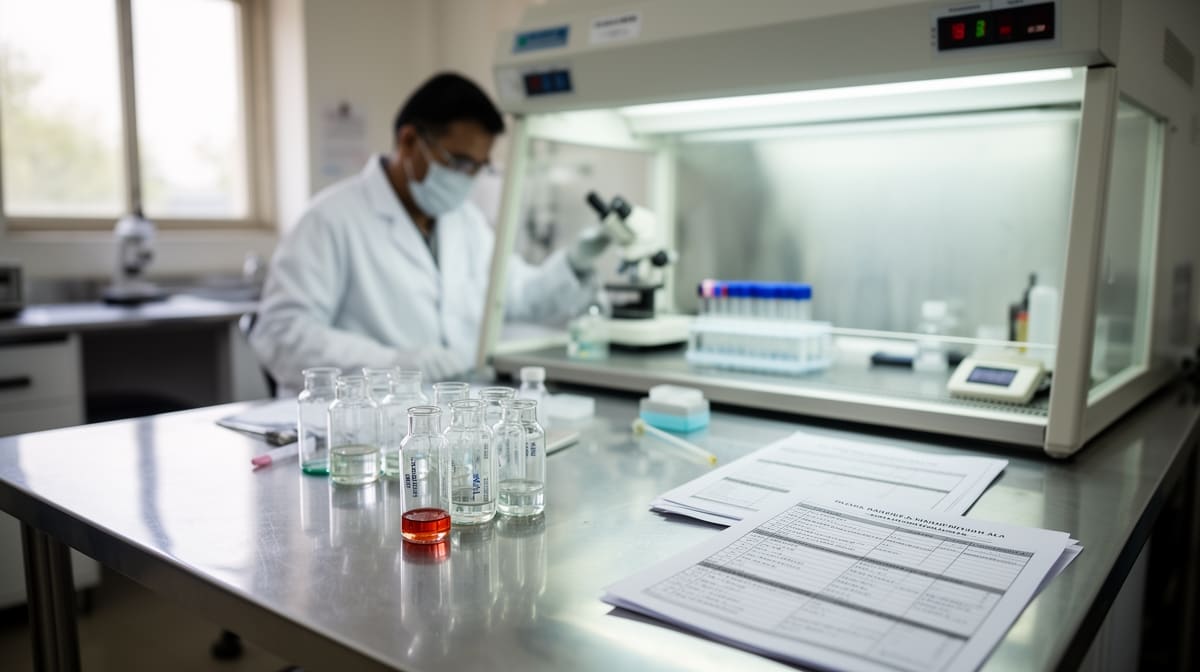
The Additional Public Prosecutor argued that the petitioner’s history of five pending criminal cases under the Maharashtra Prohibition Act, combined with chemical analysis of seized samples, established a pattern of producing toxic liquor. The C.A. reports confirmed the presence of 3% v/v ethyl alcohol, 25 mg v/v chloral hydrate, and copper sulfate - all known to cause liver, kidney, and respiratory damage. The state emphasized that the petitioner’s activities endangered the broader community, satisfying the public order threshold under the MPDA Act.
The Court's Analysis
The Court examined the distinction between "law and order" and "public order" as articulated in Arjun Ratan Gaikwad v. State of Maharashtra. It held that while law and order refers to localized disturbances, public order involves harm to the community at large. The Court found that the petitioner’s conduct met the latter standard.
"It is extremely important to note that, the petitioner is involved in criminal activities, such as producing artificial Toddy/Sindi, by using harmful chemicals."
The Court emphasized that the presence of chloral hydrate and copper sulfate in the seized samples was not incidental but systemic. These substances are not merely adulterants - they are toxic poisons linked to multiple deaths in Maharashtra due to illicit liquor consumption. The fact that the petitioner was caught in the act of selling such liquor, and that the same pattern repeated across five cases over four years, demonstrated a continuing threat.
The Court distinguished the petitioner’s case from Ibbu Kashim, where no poisonous substances were detected. Here, the scientific evidence was conclusive. The absence of arrest in the latest cases was not determinative; the MPDA Act permits detention based on preventive necessity, not punitive intent. The detaining authority had considered the totality of conduct, not isolated incidents.
The Verdict
The petition was dismissed. The Court held that preventive detention under the MPDA Act is justified when an individual systematically produces and sells adulterated liquor containing toxic substances that endanger public health, even if arrests have not been made in the most recent incidents. The orders of detention were upheld as lawful and procedurally sound.
What This Means For Similar Cases
Toxic Substances Elevate Bootlegging to Public Order Threat
- Practitioners must now treat the presence of chloral hydrate, copper sulfate, methanol, or other confirmed toxins as conclusive evidence of public order risk under the MPDA Act.
- Merely proving illegal liquor production is insufficient; the chemical composition must be analyzed and documented to meet the threshold.
Arrest Not a Prerequisite for Detention
- The absence of arrest in recent cases does not invalidate a detention order if the overall pattern demonstrates a continuing threat.
- Detaining authorities may rely on cumulative evidence from multiple pending cases, even if some are still under investigation.
Scientific Reports Trump Witness Testimony
- C.A. reports from forensic labs carry decisive weight in MPDA cases.
- Oral statements from secret witnesses, even if credible, cannot override objective chemical evidence of harm to public health.
- Practitioners should prioritize securing and preserving sample analysis reports in all bootlegging-related detention matters.