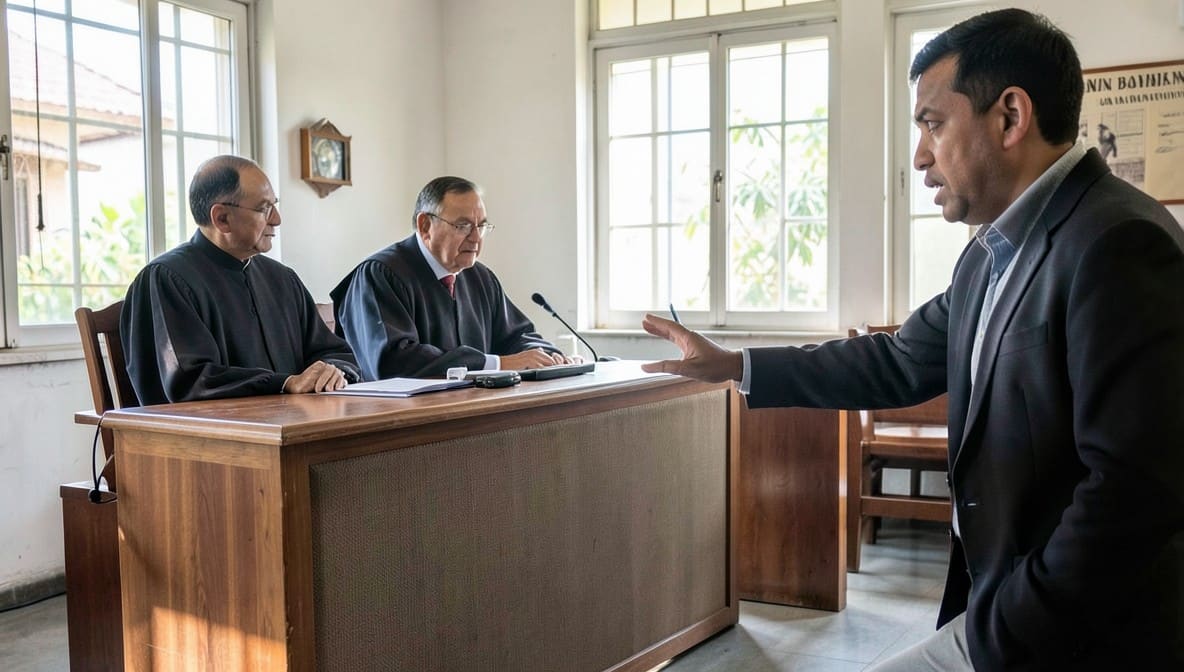
The Bombay High Court has reaffirmed that preventive detention under the Maharashtra Prevention of Dangerous Activities Act cannot be justified by a pattern of ordinary criminal offences unless there is clear evidence of a direct threat to public order. This judgment underscores the constitutional limits on executive power and the necessity of substantive, case-specific justification for depriving liberty without trial.
Background & Facts
The Dispute
The petitioner, Bhima Baban Salve, a 20-year-old labourer from Mukundwadi, Chh. Sambhajinagar, was detained under Section 3(1) of the Maharashtra Prevention of Dangerous Activities of Slumlords, Bootleggers, Drug-Offenders, Dangerous Persons, Video Pirates, Sand Smugglers and Persons Engaged in Black Marketing of Essential Commodities Act, 1981 (MPDA Act). The detention order dated 30.07.2025, issued by the Commissioner of Police (Respondent No. 2), classified him as a "Dangerous Person" under Section 2(b-1) of the MPDA Act. This was subsequently approved by the State Government on 07.08.2025 and confirmed by the Advisory Board on 19.09.2025.
Key Facts
- The petitioner has been named in nine criminal cases registered between 2022 and 2025 across multiple police stations:
- Mukundwadi Police Station: CR No. 395/2022 (Sections 324, 323, 34 IPC), CR No. 432/2022 (Sections 324, 34 IPC), CR No. 340/2023 (Sections 457, 380 IPC), CR No. 501/2023 (Sections 380, 454, 457 IPC), CR No. 202/2025 (Sections 303(2), 62, 3(5) of BNS, 4/25 Arms Act, 135 Maharashtra Police Act)
- Jawaharnagar Police Station: CR No. 243/2024 (Sections 309(4), 309(5) BNS)
- MIDC CIDCO Police Station: CR No. 125/2025 (Sections 309(4), 309(6) BNS), CR No. 133/2025 (Sections 309(6), 3(5) BNS)
- Karmad Police Station: CR No. 144/2025 (Sections 309(6), 126(2) BNS)
- All nine cases are pending trial; none have resulted in conviction.
- The petitioner has been released on bail in three of these cases.
- In the most recent case (CR No. 202/2025), the petitioner was not even arrested.
- A preventive action under Section 110 CrPC (Chapter 04/2024) was initiated in 2024 but subsequently dropped.
- The detaining authority relied exclusively on four recent cases (CR Nos. 125/2025, 133/2025, 144/2025, and 202/2025) to justify the detention.
- The detention order cited "secret witness" statements, which were vague, undated, and stereotypical in nature.
- No attempt was made by the detaining authority to review the bail conditions, seek cancellation of bail, or obtain copies of bail orders.
Procedural History
- 18.03.2025: CR No. 125/2025 registered at MIDC CIDCO Police Station
- 21.02.2025: CR No. 133/2025 registered at MIDC CIDCO Police Station
- 09.04.2025: CR No. 144/2025 registered at Karmad Police Station
- 26.05.2025: CR No. 202/2025 registered at Mukundwadi Police Station
- 30.07.2025: Detention order passed by Commissioner of Police under Section 3(1) MPDA Act
- 07.08.2025: State Government approved detention order
- 19.09.2025: Advisory Board confirmed detention
- 15.10.2025: Writ Petition No. 1674 of 2025 filed before Bombay High Court (Aurangabad Bench)
- 10.03.2026: Case reserved for judgment
- 07.04.2026: Judgment pronounced
Relief Sought
The petitioner sought quashing of the detention order dated 30.07.2025, the approval order dated 07.08.2025, and the confirmation order dated 19.09.2025, on grounds of non-application of mind, lack of live link to public order, and reliance on vague secret witness statements.
The Legal Issue
The central question was whether the repeated commission of individual criminal offences, even if numerous and recent, without evidence of a direct threat to public order, can justify preventive detention under the MPDA Act, and whether reliance on vague, undated secret witness statements satisfies the requirement of subjective satisfaction under Article 226.
Arguments Presented
For the Petitioner
The petitioner’s counsel argued that the offences registered against him - primarily theft, hurt, and possession of arms - are individual in nature and do not rise to the level of threatening public order. He emphasized that the petitioner had been released on bail in three cases, indicating the ordinary criminal justice system was functioning. He contended that the detaining authority failed to establish a live link between the prior offences (2022 - 2024) and the four recent cases cited in the detention order. He relied on Shaik Nazneen v. State of Telangana and Others to argue that law and order disturbances, even if recurrent, cannot be conflated with public order breaches warranting preventive detention. He further challenged the reliability of secret witness statements as stereotypical, unsubstantiated, and lacking specific dates or corroboration.
For the Respondent
The Additional Public Prosecutor argued that the petitioner’s repeated involvement in serious offences, including theft and threats, demonstrated a persistent tendency to commit crimes. He contended that the acts occurred in public places and that secret witness statements corroborated the petitioner’s role in creating an atmosphere of fear. He asserted that the petitioner’s continued criminal conduct despite being on bail indicated a threat to future public order, justifying extraordinary preventive action under the MPDA Act.
The Court's Analysis
The Court undertook a rigorous examination of the distinction between "law and order" and "public order," drawing extensively from Shaik Nazneen v. State of Telangana and Others. It held that while law and order refers to the maintenance of peace between individuals, public order concerns the broader stability of the community, including potential for widespread unrest or collective disturbance.
"The acts alleged against the petitioner, even if true, are directed against individuals and do not indicate a propensity to disturb the peace of the community at large."
The Court noted that the detaining authority failed to demonstrate any nexus between the earlier offences (2022 - 2024) and the four recent cases cited in the detention order. The fact that three cases were already under bail and the fourth did not even result in arrest further undermined the claim of imminent danger. The Court emphasized that the mere existence of pending cases, without evidence of breach of public order, cannot justify deprivation of liberty under a preventive detention statute.
The Court also found the secret witness statements to be legally insufficient. They were vague, lacked specific dates, and were devoid of corroborative material. The detaining authority did not attempt to verify the credibility of these statements, obtain bail orders, or consider whether bail conditions could be modified or cancelled.
"The absence of any attempt to review bail conditions or seek cancellation of bail reveals a mechanical application of mind, not a subjective satisfaction required under Article 226."
The Court further held that the Advisory Board’s confirmation could not cure the procedural and substantive defects in the detention order. The Board’s role is advisory, and its opinion cannot substitute the detaining authority’s independent duty to apply its mind to concrete material.
The Verdict
The petition was allowed. The Court quashed the detention order dated 30.07.2025, the State Government’s approval order dated 07.08.2025, and the Advisory Board’s confirmation order dated 19.09.2025. The petitioner, Bhima Baban Salve, was directed to be released forthwith, unless detained in any other valid case. The rule was made absolute.
What This Means For Similar Cases
Preventive Detention Requires Concrete Public Order Threat
- Practitioners must now demonstrate a direct, tangible link between the detainee’s conduct and a threat to public order - not merely a pattern of individual crimes.
- Routine criminal offences, even if repeated, cannot be aggregated to justify preventive detention unless they collectively indicate a risk of communal unrest or societal disruption.
Secret Witness Statements Are Insufficient Without Corroboration
- Vague, undated, or stereotypical secret witness statements cannot form the sole basis for detention.
- Detaining authorities must independently verify the reliability of such statements and record reasons for accepting them.
- Failure to obtain bail orders or assess bail conditions constitutes a fatal procedural flaw.
Bail Status Must Be Actively Considered
- If a person is on bail, the detaining authority must examine whether bail conditions are being violated or whether cancellation is warranted.
- Merely noting that bail was granted is inadequate; active steps to review or challenge bail must be documented.
- The existence of pending cases alone, without evidence of flight risk or reoffending, cannot justify detention under MPDA Act.