The High Court of Chhattisgarh has set aside the conviction of a maternal uncle under Section 6 of the POCSO Act and Section 376(3) IPC, holding that the prosecution failed to prove the victim's minority through statutorily prescribed documents or an ossification test. The court further ruled that DNA evidence establishing biological paternity proves sexual intercourse but not the absence of consent required for rape under Section 376 IPC, especially when the victim's testimony is unreliable and medical evidence shows no signs of force.
Background & Facts
The Dispute
The appellant, Rajesh Hemla, aged about 26 years, resident of Chinnakodepal Nayapara, Police Station Modakpal, District Bijapur, Chhattisgarh, challenged his conviction and sentence passed by the Additional Sessions Judge (FTC), South Bastar, Dantewada, in Special Sessions (POCSO) Case No. 17/2021. The trial court convicted him under Section 6 of the Protection of Children from Sexual Offences Act, 2012 (POCSO Act) read with Section 376(3) of the Indian Penal Code (IPC), sentencing him to 20 years rigorous imprisonment and a fine of Rs. 1,000/-, with additional rigorous imprisonment for one year in default of payment.
Key Facts
- The victim filed a written complaint (Ex.P/1) at Police Station Modakpal, District Bijapur on 01.02.2021, alleging that after Holi in March 2020, on 24.03.2020, her parents had gone out for work and she was sitting outside her maternal aunt's home at about 7:00 - 8:00 p.m. when the appellant, her maternal uncle, came to her.
- The appellant allegedly took her forcefully to a nearby secluded forest area, tore her clothes, and forcibly committed rape. He told her he would marry her and left.
- She returned home but did not disclose the incident out of fear. Two or three days later, the appellant again came to the house when family members were asleep, harassed her, and pulled her clothes; she escaped.
- Subsequently, on several occasions from 24.03.2020 to 01.02.2021, he forcibly established physical relations with her against her will, due to which she became pregnant.
- Based on the complaint, the police registered FIR (Ex.P/2) for offences under Section 376 IPC and Sections 4 & 6 of the POCSO Act.
- After investigation, a charge-sheet was filed under Section 376(2)(n) IPC and Sections 4 & 6 POCSO Act.
- The trial court framed charges under Sections 376(3), 376(2)(n), 506(ii) IPC and Section 6 POCSO Act.
- The trial court acquitted the appellant of charges under Sections 376(2)(n) and 506(ii) IPC but convicted him under Section 376(3) IPC and Section 6 POCSO Act vide judgment dated 01.12.2022.
- The appellant remained in jail during trial from 03.02.2021 to 17.08.2021 and after conviction from 01.12.2022, totalling about 4 years and 5 months.
Procedural History
- 01.02.2021: Complaint filed at Police Station Modakpal; FIR registered.
- 03.02.2021: Appellant arrested and remanded to judicial custody.
- 17.08.2021: Appellant released on bail during trial.
- 01.12.2022: Trial court judgment convicting appellant under Section 6 POCSO Act and Section 376(3) IPC; sentenced to 20 years RI and fine.
- 01.12.2022: Appellant taken into custody post-conviction.
- 2022: Criminal Appeal No. 1945 of 2022 filed before High Court of Chhattisgarh.
- 06.10.2026: Appeal reserved for judgment.
- 28.10.2026: Judgment delivered allowing appeal.
The Parties' Positions
Appellant's contentions: Prosecution failed to establish victim's age; Dakhil Kharij Register (Ex.P/15) unreliable as author not examined and foundational record not produced; victim stated she was born in 2001; father stated age 18 - 19 years; mother unable to recollect; medical evidence does not support prosecution; relationship was consensual; trial court erred in convicting under POCSO Act.
State's contentions: Dakhil Kharij Register shows victim's DOB as 07.05.2006, proving minority; once minority established, consent immaterial under POCSO Act; medical evidence not sole determinant; DNA report (Ex.P/26) proves appellant is biological father, establishing sexual assault; even if victim major, offence under Section 376 IPC made out.
Relief Sought
The appellant sought setting aside of the conviction and sentence dated 01.12.2022 and acquittal from all charges.
The Legal Issue
The central questions were: (1) Whether the prosecution established beyond reasonable doubt that the victim was a minor at the time of the alleged incident, such that conviction under Section 6 of the POCSO Act and Section 376(3) IPC is sustainable; (2) Alternatively, whether the appellant can be convicted under Section 376 IPC on the basis of evidence on record, despite absence of a formal charge under that provision.
Arguments Presented
For the Appellant
Learned counsel submitted that the prosecution failed to prove the victim's age. The Dakhil Kharij Register (Ex.P/15) was exhibited but the person at whose instance the entry was made was not examined, nor was the foundational record produced. The victim herself stated she was born in 2001. The father admitted recording the date of birth on guessing. The mother expressed inability to recollect. Thus, minority was not conclusively established. Counsel further argued that medical evidence did not support the prosecution case and the trial court erroneously convicted despite finding the relationship consensual. Reliance was placed on Manak Chand @ Mani vs The State Of Haryana (2024) and State of Karnataka vs. Sri. Nagesh (Crl. A. No. 100570 of 2022).
For the Respondent
Learned counsel for the State contended that the trial court rightly convicted after appreciating evidence. The Dakhil Kharij Register vividly shows DOB 07.05.2006, establishing minority. Once minority is proved, consent is immaterial under POCSO Act. Medical evidence is not the sole determinant. The DNA report (Ex.P/26) establishes the appellant as biological father, which is significant for proving sexual assault. Even if the victim is found to be a major, the offence under Section 376 IPC is made out on the material on record, and conviction can be altered under Section 464 CrPC despite absence of formal charge.
The Court's Analysis
The court identified the determination of the victim's age as pivotal, since applicability of the POCSO Act and conviction under Section 376(3) IPC (which requires the victim to be below 16 years) depend on proof that the victim was a "child" under Section 2(1)(d) of the POCSO Act at the relevant time.
The court examined Rule 12 of the Juvenile Justice (Care and Protection of Children) Rules, 2007 and Section 94 of the Juvenile Justice (Care and Protection of Children) Act, 2015, which prescribe a hierarchy of documents for age determination: (i) matriculation or equivalent certificate; (ii) date of birth certificate from school first attended; (iii) birth certificate from corporation, municipal authority, or panchayat; and only in the absence of these, (iv) medical opinion from a duly constituted Medical Board (ossification test or latest medical age determination test). The rule mandates that the document specified in clauses (a)(i), (ii), or (iii) or the medical opinion under clause (b) shall be conclusive proof of age.
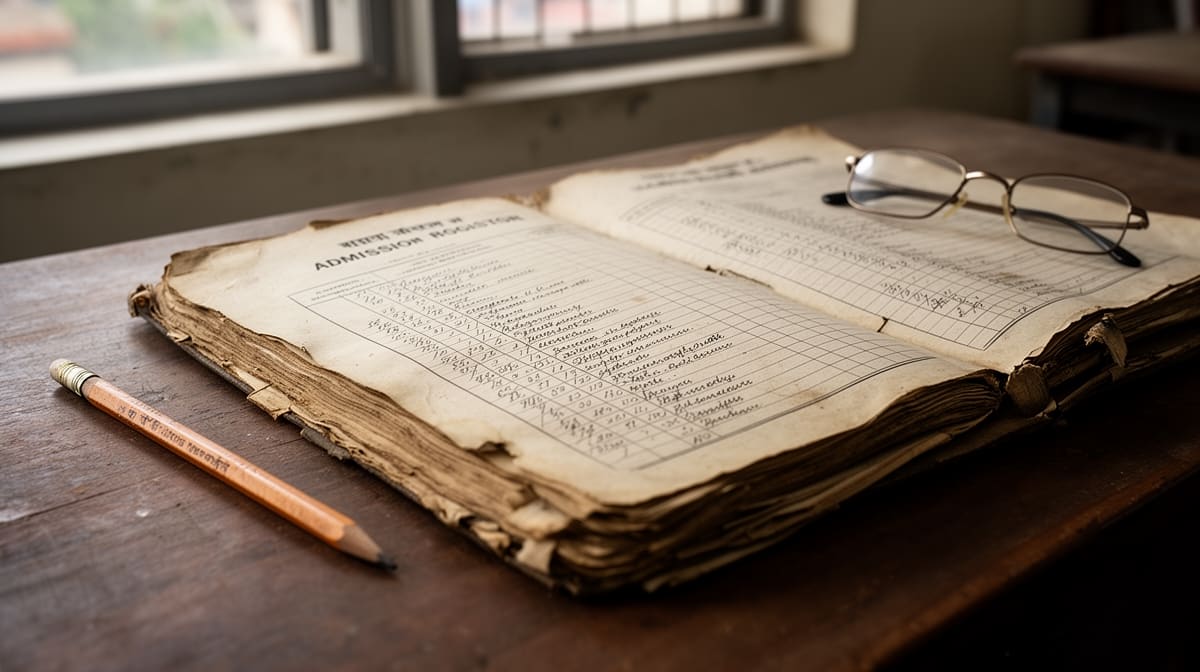
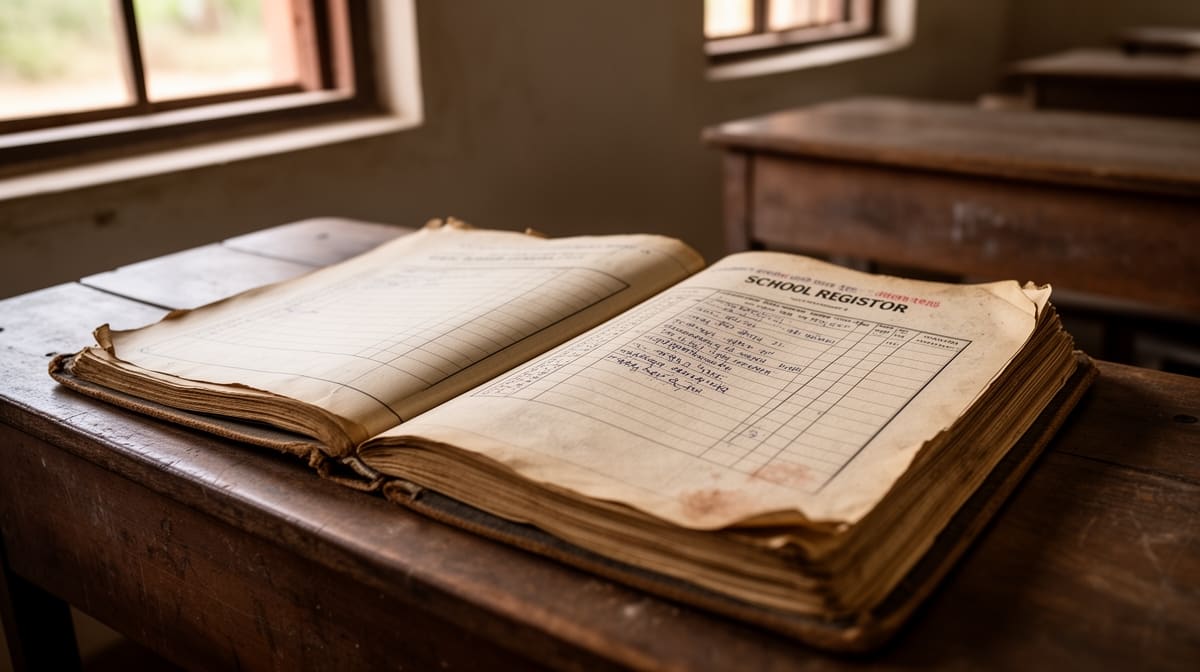
The prosecution relied solely on the Dakhil Kharij Register (Ex.P/15) exhibited through PW/6, the Head Master, who admitted he was not posted at the time of the victim's admission and did not know the basis of the entry. He also admitted he had not admitted the victim. The father (PW/3) admitted recording the date of birth on guessing. The mother (PW/4) denied her police statement. The victim (PW/2) stated she was born in 2001 and turned hostile, denying the alleged incidents.
The court held that the trial court's finding relying on the Dakhil Kharij Register was perverse and contrary to law, citing Manak Chand @ Mani vs The State Of Haryana (2024), where the Supreme Court observed: "The date of birth mentioned in the scholar's register has no evidentiary value unless the person who made the entry or who gave the date of birth is examined." The court further relied on Pynchemalangaki Bareh vs. State of Meghalaya (2026), where the Supreme Court held that the prosecution must obtain the birth certificate from the school, matriculation certificate, or birth certificate from a corporation/municipal authority/panchayat; only in their absence can an ossification test be ordered. Admittedly, no such statutory document was produced, nor was the victim subjected to any ossification test.
The court also rejected the trial court's view that Section 94 of the JJ Act makes the Dakhil Kharij Register a primary document, clarifying that a conjoint reading of Section 34 POCSO Act and Section 94 JJ Act requires courts to follow the steps in Section 94 JJ Act for age determination of a victim under POCSO Act, as fortified by Jarnail Singh vs. State of Haryana (2013) and P. Yuvaprakash v. State (2024).
On the alternative prayer for conviction under Section 376 IPC, the court noted that Section 464(1) CrPC permits an appellate court to alter findings despite omission to frame a charge. However, the victim's evidence was found unreliable: she denied the forceful taking to the forest, denied rape, denied pregnancy, and denied recording the appellant as the father. The doctor (PW/7) deposed no injury on the body or private parts indicating struggle or forceful commission. There was a 7-month delay in lodging the FIR with no reasonable explanation, which dilutes credibility and results in loss of forensic evidence, per Parkash Chand vs. State of Himachal Pradesh (2019). The DNA report (Ex.P/26) proves sexual intercourse and biological paternity but does not establish absence of consent, which is the essence of rape under Section 376 IPC. Citing Santosh Prasad vs. State of Bihar (2020) and Nirmal Premkumar vs. State (2024), the court held it unsafe to convict on such evidence.
The Verdict
The appeal was allowed. The conviction and sentence dated 01.12.2022 passed by the Additional Sessions Judge (FTC), South Bastar, Dantewada, in Special Sessions (POCSO) Case No. 17/2021, were set aside. The appellant was ordered to be released from jail forthwith, if not required in any other case. The court answered both points for determination in favour of the appellant.
What This Means For Similar Cases
Statutory Documents Are Mandatory For Age Determination
- Prosecution must produce matriculation certificate, school birth certificate, or government-issued birth certificate as prescribed under Section 94 JJ Act and Rule 12 JJ Rules, 2007.
- A school admission register (Dakhil Kharij) without testimony of the entry-maker or informant has no evidentiary value for proving age.
- Ossification test is the fallback, not the first resort, and must be ordered by the court if statutory documents are unavailable.
- Courts cannot rely on a document merely because it comes from government custody; foundational proof is non-negotiable.
DNA Evidence Proves Intercourse, Not Rape
- DNA establishing biological paternity proves sexual intercourse but does not prove lack of consent.
- In the absence of injuries, medical corroboration, or reliable victim testimony, conviction under Section 376 IPC cannot rest solely on DNA.
- Delay in FIR (here, 7 months) without explanation weakens the prosecution case and results in loss of corroborative forensic evidence.
Appellate Power Under Section 464 CrPC Is Not Unlimited
- While Section 464(1) CrPC allows appellate courts to convict under an uncharged offence if evidence supports it, the evidence must still meet the standard of proof beyond reasonable doubt.
- A hostile victim, absence of medical evidence of force, and unexplained delay collectively make conviction unsafe.