The Bombay High Court has clarified that permissive use of a registered trademark, even among family members under a verbal agreement, terminates upon breach of the underlying conditions. This ruling reinforces that trademark rights are not diluted by informal arrangements and that unauthorized continuation of use after termination constitutes actionable infringement.
Background & Facts
The Dispute
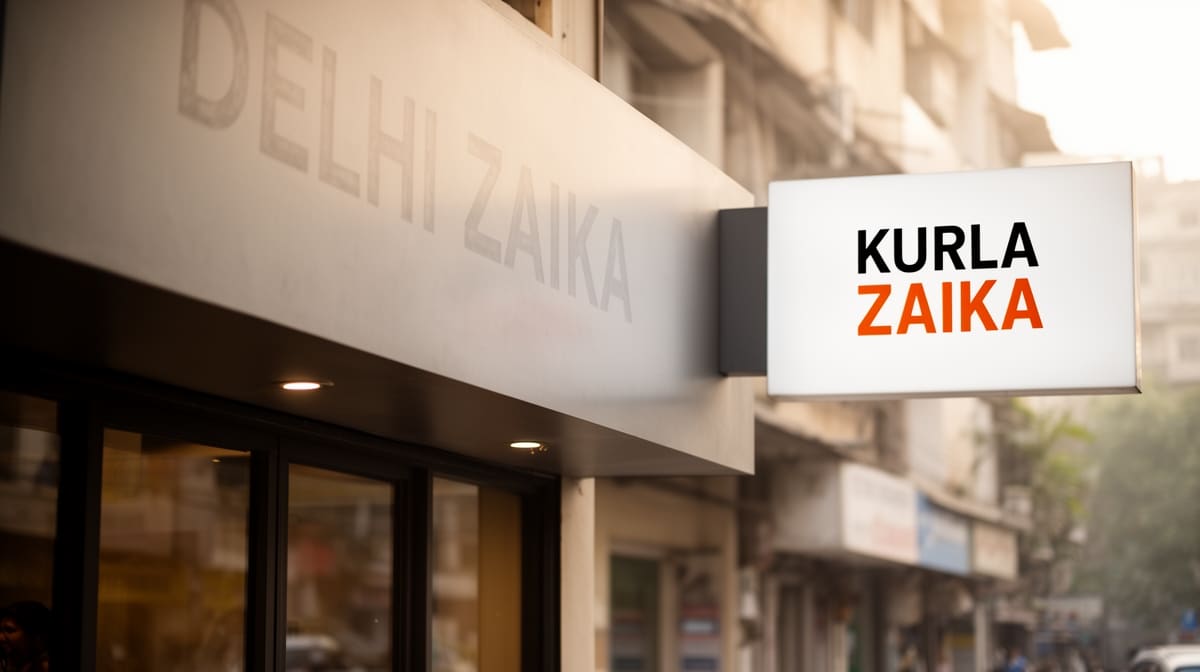
The plaintiff, operating under the registered trademark "DELHI ZAIKA - The Pure Taste of Delhi", alleges that Defendant No. 2, its biological brother, was granted permissive use of the mark under a verbal partnership agreement to operate a restaurant from a common kitchen in Kurla. The arrangement was conditional on profit-sharing and joint operations. In 2022, Defendant No. 2 established a separate kitchen and began operating independently, yet continued using the plaintiff’s registered trademark on signage, menus, and social media, adding only the word "Kurla".
Procedural History
- 2010: Plaintiff began using the mark "DELHI ZAIKA" in restaurant operations
- January 13, 2011: Plaintiff filed trademark application in Class 43
- February 29, 2016: Trademark registration granted
- 2022-2023: Defendant No. 2 establishes separate kitchen and continues using the mark
- 2025: Plaintiff files Commercial IP Suit for infringement, passing off, and copyright violation
- March 11, 2026: Court hears interim application for ad-interim injunction
Relief Sought
The plaintiff seeks an ad-interim injunction restraining the defendants from using the registered trademark "DELHI ZAIKA" in any form, including on digital platforms, menus, and physical signage, pending final adjudication.
The Legal Issue
The central question was whether permissive use of a registered trademark can continue after the underlying conditional agreement has been breached, and whether such continued use constitutes prima facie infringement under the Trade Marks Act, 1999.
Arguments Presented
For the Petitioner
The plaintiff argued that the trademark registration certificate establishes exclusive proprietary rights. The verbal agreement was strictly conditional on shared operations and profit-sharing; once Defendant No. 2 established a separate kitchen, the permissive license terminated. Continued use of the identical mark, even with the addition of "Kurla", creates likelihood of public confusion. The plaintiff cited extensive promotional activity, awards, and five operational outlets to establish goodwill. Reliance was placed on Bajaj Auto Ltd. v. TVS Motor Co. Ltd. for the principle that unauthorized use of a registered mark, even with minor modifications, amounts to infringement.
For the Respondent
The respondents did not appear or file any written submissions. Service was refused, and no defense was raised before the court. The court noted the absence of any counter-affidavit or rebuttal evidence.
The Court's Analysis
The Court examined the nature of permissive use under trademark law and found that such use is not absolute but contingent on the terms of the underlying understanding. The registration certificate, dated 2016, conferred exclusive rights to the plaintiff. The court emphasized that permissive use is revocable upon breach of conditions.
"It is specifically pleaded that Defendant No. 2 was permitted under the mutual arrangement and understanding to use the trade mark subject to condition that there would be sharing of profits. In the year 2023, the Defendants have prima facie established a new kitchen at Kurla and that being so, permissive user by Plaintiff ceased..."
The court held that the addition of "Kurla" to the registered mark does not alter its essential identity or eliminate the likelihood of confusion. The plaintiff’s evidence of reputation, including awards and digital presence, further strengthened the case for likelihood of deception. The court rejected any notion that familial relationship negates trademark rights. The absence of any defense from the respondents reinforced the prima facie case. The court concluded that the balance of convenience and irreparable harm favored the plaintiff.
The Verdict
The plaintiff won. The Court held that permissive use of a registered trademark terminates upon breach of its conditions, and continued use thereafter constitutes prima facie infringement. An ad-interim injunction was granted restraining the defendants from using the mark "DELHI ZAIKA" in any form pending final disposal.
What This Means For Similar Cases
Permissive Use Is Conditional and Revocable
- Practitioners must document licensing terms in writing to avoid ambiguity
- Verbal permissions, even among family, do not override statutory trademark rights
- Breach of conditions (e.g., separate operations, non-payment of royalties) automatically terminates permissive use
Minor Modifications Do Not Avoid Infringement
- Adding geographic identifiers like "Kurla" or "Branch" to a registered mark does not render it non-infringing
- Courts will assess overall impression on the public, not technical alterations
- Use of identical word marks with trivial suffixes remains actionable under Section 29(1) of the Trade Marks Act
Non-Appearance by Defendant Strengthens Prima Facie Case
- Courts are more likely to grant interim relief when defendants refuse service or remain silent
- Registration certificate + evidence of goodwill + unauthorized use = sufficient for ad-interim injunction
- No need to prove actual confusion; likelihood of confusion suffices under Section 29(2)