The Calcutta High Court has reaffirmed that a claim to pension benefits cannot be sustained in the absence of primary documentary evidence, even where administrative delays have contributed to evidentiary loss. The judgment underscores that the burden of proving eligibility rests squarely on the claimant, and mere assertion, unsupported by verifiable records, cannot override procedural and evidentiary norms.
Background & Facts
The Dispute
The petitioner, Suvra Kumar Dey, a permanent employee of the West Bengal Transport Corporation Limited (formerly Calcutta Tramways Company (1978) Limited), claimed entitlement to pension under the Calcutta Tramways Company (1978) Limited Employees’ Pension Regulation - 2001. The Corporation introduced the pension scheme on 24.12.2001 and allowed employees to opt in by submitting a formal option form by 24.06.2002. The petitioner alleged that he submitted his duly signed option form to his Foreman on 20.06.2002, within the stipulated deadline, and that the form was subsequently lost or misfiled by the Corporation.
Key Facts
- The petitioner joined the Corporation in April 1979 and retired on superannuation on 31.10.2020.
- The pension scheme required submission of an option form by 24.06.2002.
- The petitioner claimed he submitted the form on 20.06.2002 at the Tollygunj Tram Engineering Department (Rolling Stock Depot).
- He alleged that the Foreman acknowledged receipt by affixing the office seal and signature.
- The original option form was not found in any official records.
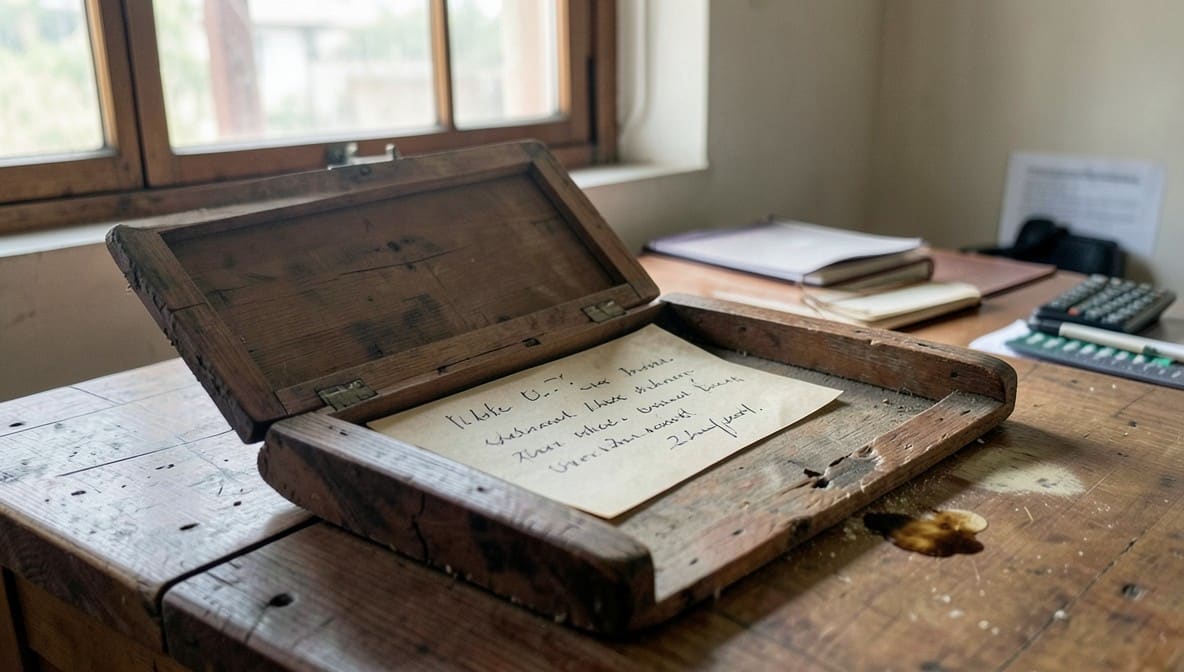
- The petitioner relied on an entry in the peon book dated 20.06.2002 (Page 77) as proof of submission.
- The peon book entry was made in the petitioner’s own handwriting.
- The entry on Page 77 lacked the standard receiving signature from the Nonapukur Office, unlike Pages 76 and 78 which bore such acknowledgments.
- The petitioner was officiating as a Clerk on 20.06.2002 and had access to the peon book.
- The petitioner submitted a photocopy of the option form, but the Chief Accounts Officer confirmed the original could not be located.
- The petitioner made no formal complaint about the loss of the form until 2013.
- The petitioner had not raised any objection to provident fund deductions or pay slips between 2003 and 2013, despite claiming to be a pension optee.
Procedural History
- 24.06.2002: Alleged submission of pension option form.
- 24.06.2013: Petitioner first formally requested search and reconstruction of his pension file.
- 2014: Writ Petition No. W.P. 346 of 2014 filed before the Calcutta High Court.
- 07.08.2019: High Court directed the Managing Director to conduct an inquiry into the genuineness of the option form and peon book entry.
- 16.01.2020: Managing Director issued order concluding the peon book entry was an afterthought and the option form was not submitted.
- 06.05.2024: High Court directed completion of further inquiry.
- 19.06.2024: Managing Director issued final order reaffirming the 2020 findings.
- 12.02.2021: Writ Petition No. WPO 124 of 2021 filed challenging the 2020 order.
- 05.05.2026: Judgment delivered by the Calcutta High Court.
The Parties' Positions
For the Petitioner
- Claimed he submitted the option form on 20.06.2002.
- Relied on peon book entry as proof of submission.
- Argued that the Corporation’s negligence in misplacing documents should not penalize him.
- Cited Hardip Singh, Noor Aga, and State of Rajasthan v. Mahendra Nath Sharma to assert that peon book entries made in regular course of business are presumed reliable under Section 35 of the Evidence Act.
- Contended that failure to examine the Foreman or conduct handwriting analysis rendered the inquiry defective.
For the Respondent/Corporation
- Argued that the original option form was never found in records.
- Highlighted that the peon book entry was self-made, unacknowledged, and inconsistent with standard practice.
- Pointed to the petitioner’s own admission that he made the entry.
- Cited Shri Sitaram Sugar Co. v. Union of India and NALSA v. Union of India to argue that writ jurisdiction is not a forum for re-appreciating evidence.
- Maintained that the inquiry was conducted fairly and in compliance with the Court’s 2019 direction.
Relief Sought
The petitioner sought:
- A writ of mandamus directing the Corporation to treat him as a pension optee.
- Reconstruction of his service book to include the option form.
- Release of current pension and arrears from November 2020.
- Setting aside of the Managing Director’s order dated 16.01.2020 and 19.06.2024.
The Legal Issue
The central question was whether the petitioner discharged the burden of proving submission of the pension option form by 20.06.2002, in the absence of the original document, and whether an unacknowledged, self-made peon book entry could serve as sufficient proof under administrative law and the Evidence Act.
Arguments Presented
For the Petitioner
The petitioner’s counsel, Mr. Debdutta Basu, argued that the peon book entry dated 20.06.2002, made in the regular course of duty, was admissible under Section 35 of the Evidence Act, 1872 as a business record. He relied on Hardip Singh v. State of Punjab and State of Rajasthan v. Mahendra Nath Sharma to assert that entries made before litigation arose (ante litem motam) carry a presumption of truth. He contended that the Corporation’s failure to preserve documents and to examine the Foreman or conduct handwriting analysis rendered the inquiry incomplete. He emphasized that pension is a statutory right, not a bounty, and administrative negligence should not deprive a long-serving employee of his entitlement.
For the Respondent/State
The Corporation, represented by Mr. Kalyan Bandyopadhyay and Ms. Debolina Chattaraj, argued that the absence of the original option form was fatal to the claim. They highlighted that the peon book entry was made by the petitioner himself, lacked the mandatory receiving signature, and deviated from established procedural norms. They cited Shri Sitaram Sugar Co. v. Union of India to argue that writ courts should not re-appreciate evidence in service disputes. The final inquiry report, supported by the Works Manager and the enquiry committee, was consistent and procedurally sound. The petitioner’s admission that he made the entry and his failure to produce any corroborative evidence undermined his case.
The Court's Analysis
The Court undertook a rigorous evaluation of the evidentiary landscape, emphasizing the primacy of primary evidence in administrative proceedings. The absence of the original pension option form was deemed decisive. As the Court observed, "primary documentary evidence carries the highest probative value. Without the original document, the petitioner’s claim lacks foundational proof, and the burden of proof remains undischarged."
The Court further examined the peon book entry on Page 77. It noted that while entries in business records are presumed reliable under Section 35 of the Evidence Act, this presumption is rebuttable. The entry in question was not merely unacknowledged - it was the only entry on that date, made by the petitioner himself, and conspicuously devoid of the receiving signature that appeared on adjacent pages. The Court held: "A mere entry, without a receiving signature or acknowledgment, does not establish delivery. Office procedure clearly requires receipt endorsement. The deviation from standard practice - especially when adjacent entries contain signatures - renders this entry unreliable."
The Court also considered the petitioner’s own admission that he made the entry. This admission, the Court found, was not merely an oversight but a critical self-incriminating fact that directly undermined his claim. The Court noted: "Such unilateral entries are self-serving statements, which require independent corroboration, which is not available here."
The concurrent findings of the enquiry committee and the Works Manager were accorded significant weight. The Court reiterated that "concurrent findings of fact are given significant weight in judicial review. This is not to be interfered with, unless shown to be perverse."
The Court rejected the petitioner’s argument that administrative negligence should shift the burden of proof. It held: "Even if loss is assumed, the petitioner must first establish his foremost submission through credible evidence. In this case absence of any acknowledgment receipt copy and any other corroborative record have rendered such foundational fact of submission itself as unproven."
The Court also dismissed procedural objections, finding that the petitioner had been afforded multiple opportunities to present his case, review statements, and submit objections. The inquiry process complied with the principles of audi alteram partem. The Court concluded: "Minor procedural objections do not amount to violation of natural justice unless prejudice due to any alleged unfairness in the process is demonstrated, which is absent here."
"The conclusion that the entry was an afterthought is a reasonable inference drawn from missing signature, lack of records and the petitioner’s conduct. Since the finding is not arbitrary or perverse, it duly withstands judicial scrutiny."
The Verdict
The writ petition was dismissed without any order as to costs. The Calcutta High Court upheld the findings of the Managing Director dated 19.06.2024, holding that the petitioner failed to discharge the burden of proving submission of the pension option form. The Court found no basis to interfere with the administrative conclusion that the peon book entry was an afterthought and that the original option form was never received. The petitioner’s claim for pension arrears and reconstruction of his service book was rejected.
What This Means For Similar Cases
Documentary Evidence Is Non-Negotiable
- Practitioners must advise clients that pension claims based on lost documents require contemporaneous, corroborative evidence.
- Photocopies or self-made entries without official acknowledgment are insufficient to establish entitlement.
- The burden of proof remains on the claimant, even where administrative negligence is alleged.
Business Records Are Presumptive, Not Conclusive
- Entries in peon books, registers, or service records are admissible under Section 35 of the Evidence Act, but only if they meet procedural norms.
- Self-made entries, especially by the claimant, are inherently suspect and require independent corroboration.
- Deviations from standard practice (e.g., missing signatures) can rebut the presumption of reliability.
Judicial Restraint in Service Disputes
- Writ courts will not re-appreciate evidence in service matters unless findings are perverse or procedurally flawed.
- Administrative inquiries conducted in compliance with court directions and natural justice are entitled to deference.
- Delay in producing evidence weakens, rather than strengthens, a claim.