The Supreme Court has affirmed that the non-production of tainted currency notes does not automatically vitiate a conviction under the Prevention of Corruption Act, provided the chain of custody and forensic verification are otherwise intact. In this case, the Court upheld the conviction of a former constable for demanding bribe, while significantly reducing the sentence on humanitarian grounds.
Background & Facts
The Dispute
The appellant, Raj Bahadur Singh, was a Constable in the Excise Department of Uttarakhand when he was accused of demanding a bribe of Rs. 500 from Kashmir Singh (PW1), a local contraband liquor trader. The incident occurred during a raid on Singh’s village on 16.06.1990, where Singh was allegedly threatened with false prosecution unless he paid the sum. Singh filed a complaint with the Superintendent of Police (Vigilance) on 18.06.1990, leading to a trap operation on 19.06.1990 at a restaurant in Khatima.
Key Facts
- The complainant, Kashmir Singh (PW1), had been raided three times previously for contraband liquor trade.
- On 18.06.1990, Singh handed over five Rs. 100 notes to Inspector Mahender Pal Singh, who tainted them with Phenolphthalein powder in the presence of two independent witnesses.
- On 19.06.1990 at 11:00 a.m., the trap was executed. The appellant was observed accepting the notes.
- The appellant’s hands were washed with Sodium Carbonate solution, which turned pink, confirming the presence of phenolphthalein.
- A panchnama was prepared on the spot documenting the recovery.
- An FIR (No. 114/1990) was registered on 19.06.1990 under the Prevention of Corruption Act, 1988.
- The charge sheet was filed under Section 7 and Section 13(1)(d) read with Section 13(2) of the P.C. Act.
- The complainant’s testimony was corroborated by Sree Jeet Singh (PW2), an independent witness.
- The restaurant owner, a defense witness, denied the occurrence of the trap in his establishment.
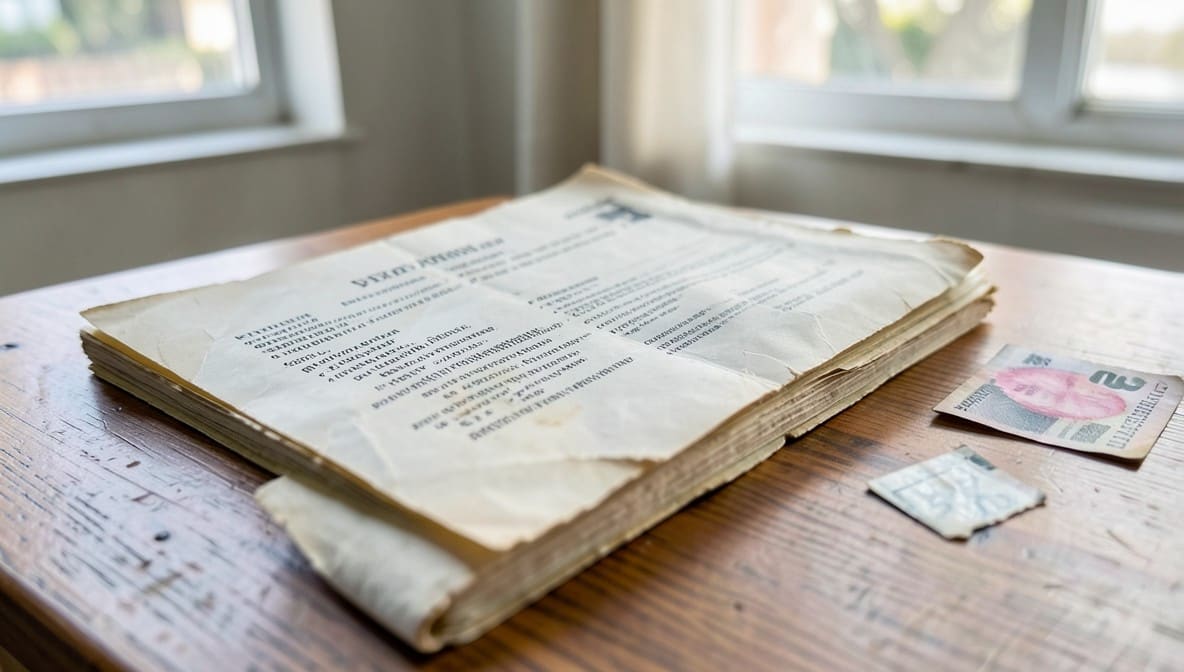
- The tainted currency notes were not produced in court.
Procedural History
- 16.06.1990: Raid on complainant’s village; alleged demand for bribe.
- 18.06.1990: Complaint filed with Superintendent of Police (Vigilance).
- 19.06.1990: Trap conducted; appellant arrested; FIR registered.
- 1990: Investigation completed; charge sheet filed as Case No. 368/1990.
- 03.03.2006: Trial Court convicted appellant under Section 7 (R.I. 1 year + fine Rs. 1,000) and Section 13(2) (R.I. 2 years + fine Rs. 2,000).
- 13.04.2012: High Court of Uttarakhand dismissed appeal and upheld conviction.
- 21.08.2012: Supreme Court refused exemption from surrender.
- 15.10.2012: Appellant surrendered and was in custody.
- 07.01.2013: Supreme Court granted bail after 2 months and 24 days of incarceration.
- 13.04.2012: High Court judgment appealed to Supreme Court.
- 13.03.2026: Supreme Court delivered judgment.
The Parties' Positions
Appellant: Argued the case was fabricated due to personal enmity; complainant had motive to implicate him to continue illegal liquor trade; contradictions in witness statements; PW2 was an interested witness; trap was collusive; defense opportunity under Section 21 of P.C. Act was denied; tainted currency notes were not produced.
Respondent (State): Maintained the prosecution case was built on reliable ocular evidence; complainant acted solely as a victim; trap was independently organized by Vigilance; PW2 was not an interested witness; contradictions were minor and immaterial; Section 313 Cr.P.C. statement was recorded; non-production of currency notes was not raised below.
Relief Sought
The appellant sought quashing of conviction and sentence. The State sought dismissal of the appeal. The appellant also sought release on account of age and time already served.
The Legal Issue
Did the failure to produce the tainted currency notes in court fatally undermine the prosecution’s case under the Prevention of Corruption Act, and was the appellant denied a fair opportunity to examine himself as a defense witness under Section 21 of the P.C. Act?
Arguments Presented
For the Appellant
The appellant’s counsel contended that the non-production of the currency notes was a fatal irregularity, as they constituted the primary physical evidence. He argued that the complainant’s testimony was unreliable due to his criminal background and motive to retaliate. He further claimed that PW2, though termed an independent witness, was acquainted with the complainant and thus biased. He asserted that Section 21 of the P.C. Act granted the accused a statutory right to examine himself as a defense witness, which was denied. He also argued that the trap was orchestrated by the complainant and police, rendering the entire operation tainted.
For the Respondent
The State countered that the prosecution established a complete chain of evidence through the testimony of PW1 and PW2, supported by forensic verification via phenolphthalein reaction and the panchnama. The complainant’s prior encounters with the excise department were not evidence of malice but context for his fear. The High Court had correctly assessed PW2 as a neutral witness, not an interested one. The non-production of currency notes was not raised at any stage before the Trial Court or High Court and could not be raised for the first time before the Supreme Court. The appellant had ample opportunity to testify under Section 313 Cr.P.C., and Section 21 does not create an absolute right to examine oneself as a witness.
The Court's Analysis
The Supreme Court conducted a meticulous review of the evidence, emphasizing that the prosecution’s case rested on ocular testimony and forensic corroboration. The Court noted that the complainant’s account was detailed, consistent, and withstands cross-examination. The presence of phenolphthalein on the appellant’s hands, confirmed by the Sodium Carbonate test, provided objective corroboration of the transaction.
"Perusal of the deposition of this witness shows that he gave a detailed description about the pre-trap steps taken by the authorities, the details of the trap conducted by the authorities and post-trap measures taken by the authorities. PW-1 was subjected to cross-examination and he stood firm to his version."
The Court rejected the argument that PW2 was an interested witness, holding that mere acquaintance with the complainant does not render a witness biased. The burden to prove hostility or interest lies on the defense, which was not discharged.
Regarding the non-production of currency notes, the Court held that this ground was not raised before any lower court and was introduced for the first time in oral arguments before the Supreme Court. The Court relied on the panchnama and forensic report as sufficient to establish the chain of custody.
"It may not be out of place to state here that the statement of accused under Section 313 Cr.P.C. was recorded."
The Court clarified that Section 21 of the P.C. Act does not confer a right to examine oneself as a witness in the same manner as a prosecution witness. The accused may make a statement under Section 313 Cr.P.C., which was done here, and that satisfies due process.
The Court also dismissed the claim of collusion in the trap, noting that the complainant merely reported the crime and had no role in selecting the trap team or timing.
The Verdict
The appeal was dismissed in part. The Supreme Court upheld the conviction under Section 7 and Section 13(2) of the Prevention of Corruption Act, 1988. However, the sentence was modified: rigorous imprisonment of six months for the offense under Section 7, and rigorous imprisonment of one year for the offense under Section 13(2), to run concurrently. The appellant had already undergone 2 months and 24 days of custody, which was taken into account. No fine was modified.
What This Means For Similar Cases
Non-Production of Physical Evidence Is Not Fatal If Chain Is Proven
- Practitioners must argue that forensic reports, panchnamas, and witness testimony can substitute for physical evidence if the chain of custody is unbroken.
- Failure to produce currency notes or seized items will not automatically lead to acquittal if corroborative evidence is robust.
- Courts will not entertain new grounds raised for the first time in the Supreme Court unless they go to the root of the trial’s fairness.
Shadow Witnesses Are Admissible If Not Proven Interested
- Independent witnesses need not be strangers to the complainant; mere acquaintance does not equate to interest.
- The defense must present specific evidence of bias or hostility to discredit a witness.
- Courts will rely on the totality of circumstances, including forensic and procedural consistency, to assess credibility.
Section 21 PC Act Does Not Guarantee Self-Examination as Witness
-
The right to testify under Section 21 is not a statutory right to be called as a defense witness.
-
Section 313 Cr.P.C. remains the primary mechanism for an accused to explain his version.
-
Failure to testify under Section 313 cannot be used to claim denial of natural justice.
-
Always document and preserve forensic evidence even if not formally produced.
-
Challenge witness credibility with concrete evidence of bias, not mere suspicion.
-
Raise all evidentiary objections at the earliest opportunity to avoid waiver.