The Karnataka High Court has reaffirmed the statutory obligation of insurers to compensate victims of motor accidents, even when the vehicle was driven by an unlicensed minor, reinforcing the doctrine of 'pay and recover' as a vital safeguard for third-party claimants under the Motor Vehicles Act.
Background & Facts
The Dispute
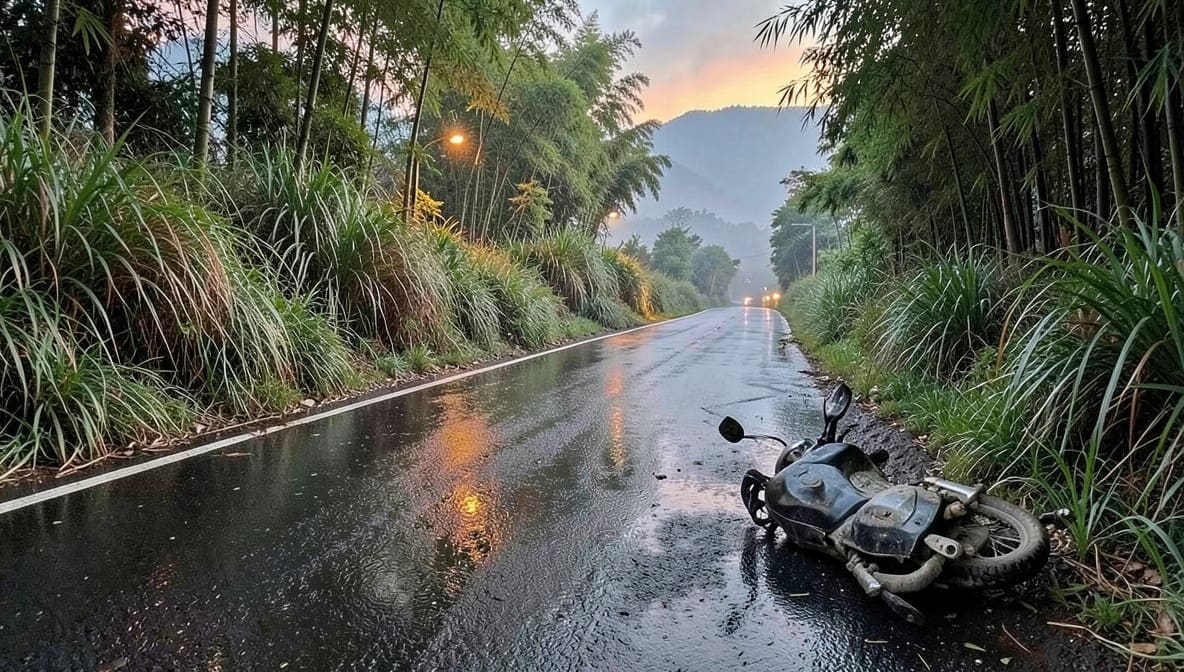
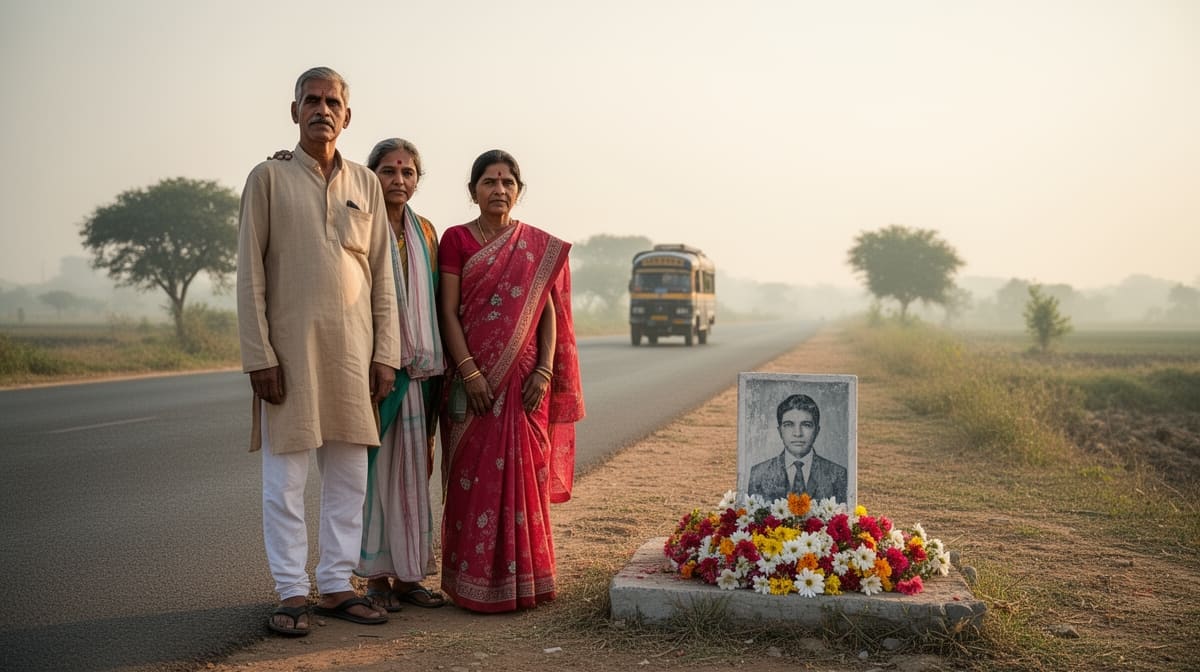
The dispute arises from a fatal motor accident that occurred on 08.05.2018, involving a tractor bearing Engine No. AJ5537B01501 and Chassis No. MEA629A1AJ2174681. The deceased, Sri Naveen Kumar N., aged 12 years and a student, died as a result of injuries sustained in the accident. The claim petition was filed before the Motor Accident Claims Tribunal (MACT), Bengaluru City, seeking compensation for loss of dependency and other heads of damages.
Key Facts
- The deceased was a minor student with no income at the time of death.
- The tractor was insured under a valid policy issued by Reliance General Insurance Company Limited.
- The driver of the tractor was alleged to be a minor named Bhaskar, who did not possess a valid driving licence.
- The owner of the tractor, Narasimhapappa, did not file a written statement or appear as a witness to rebut allegations of negligence in entrusting the vehicle to an unlicensed minor.
- The claimant examined himself as PW1 and an eyewitness as PW2, and marked documents Exs. P1 to P15.
- The insurer marked Exs. R1 to R3, including the insurance policy and vehicle registration records.
- The insurer contended that the vehicle was being driven by a minor without a licence, and that the deceased was either a passenger on the mudguard or the driver himself.
- The owner/insured failed to produce any evidence to establish that reasonable care was taken in entrusting the vehicle to a licensed driver.
Procedural History
- 08.05.2018: Motor accident occurred resulting in death of 12-year-old Naveen Kumar N.
- 2018: Claim petition (MVC No. 5566/2018) filed before MACT, Bengaluru City (SCCH-4).
- 03.11.2022: Tribunal awarded compensation of Rs. 15,97,000/- with 6% interest per annum from the date of petition.
- 2023: Three appeals filed before the Karnataka High Court:
- MFA No. 468/2023: Filed by Reliance General Insurance Company Limited challenging quantum and liability.
- MFA No. 296/2023: Filed by claimant seeking enhancement of compensation.
- MFA No. 820/2023: Filed by owner of tractor challenging joint and several liability.
- 17.03.2026: Appeals heard and reserved.
- 05.06.2026: Judgment pronounced by the Division Bench.
The Parties' Positions
For the Insurer (Appellant in MFA No. 468/2023):
- Argued that the vehicle was entrusted to a minor without a valid licence, violating policy conditions.
- Contended that the deceased was either the driver or an unauthorized passenger on the mudguard, making the insurer not liable.
- Relied on Beliram v. Rajender Kumar to argue that 'pay and recover' should not apply where gross negligence is established.
- Asserted that the insurer should not be compelled to pay when the insured breached fundamental policy terms.
For the Owner/Insured (Appellant in MFA No. 820/2023):
- Argued that the compensation awarded was excessive.
- Claimed that the deceased himself was driving the tractor and therefore could not claim compensation as a tortfeasor.
- Did not file a written statement or appear as a witness to substantiate this claim.
For the Claimant (Appellant in MFA No. 296/2023):
- Argued that the notional income of Rs. 10,000/- per month was too low.
- Sought enhancement of compensation under conventional heads.
- Contended that the Tribunal erred in awarding Rs. 25,000/- for loss of love and affection and Rs. 5,000/- for transportation of the body.
Relief Sought
- MFA No. 468/2023: Seek reversal of 'pay and recover' direction and exemption from liability.
- MFA No. 820/2023: Seek reduction in compensation and exemption from joint liability.
- MFA No. 296/2023: Seek enhancement of compensation to Rs. 19,60,000/- and deletion of unwarranted heads.
The Legal Issue
The central questions were: (1) Whether the insurer can be absolved of statutory liability under the Motor Vehicles Act merely because the vehicle was driven by an unlicensed minor, and (2) Whether the Tribunal erred in assessing notional income and awarding compensation under conventional heads for the death of a minor.
Arguments Presented
For the Appellant/Petitioner
The insurer relied on Beliram v. Rajender Kumar to argue that when the insured consciously entrusts a vehicle to an unlicensed person, especially a minor, and such breach is fundamental to the accident, the insurer should not be bound by the 'pay and recover' doctrine. It further contended that the deceased was either the driver or an unauthorized passenger on the mudguard, invoking Gadhilingappa v. K. Guleppa and Shivraj v. Rajendra to deny liability. The insurer argued that the policy conditions were breached, and the Tribunal’s direction to pay and recover was legally unsustainable.
For the Respondent/State
The claimant contended that the insurer’s statutory liability under Section 147 of the Motor Vehicles Act is absolute and cannot be defeated by policy exclusions or the insured’s negligence. Citing National Insurance Co. Ltd. v. Swaran Singh and New India Assurance Co. Ltd. v. Kamla, the claimant argued that the 'pay and recover' principle exists precisely to protect third-party victims. The claimant also challenged the Tribunal’s notional income calculation, urging adoption of the Karnataka State Legal Services Authority’s chart, which prescribed Rs. 12,500/- per month for skilled workers in 2018.
The Court's Analysis
The Court began by affirming that the occurrence of the accident and the death of the deceased were not in dispute. The key issue was the insurer’s liability in light of the unlicensed driver and the absence of rebuttal from the owner.
"The initial burden lies on the insurer to prima facie establish that the driver of the offending vehicle did not possess a valid and effective driving licence. Once such a burden is discharged, the onus shifts to the owner of the vehicle to establish that the driver possessed a valid licence or that reasonable care was taken to ensure that the vehicle was entrusted to a duly licensed person."
The Court noted that the owner failed to file a written statement or appear as a witness to rebut the insurer’s claim that the driver was a minor without a licence. This failure was fatal to the owner’s defence.
The Court then examined the settled jurisprudence from the Supreme Court. In Swaran Singh, it was held that mere absence of a valid licence does not absolve the insurer of liability to third parties. In Kamla, the Court reiterated that while the insurer may not indemnify the insured, it remains statutorily liable to pay the claimant with liberty to recover from the insured.
The Court distinguished Beliram, noting that in that case, the licence had expired long before the accident and there was clear evidence of gross negligence. Here, the owner’s silence and non-appearance rendered the insurer’s defence incomplete.
Regarding the passenger issue, the Court acknowledged Gadhilingappa but held that even if the deceased was on the mudguard, the insurer’s liability to third parties under Section 147 remains intact, as per Swaran Singh.
On the quantum of compensation, the Court relied on the recent judgment in Hitesh Nagjibhai Patel v. Bababhai Nagjibhai Rabari, which mandates that for minors, notional income must be based on minimum wages for skilled workers in the State. The Karnataka State Legal Services Authority’s chart for 2018 fixed this at Rs. 12,500/- per month, which the Court adopted.
The Court further held that compensation under 'loss of love and affection' and 'transportation of the dead body' were duplicative of funeral expenses and must be deleted. The Tribunal’s award of Rs. 15,000/- under 'loss of estate' was upheld.
"The doctrine of 'pay and recover' serves to balance the rights of the victim and the insurer. While the insurer cannot be compelled to bear liability beyond the terms of the contract, the statutory duty to compensate third parties is non-negotiable."
The Verdict
The claimant succeeded in part. The Court set aside the Tribunal’s award of Rs. 15,97,000/- and enhanced the compensation to Rs. 19,60,000/-. The rate of interest at 6% per annum from the date of petition till realization was retained. The Tribunal’s award of Rs. 25,000/- for loss of love and affection and Rs. 5,000/- for transportation of the body were deleted. The insurer was directed to pay the enhanced amount of Rs. 19,60,000/- with liberty to recover the same from the owner of the vehicle. No order was made on costs.
What This Means For Similar Cases
Statutory Liability Cannot Be Evaded by Policy Exclusions
- Practitioners must argue that Section 147 of the Motor Vehicles Act imposes absolute liability on insurers for third-party claims, irrespective of policy breaches by the insured.
- Insurers cannot rely on policy conditions to deny payment to victims; their recourse is recovery from the insured, not avoidance of liability.
- In cases involving unlicensed drivers, the burden shifts to the owner to prove due diligence - silence or non-appearance will be construed as failure to discharge this burden.
Notional Income for Minors Must Reflect Minimum Wage Standards
- For deceased minors, courts must use the minimum wage for skilled workers in the respective State as the baseline for notional income, per Hitesh Nagjibhai Patel.
- The Karnataka State Legal Services Authority’s annual chart is now a binding reference for MACTs and High Courts in Karnataka.
- Claims based on speculative or arbitrary income figures (e.g., Rs. 10,000/-) will be revised upward to match statutory benchmarks.
Conventional Heads Must Be Precisely Allocated
-
Compensation under 'loss of love and affection' is not permissible where dependency loss is already compensated.
-
'Transportation of the dead body' is subsumed under 'funeral expenses' and must not be awarded separately.
-
'Loss of estate' may be awarded if supported by evidence of future inheritance potential, but must be quantified separately.
-
Always verify the State’s minimum wage for skilled workers for the year of accident.
-
Never concede to low notional income for minors without citing Hitesh Nagjibhai Patel.
-
Insist on deletion of duplicative heads like transportation costs and loss of affection.