In a significant ruling on passport administration, the Telangana High Court clarified that corrections to date of birth in passports must be sought within five years of issuance, or after attaining majority for minors. The Court disposed of a writ petition seeking mandamus to correct a minor's date of birth, recording the respondents' submission that a fresh application would be considered.
Background & Facts
The Dispute
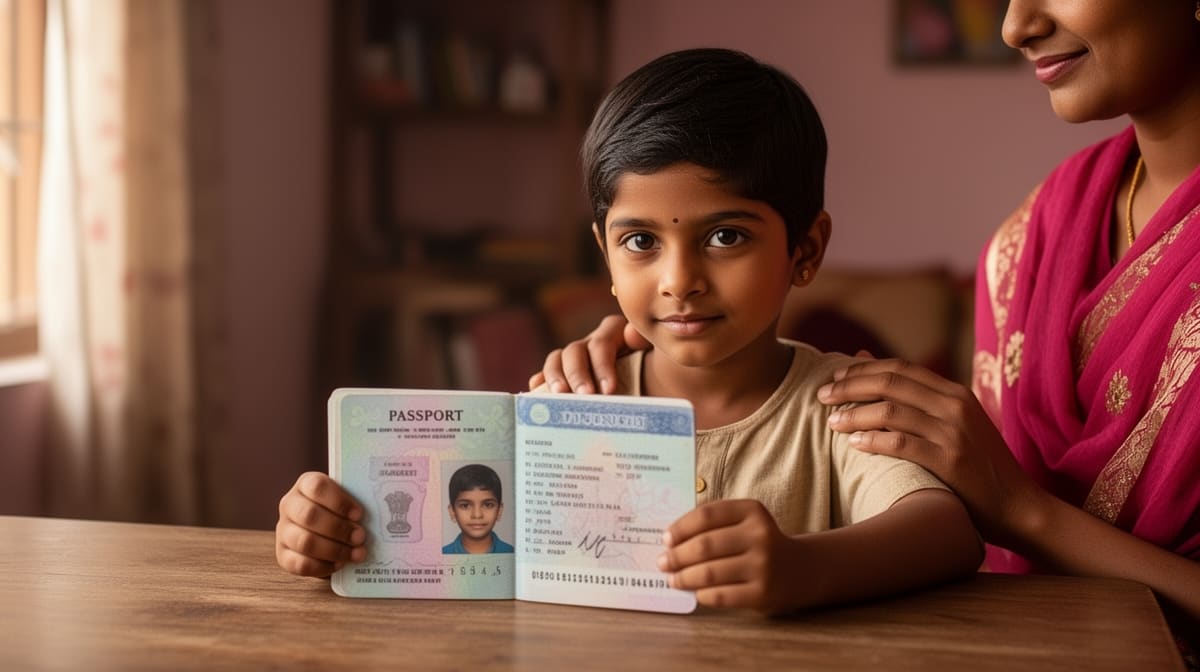
The first petitioner, Maddi Amartya Reddy, a minor represented by his father (the second petitioner), sought correction of his date of birth in his passport. The passport incorrectly recorded his date of birth as 10.07.2011, while his school records reflected the correct date as 10.10.2013. The petitioners approached the High Court under Article 226 of the Constitution of India seeking a writ of mandamus to direct the Regional Passport Officer (respondent No. 2) to accept a fresh application for issuance of a new passport with the correct date of birth.
Key Facts
- The first petitioner was 13 years old at the time of filing, studying in 9th class at Slate the School, Himayath Nagar, Hyderabad
- His passport incorrectly recorded his date of birth as 10.07.2011 instead of 10.10.2013 as per school records
- The petitioners reside at Flat No. 104, Mothe Apartments, Barkathpura, Hyderabad
- The respondents are:
- Union of India, represented by the Secretary, Ministry of External Affairs, New Delhi
- Regional Passport Officer, Passport Office, Secunderabad
Procedural History
- Writ Petition No. 10340 of 2026 filed under Article 226 seeking:
- A writ of mandamus declaring the respondents' action as arbitrary and illegal
- Direction to accept a fresh application for issuance of a new passport with the correct date of birth
- I.A. No. 1 of 2026 filed under Section 151 CPC for interim relief during the pendency of the writ petition
Relief Sought
The petitioners sought:
- A declaration that the respondents' refusal to correct the date of birth was arbitrary and illegal
- A direction to the Regional Passport Officer to receive a fresh application for issuance of a new passport with the correct date of birth (10.10.2013)
- Consideration of the fresh application pending disposal of the writ petition
The Legal Issue
The primary question before the Court was whether the five-year limitation period for correcting date of birth in passports, as prescribed by the Ministry of External Affairs, applies to minors, and if so, whether the respondents could be compelled to accept a fresh application beyond this period.
Arguments Presented
For the Petitioners
- Argued that the incorrect date of birth in the passport was a clerical error that needed correction
- Contended that the five-year limitation should not apply to minors, as they cannot be expected to seek corrections during minority
- Sought interim relief under Section 151 CPC to allow submission of a fresh application pending the writ petition
For the Respondents
- Relied on Office Memorandum No. VI/40/2/2001 dated 22.09.2016 issued by the Ministry of External Affairs, CPV Division, which states:
- Corrections to date of birth must be sought within five years of passport issuance
- For minors, corrections can be sought after attaining majority
- Submitted that the petitioners' case could be considered if a fresh online application was submitted
The Court's Analysis
The Court, after hearing both parties and perusing the records, noted the following:
-
The Office Memorandum dated 22.09.2016 clearly lays down the procedure for correcting date of birth in passports. The memorandum stipulates that corrections must be sought within five years of issuance, or after attaining majority for minors.
-
The respondents' counsel submitted that if a fresh online application was filed, the petitioners' case could be considered. This submission was recorded by the Court as a concession.
-
The Court did not engage in a detailed analysis of the constitutional validity of the five-year limitation or its applicability to minors, as the respondents' submission provided a practical remedy to the petitioners.
"The learned standing counsel appearing for the respondents produced a copy of Office Memorandum dated 22.09.2016 issued by the Ministry of External Affairs, CPV Division, wherein it is stated that when an applicant comes to PIA for change/correction with regard to date of birth, the same has to be within five years of issuance of passport. In case of minors, the minors after attaining the majority may seek correction of date of birth."
The Verdict
The Court disposed of the writ petition with the following directions:
- The respondents' submission that the petitioners' case could be considered upon submission of a fresh online application was recorded
- The writ petition was disposed of based on this submission
- No order as to costs was passed
- Miscellaneous petitions pending in the writ petition were closed
What This Means For Similar Cases
Five-Year Limitation Is Binding
- Practitioners must advise clients that corrections to date of birth in passports must be sought within five years of issuance
- For minors, corrections can only be sought after attaining majority
- Failure to comply with this timeline may result in denial of correction requests, as seen in this case
Fresh Application Is a Viable Remedy
- The Court's disposal based on the respondents' submission suggests that fresh applications may be considered even beyond the five-year period
- Petitioners should exhaust administrative remedies before approaching courts, as the respondents may consider fresh applications on a case-by-case basis
Writ Jurisdiction Is Not Automatic
- Courts may dispose of writ petitions if respondents offer a practical remedy, as seen here
- Petitioners cannot assume that writ of mandamus will be issued merely because an administrative rule appears arbitrary; alternative remedies must be explored first