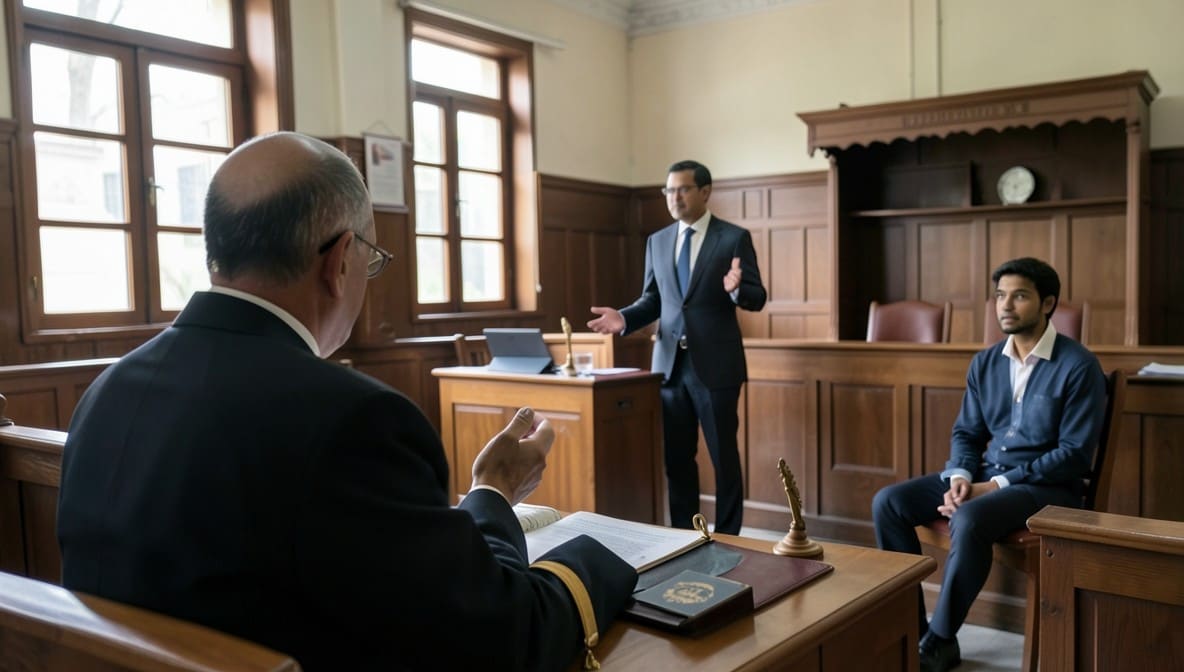
The Bombay High Court recently granted bail to a convict serving a sentence for offences under Sections 302, 307, and 506-II read with Section 149 IPC, despite the gravity of the charges. The Court relied on the principle of parity, noting that two co-accused had already been granted bail, and observed inconsistencies in the prosecution's evidence. This judgment underscores the importance of evidentiary scrutiny and equal treatment in bail applications, even in serious offences.
Background & Facts
The Offence and Conviction
The applicant, Machhindra Kadam, was convicted by the Additional Sessions Judge, Nashik, for offences punishable under Sections 302 (murder), 307 (attempt to murder), 506-II (criminal intimidation), and 148 (rioting armed with deadly weapon) of the Indian Penal Code (IPC), read with Section 149 IPC (unlawful assembly). He was acquitted of the offence under Section 135 of the Bombay Police Act. The conviction stemmed from an incident involving the assault of the deceased and injured persons with a knife.
Procedural History
The applicant's journey through the judicial system reflects persistent efforts to secure bail:
- Trial Court Conviction: The applicant was convicted and sentenced, with the trial court rejecting his bail applications.
- First Bail Application (Interim Application No. 1 of 2019): Rejected on 3 December 2020 by the Bombay High Court.
- Second Bail Application (Interim Application No. 1618 of 2022): Rejected on 29 November 2023 by the Bombay High Court.
- Supreme Court Appeal: The applicant approached the Supreme Court but was unsuccessful.
- Third Bail Application (Present Application): Filed as Interim Application No. 953 of 2026 before the Bombay High Court.
Key Facts and Detention Details
- The applicant tendered Imprisonment Certificates dated 1 January 2026 and 26 March 2026, showing he had undergone 8 years, 5 months, and 16 days of actual imprisonment.
- The prosecution opposed bail, arguing that the applicant was the main accused, and the charge of assaulting the deceased and injured with a knife was substantiated. The knife was allegedly recovered at his instance.
- The applicant's counsel contended that there were inconsistencies in the versions of two eye witnesses and that the knife was recovered from a drainage, which is an open place, casting doubt on the recovery's reliability.
- The applicant relied on the principle of parity, highlighting that two co-accused had been granted bail, including one (Manish) who was granted bail by the same Bench on 3 July 2026 in Interim Application No. 591 of 2026.
Relief Sought
The applicant sought suspension of sentence and enlargement on bail, arguing that his role in the offence was not significantly different from that of the co-accused who had already been granted bail.
The Legal Issue
The central question before the Court was whether parity in sentencing and partial completion of the sentence could justify granting bail to a convict in a serious offence, particularly when co-accused had already been granted bail and inconsistencies existed in the prosecution's evidence.
Arguments Presented
For the Applicant
- Parity Principle: The applicant's counsel argued that the applicant's role in the offence was not distinguishable from that of the co-accused who had been granted bail. Granting bail to the co-accused while denying it to the applicant would violate the principle of parity.
- Inconsistencies in Evidence: The counsel highlighted discrepancies in the versions of the eye witnesses and the doubtful recovery of the knife from an open drainage, which weakened the prosecution's case.
- Partial Detention: The applicant had already undergone 8 years, 5 months, and 16 days of imprisonment, which was a significant portion of the sentence, justifying bail on humanitarian grounds.
For the Respondent-State
- Gravity of Offence: The learned Additional Public Prosecutor (APP) opposed the bail application, emphasizing the seriousness of the charges under Sections 302 and 307 IPC.
- Role of the Applicant: The APP contended that the applicant was the main accused and that the charge of assaulting the deceased and injured with a knife was substantiated by evidence, including the recovery of the knife at his instance.
The Court's Analysis
The Court carefully weighed the arguments presented by both sides. While acknowledging the gravity of the offence, the Court noted the following key factors:
-
Principle of Parity: The Court observed that two co-accused had already been granted bail, including one by the same Bench. This created a strong case for parity, as the applicant's role was not materially different from that of the co-accused.
-
Inconsistencies in Evidence: The Court took note of the discrepancies in the eye witnesses' versions and the doubtful recovery of the knife from an open drainage. These inconsistencies raised questions about the reliability of the prosecution's case.
-
Partial Detention: The applicant had undergone over 8 years of imprisonment, which was a substantial portion of the sentence. The Court considered this as a mitigating factor in favor of granting bail.
-
Precedent Consideration: The Court referenced the case of Saudan Singh v. State of Uttar Pradesh (2022 SCC Online SC 697), where the Supreme Court had observed certain sentencing norms. However, the Court noted that the applicant had not undergone the full 10-year sentence as contemplated in the precedent.
The Court concluded that the principle of parity and the partial completion of the sentence justified granting bail to the applicant. The Court also imposed strict conditions to ensure compliance and prevent misuse of liberty.
"We are inclined to grant the applicant benefit of parity. Hence, the following Order."
The Verdict
The Bombay High Court allowed the bail application and passed the following orders:
- Suspension of Sentence: The sentence imposed on the applicant was suspended.
- Bail Conditions: The applicant was enlarged on bail in the sum of Rs. 25,000 with one or more sureties in the like amount, to the satisfaction of the trial court.
- Fine Payment: The applicant was directed to pay the fine amount as per the trial court's judgment within two weeks from the date of the order.
- Reporting Requirement: The applicant was required to report once every three months to the Upnagar Police Station at Nashik Road on the first Monday of every month, commencing from August 2026, between 11:00 a.m. and 1:00 p.m..
- Contact Details: The applicant was directed to furnish his contact details and residential address to the trial court.
What This Means For Similar Cases
Parity as a Decisive Factor in Bail Applications
This judgment reinforces the principle that parity in sentencing can be a decisive factor in bail applications, even in serious offences. Practitioners should:
- Highlight Disparities: Argue for bail by highlighting cases where co-accused with similar or more serious roles have been granted bail.
- Leverage Precedents: Cite judgments like Saudan Singh to emphasize the importance of equal treatment in judicial proceedings.
Evidentiary Scrutiny in Bail Applications
The Court's reliance on inconsistencies in evidence underscores the need for rigorous scrutiny of prosecution's case in bail applications:
- Challenge Witness Credibility: Point out discrepancies in witness statements to weaken the prosecution's case.
- Question Recovery Procedures: Scrutinize the circumstances of recovery of weapons or evidence, especially if recovered from open or public places.
Partial Detention as a Mitigating Factor
The Court considered the duration of imprisonment undergone as a mitigating factor. This sets a precedent for:
- Humanitarian Grounds: Argue for bail on humanitarian grounds when the convict has undergone a significant portion of the sentence.
- Balancing Justice: Emphasize the need to balance the interests of justice with the rights of the convict, especially in cases of prolonged detention.
Strict Bail Conditions for Serious Offences
The Court imposed strict bail conditions, reflecting its concern about the gravity of the offence. Practitioners should:
- Propose Stringent Conditions: Suggest reporting requirements, surety bonds, and compliance timelines to address the Court's concerns.
- Ensure Compliance: Advise clients to strictly adhere to bail conditions to avoid revocation of bail.
This judgment serves as a reminder of the delicate balance between upholding justice and ensuring fair treatment for convicts, even in cases involving serious offences.