The Punjab & Haryana High Court has reinforced a fundamental principle of civil procedure: attachment of property under Order XXXVIII Rule 5 CPC must be proportionate to the claim. In a decisive ruling, the Court set aside an order attaching land worth over ₹1.1 crore to secure a claim of just ₹24.17 lakh, emphasizing that such extraordinary remedies cannot be applied indiscriminately.
Background & Facts
The Dispute
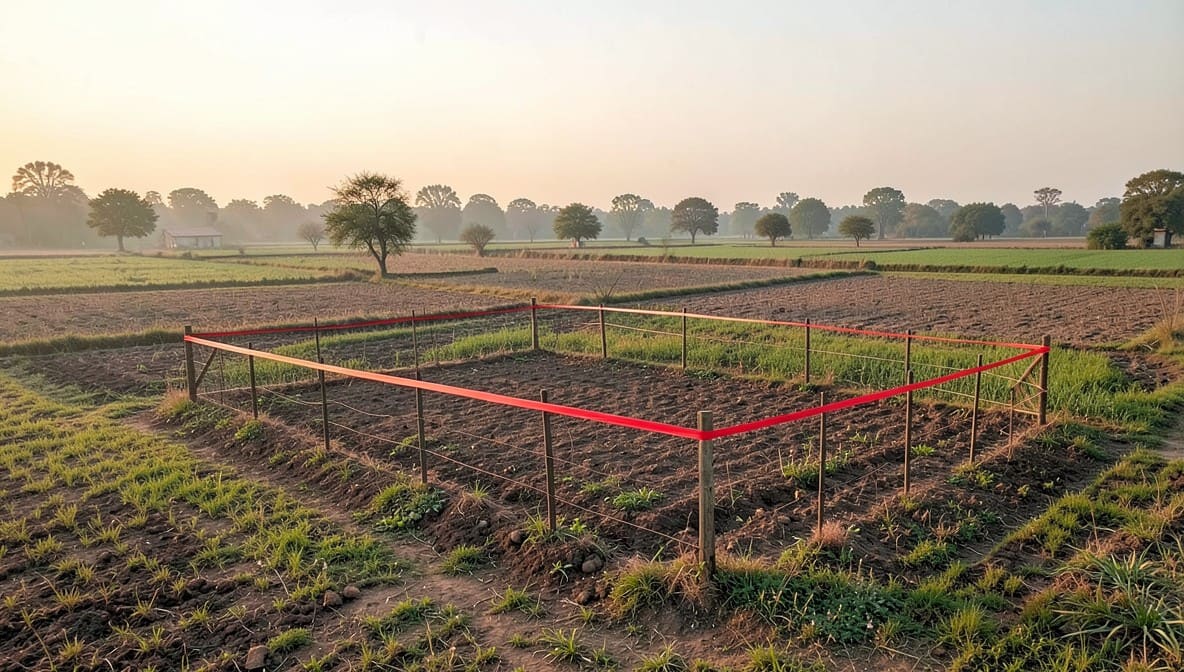
Respondent No. 1 filed a civil suit against the petitioner, Daljit Kaur, seeking recovery of ₹24,17,256/-, comprising ₹15,00,000/- as principal amount and ₹9,17,256/- as interest. The suit was filed in the Court of the Additional Civil Judge (Senior Division), Faridkot. The petitioner filed a written statement, and the respondent filed a replication. During the pendency of the suit, the respondent applied under Order XXXVIII Rule 5 of the Code of Civil Procedure, 1908, seeking attachment of the petitioner’s agricultural land.
Key Facts
- The suit amount claimed: ₹24,17,256/-
- The property attached: agricultural land located in Faridkot district
- Estimated market value of the attached property: ₹1,10,62,500/- as per quotations submitted by the petitioner
- The attachment order was passed without any prior notice to the petitioner
- The petitioner’s property value exceeds the suit amount by over 450%
- No allegation of dissipation or concealment of assets was made by the respondent
Procedural History
- Date of filing of suit: Not specified in judgment, but proceedings occurred prior to 05.01.2026
- 05.01.2026: Additional Civil Judge (Senior Division), Faridkot, passed order allowing application under Order XXXVIII Rule 5 CPC and directed attachment of the petitioner’s entire agricultural land
- 21.04.2026: Petitioner filed revision petition under Article 227 of the Constitution before the Punjab & Haryana High Court
- 21.04.2026: High Court heard the petition orally and disposed of it on the same day
Relief Sought
The petitioner sought setting aside of the attachment order dated 05.01.2026 and directed the trial court to attach only such portion of the property as is proportionate to the suit amount of ₹24,17,256/-. The petitioner also sought costs.
The Legal Issue
The central question was whether a court, while granting attachment under Order XXXVIII Rule 5 CPC, is bound to ensure that the property attached is proportionate to the claim, and whether attachment of property valued at over four times the suit amount constitutes an abuse of process.
Arguments Presented
For the Petitioner
Learned counsel for the petitioner submitted that the property sought to be attached was valued at ₹1,10,62,500/-, far exceeding the claim of ₹24,17,256/-. He argued that Order XXXVIII Rule 5 CPC is an extraordinary remedy intended to secure the decree, not to punish or coerce the defendant. He relied on the principle of proportionality and cited judicial precedents holding that attachment must not be excessive or oppressive. He submitted that no evidence was adduced to suggest that the petitioner intended to dispose of or conceal the property.
For the Respondent
The respondents were not served with notice, and no arguments were presented on their behalf. The Court noted that the respondents did not oppose the petition, and no counter-submissions were filed.
The Court's Analysis
The Court observed that Order XXXVIII Rule 5 CPC empowers the court to order attachment before judgment only if it is satisfied that the defendant is about to dispose of or remove property with intent to obstruct or delay execution of a future decree. The Court emphasized that this remedy is not meant to be used as a weapon of coercion or to inflict undue hardship.
"The attachment of property must be proportionate to the claim. To attach property worth over ₹1.1 crore to secure a claim of ₹24.17 lakh is manifestly excessive and contrary to the spirit of the Code."
The Court noted that the trial court had not considered the market value of the property or assessed whether a lesser portion of the land could suffice to secure the claim. The absence of any allegation of fraudulent intent or risk of dissipation further undermined the necessity of such a sweeping order. The Court held that the trial court’s failure to apply the principle of proportionality rendered the order unsustainable.
The Court clarified that while the power under Order XXXVIII Rule 5 CPC is wide, it is not unfettered. Courts must exercise judicial discretion with restraint, ensuring that the remedy does not become disproportionate to the object sought to be achieved.
The Verdict
The revision petition was allowed. The impugned order dated 05.01.2026 was set aside. The trial court was directed to pass a fresh order directing attachment of only such portion of the petitioner’s agricultural property as is sufficient to cover the suit amount of ₹24,17,256/-. The Registry was directed to forward a copy of this order to the Additional Civil Judge (Senior Division), Faridkot, for immediate compliance. All pending applications stood disposed of.
What This Means For Similar Cases
Proportionality Is Mandatory in Pre-Judgment Attachment
- Practitioners must now demonstrate to the court that the value of property sought to be attached is reasonably proportionate to the claim
- Courts must record reasons for rejecting lesser alternatives, such as partial attachment or attachment of a specific parcel
- Failure to consider market value or proportionality renders the order liable to be set aside on revision
No Automatic Right to Attach Entire Property
- A claim of ₹24 lakh does not justify attachment of property worth ₹1.1 crore
- Courts must evaluate whether the defendant poses a real risk of disposal or concealment before granting such relief
- Mere pendency of a suit is insufficient grounds for disproportionate attachment
Strategic Implications for Litigants
- Plaintiffs should file affidavits with market valuations and propose specific property for attachment
- Defendants must promptly submit valuation reports to challenge excessive attachment
- Courts are now on notice that disproportionate attachment will be reviewed under Article 227