The High Court of Punjab and Haryana dismissed a petition under Section 528 of the Bharatiya Nagarik Suraksha Sanhita, holding that the attachment of disputed agricultural land under Section 164 BNSS was lawful even though title and possession issues were pending in civil proceedings.
Background & Facts
The Dispute
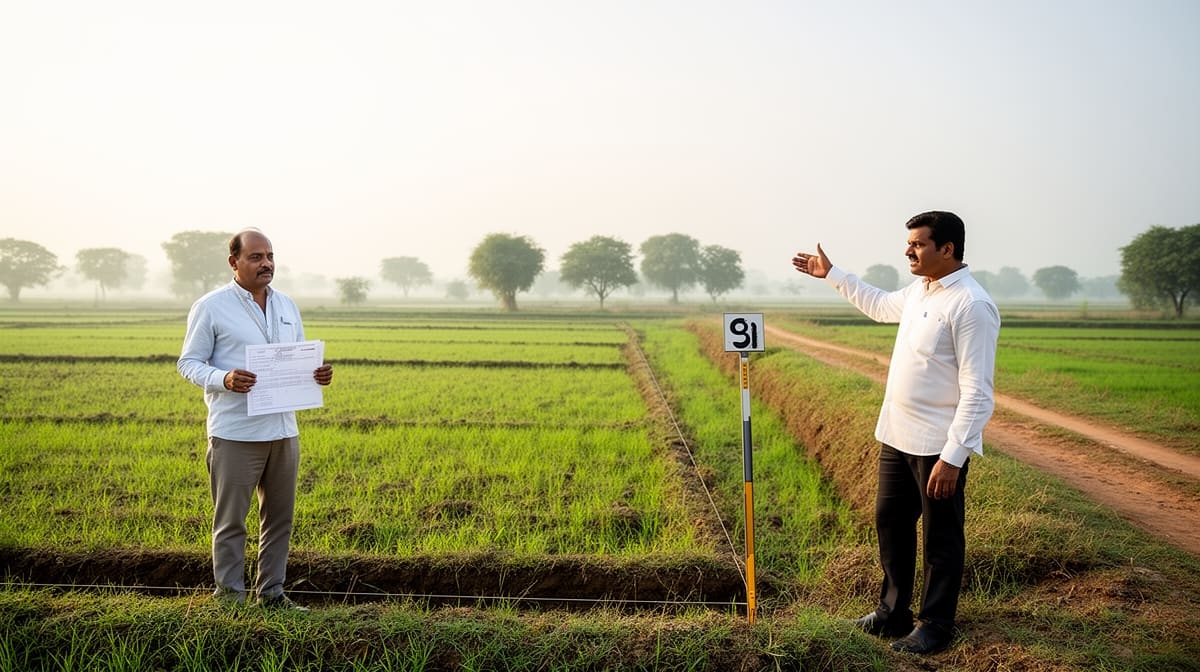
- Petitioners No.1 and 2, Mahender Singh and Sukhchain Singh, claim ownership of 69 Kanals 7 Marlas of land in Village Joshi, Tehsil Madlauda, District Panipat.
- Respondents No.6 and 7, Jitender and Narender Singh, obtained a decree in their favour on 04.09.2019 in a suit filed against the petitioners.
- The decree was followed by a sale agreement dated 31.05.2019 and a sale deed registered on 26.09.2019, later cancelled on the ground that the land was "shamlat deh".
- A second agreement was executed on 23.01.2020 between the same parties.
- The Gram Panchayat of Village Joshi filed a civil suit in 2023 challenging the 2019 decree; the suit is pending.
Key Facts
- 25.10.2023: Execution petition dismissed by the executing Court, citing lack of jurisdiction of the civil court.
- 03.03.2022: Petition under Section 13A of the Punjab Village Common Lands (Regulation) Act, 1961, filed by respondents No.6 and 7, dismissed.
- 24.06.2025: Complaint by petitioners before Police; inquiry closed on 29.07.2025 as civil matter.
- 29.10.2025 and 16.02.2026: Complaints by respondents No.6 and 7; Kalandra under Section 164 BNSS submitted.
- 13.04.2026: SDM, Israna, ordered attachment of the land under Section 164(1) BNSS, appointed Tehsildar Madlauda as Superintendent, and directed harvest of standing crops.
- 22.04.2026: Revision petition against the SDM order dismissed.
- 13.08.2026: Petition under Section 528 BNSS reserved.
- 26.08.2026: Judgment pronounced, dismissing the petition.
Procedural History
- 04.09.2019: Decree in favour of respondents No.6 and 7.
- 25.10.2023: Execution petition dismissed.
- 03.03.2022: Section 13A petition dismissed.
- 13.04.2026: SDM attachment order under Section 164 BNSS.
- 22.04.2026: Revision petition dismissed.
- 13.08.2026: Petition under Section 528 BNSS filed.
- 26.08.2026: Present judgment.
The Parties' Positions
- Petitioners: Argued that the attachment under Section 164 BNSS was illegal because the title and possession of the land were still disputed in civil courts; relied on Ram Sumer Puri Mahant v. State of U.P. and other precedents.
- Respondents (State and Jitender/Narender): Contended that pending civil litigation does not bar the exercise of emergency powers under Sections 145 and 146 CrPC in conjunction with Section 164 BNSS; cited Ashok Kumar v. State of Uttarakhand, Amresh Tiwari v. Lalta Prasad Dubey, and others.
Relief Sought
The petitioners sought quashing of the SDM’s attachment order, removal of the Tehsildar as Superintendent, and restoration of their possession.
The Legal Issue
What is the correct scope of the magistrate’s powers under Sections 145 and 146 of the Criminal Procedure Code when a civil suit concerning title and possession of the same property is pending, and can an attachment order under Section 164 of the Bharatiya Nagarik Suraksha Sanhita be sustained in such circumstances?
Arguments Presented
For the Petitioners
- Asserted that the existence of a pending civil suit for declaration of title creates a legal bar to initiating emergency attachment proceedings under Section 145 CrPC.
- Relied on Ram Sumer Puri Mahant v. State of U.P. to argue that where the civil court is competent to decide both title and possession, criminal-procedure attachment should not be permitted.
- Submitted that the SDM failed to demonstrate any emergency as required by Section 146(1) CrPC.
For the Respondents
- Maintained that a pending civil suit does not automatically preclude the magistrate from invoking Sections 145 and 146 where there is a genuine dispute over possession.
- Cited Ashok Kumar and Amresh Tiwari to show that the test is whether the civil court can grant protective relief; if not, criminal attachment may proceed.
- Emphasised that the SDM recorded statements, documents, and the risk of breach of peace before ordering attachment, thereby satisfying the emergency requirement.
The Court's Analysis
The Court began by noting that the law on the interplay between civil title disputes and criminal-procedure attachment is well settled. It reiterated the principle from Ram Sumer Puri Mahant that where the civil court is competent to determine both title and possession, proceedings under Sections 145 and 146 CrPC should ordinarily not be entertained. However, the Court clarified that this is not an absolute bar.
"The basic judgment on the subject is the decision of the Apex Court in the case of Ram Sumer Puri Mahant… It is only in cases where civil suit is for possession or for declaration of title in respect of the same property and where relief regarding protection of the property could be applied for and granted by the civil court that proceedings under Section 145 should not be allowed to continue."
The Court then examined the factual matrix. The decree of 04.09.2019 and subsequent sale deed indicated that the respondents had, at least temporarily, exercised control over the land. The Gram Panchayat’s claim of "shamlat deh" introduced a third-party interest but did not resolve the immediate possession dispute between the petitioners and respondents No.6 and 7.
Turning to the statutory framework, the Court explained that Section 145 CrPC empowers a magistrate to order an inquiry when there is a likelihood of breach of peace, while Section 146(1) CrPC permits attachment of the subject of dispute only if an emergency exists. The Court found that the SDM’s order was supported by:
- A police investigation report documenting statements from both sides;
- Evidence of ongoing cultivation and the risk of conflict, as reflected in the need to harvest standing crops under supervision;
- The fact that neither party possessed a clear, enforceable title at the time of the order.
The Court distinguished the petitioners’ reliance on Ram Sumer Puri Mahant by observing that the civil decree and subsequent agreements had not resulted in a final, enforceable determination of title. Consequently, the civil court could not yet grant a protective injunction or order of possession, leaving a vacuum that justified the magistrate’s emergency intervention.
The Court also rejected the contention that the mere pendency of a civil suit bars Section 145/146 proceedings, citing Amresh Tiwari which held that only when the civil suit is specifically for possession or title and the civil court can grant protective relief should the criminal-procedure route be stayed.
Having satisfied the test of emergency, the Court concluded that the attachment under Section 164(1) BNSS was lawful. It further held that the petition under Section 528 BNSS was an improper second revision of the same order and therefore dismissed it.
The Verdict
The petition under Section 528 BNSS is dismissed. The attachment of the 69 Kanals 7 Marlas of land in Village Joshi under Section 164(1) BNSS remains in force. Tehsildar Madlauda continues as Superintendent, standing crops are to be harvested under his supervision, and the proceeds are to be deposited in the government treasury until the High Court decides the pending civil matters. All pending applications, if any, are disposed of.
What This Means For Similar Cases
Pending Civil Suit Does Not Automatically Bar Attachment
- Lawyers must assess whether the civil suit seeks a protective injunction or merely a declaration of title. If the latter, criminal-procedure attachment may still be viable.
- Cite Ashok Kumar and Amresh Tiwari to argue that the magistrate’s emergency power is distinct from the civil court’s jurisdiction.
Demonstrating an Emergency Is Crucial
- The magistrate must record concrete facts indicating a likelihood of breach of peace, such as ongoing cultivation, threats, or competing claims.
- Evidence like police reports, statements, and documentary proof of possession strengthens the emergency claim.
Use of Sections 145 and 146 Must Follow Established Tests
- Section 145 triggers an inquiry; Section 146(1) requires a clear emergency before attachment.
- Courts will scrutinise whether the magistrate has explained the emergency; vague apprehensions are insufficient.
Practical Takeaways
- When advising clients in land disputes, prepare a dossier of factual material (cultivation, threats, prior agreements) to support any emergency attachment application.
- Anticipate challenges based on pending civil suits and be ready to distinguish the nature of the civil relief sought.
- Monitor parallel civil proceedings; a final civil decree may later render the attachment unnecessary, but until then the attachment can remain valid.