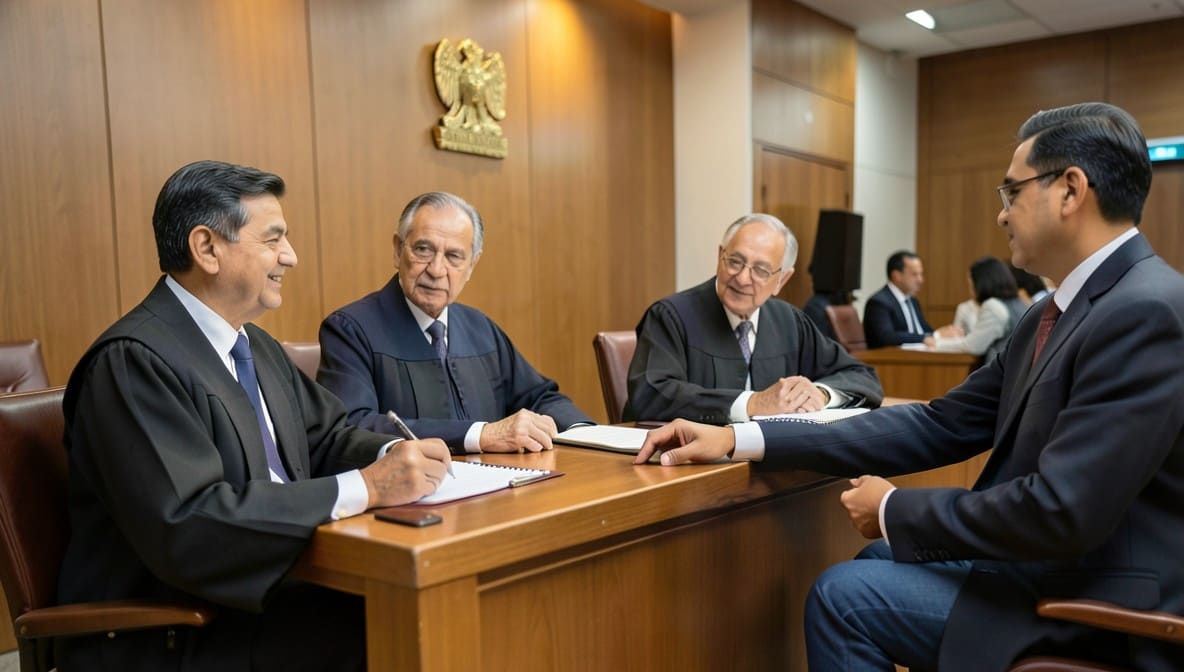
The Karnataka High Court recently delivered a significant judgment on the scope of Order XXXIX Rule 2A of the Code of Civil Procedure (CPC), clarifying the liability of corporate officers for disobedience of court orders. The Court upheld the finding of willful violation of an injunction order by a news channel’s Managing Director but modified the punishment from three months’ civil imprisonment to a one-day detention, coupled with stringent compliance conditions. This judgment underscores the imperative of strict adherence to judicial orders, even in the exercise of journalistic freedom.
Background & Facts
The Dispute
The respondent, Dr. B.R. Ravikanthegowda, a senior police officer, filed a civil suit (O.S.No.1602/2023) before the Principal Civil Judge and JMFC, Bengaluru Rural District, seeking a permanent injunction against 52 media houses, including the appellant (Power TV), from telecasting or publishing any defamatory material affecting his reputation. On 08.09.2023, the Trial Court granted an ex parte ad interim injunction restraining the defendants from broadcasting, telecasting, publishing, or circulating any material that could damage the plaintiff’s reputation.
Key Facts
- The appellant, Power TV, is operated by Power Smart Media Private Limited, represented by its Managing Director (MD), Mr. Rakesh Sanjeeva Shetty.
- The injunction order (08.09.2023) explicitly prohibited the defendants from publishing or telecasting any material portraying the plaintiff in a negative manner.
- Despite the injunction, the appellant telecast programs on 22.09.2023 and 23.09.2023, including a program titled “Dushta IPS Adhikari”, which depicted the plaintiff in a derogatory manner.
- The appellant’s written statement in the suit was verified and signed by the MD, confirming his active participation in the proceedings.
Procedural History
- 08.09.2023: Trial Court grants ex parte ad interim injunction in O.S.No.1602/2023.
- 11.09.2023: Appellant enters appearance and files written statement.
- Post-08.09.2023: Appellant telecasts programs allegedly violating the injunction.
- Miscellaneous No.102/2023: Respondent files application under Order XXXIX Rule 2A read with Section 151 CPC, seeking action for disobedience of the injunction order.
- 06.01.2026: Trial Court allows the application, holding the appellant guilty of willful disobedience and directing detention in civil prison for three months, subject to deposit of subsistence allowance.
- MFA No.694/2026: Appellant files appeal before the Karnataka High Court challenging the Trial Court’s order.
Relief Sought
The appellant sought:
- Quashing of the Trial Court’s order dated 06.01.2026.
- A declaration that the MD cannot be held personally liable for the alleged disobedience.
- Alternatively, modification of the punishment to a lesser penalty.
The Legal Issue
The central questions before the Court were:
- Whether the Managing Director of a news channel can be held personally liable for disobedience of an injunction order under Order XXXIX Rule 2A CPC, even if he is not the editor or directly responsible for content?
- Whether the Trial Court was justified in holding that the appellant willfully disobeyed the injunction order and directing civil imprisonment?
Arguments Presented
For the Appellant
- The MD is not the editor and cannot be held liable for editorial decisions.
- Order XXXIX Rule 2A CPC requires clear and cogent proof of willful disobedience, which was lacking in this case.
- The telecast was a bona fide journalistic exercise and did not amount to a deliberate violation of the injunction order.
- The Trial Court erred in inferring breach of injunction without establishing willful disobedience.
- Reliance was placed on:
- Fr. Joseph Kuzhinjalli and Another v. Visalakshi and Another (2024 SCC Online Ker 4518), to argue that liability lies with the editor, not the MD.
- J.A. Goraswa v. The Director General and Inspector General of Police, Gujarat State (1995 SCC Online Guj 201), to contend that proceedings under Rule 2A require specific identification of the contemnor.
- Tarafatullah Mandal and Others v. S.N. Maitra, I.C.S., Collector and Others (1951 SCC Online Cal 290), to emphasize that disobedience proceedings require proof of service, violation, responsibility, and post-service breach.
- T. Sudhakar Pai and Others v. Manipal Academy of Higher Education (2023 SCC Online Kar 41), to argue that the gravity of disobedience must be carefully assessed.
For the Respondent
- The MD actively participated in the proceedings, verified the written statement, and led evidence, thereby cannot disown responsibility.
- The injunction order was clear and unambiguous, and the appellant’s telecast willfully violated the same.
- The defence of journalistic exercise is untenable, as the appellant had full knowledge of the injunction order and proceeded with the telecast regardless.
- Reliance was placed on:
- Anil Ratan Sarkar and Others v. Hirak Ghosh and Others ((2002) 4 SCC 21), to argue that willful violation of court orders cannot be tolerated and self-serving interpretations are not a valid defence.
- Samee Khan v. Bindu Khan ((1998) 7 SCC 59), to contend that Order XXXIX Rule 2A empowers the Court to attach property, detain in civil prison, or adopt both measures.
- Tayabbhai M. Bagasarwalla and Another v. Hind Rubber Industries Pvt. Ltd. and Others ((1997) 3 SCC 443) and Rajivkumar Panjabi v. Vinod Rode and Another ((2017) 12 SCC 777), to demonstrate that willful disobedience warrants imprisonment.
- Prithawi Nath Ram v. State of Jharkhand and Others ((2004) 7 SCC 261), to argue that the correctness of the order cannot be questioned in disobedience proceedings.
The Court's Analysis
The Court undertook a detailed examination of Order XXXIX Rule 2A CPC, which empowers the Court to attach the property of or detain in civil prison “the person guilty of such disobedience or breach”. The provision uses the term “person” rather than “party”, indicating a wider amplitude to include individuals responsible for disobedience, even if they are not formal parties to the suit.
“The word used in the provision is ‘person’ and not ‘party’. It is relevant to note that the expressions ‘any party to the suit’ or ‘defendant’ are used in Order XXXIX Rules 1 and 2 of the Code, which provides for interim prohibitory order. The wisdom of the parliament in using the expression ‘person’ in Order XXXIX Rule 2A of the Code, instead of the words ‘party’ or ‘parties’ is obvious. The expression ‘person guilty of such disobedience or breach’ will have a wider connotation than the expression ‘party guilty of such disobedience or breach’. The intention is to ensure that the party to the proceeding does not circumvent the order of the Court, disobey or commit the breach of the order, through a person who is not a party to the proceeding. The provision also aims in ensuring that the Court order is obeyed or implemented both in its letter and spirit.” (Sudhakar Pai, paragraph 36)
The Court rejected the appellant’s contention that the MD cannot be held liable, noting:
- The MD verified and signed the written statement on behalf of the defendant.
- The MD actively participated in the proceedings and led evidence.
- The injunction order was directed against the entity (Power TV), and the MD, being in control of its functioning, falls within the ambit of “person guilty of disobedience”.
- The telecast on 22.09.2023 and 23.09.2023 included programs referring to the plaintiff as “Dushta IPS Adhikari”, which clearly violated the injunction order.
The Court emphasized that journalistic freedom under Article 19(1)(a) of the Constitution is not absolute and is subject to reasonable restrictions, including the right to reputation under Article 21. Once an injunction order is passed, strict compliance is mandatory, and unilateral interpretation or selective compliance is impermissible.
“The reputation is a valuable facet of human dignity, and the protection of reputation is a legitimate Constitutional interest. In the present case, the injunction order passed by the Trial Court was specifically intended to maintain a balance between the competing interest of freedom of press and the right of reputation of the respondent, who is a public official serving in a responsible position. Once the competent Court has passed an order of injunction restraining the publication or telecast of a material affecting the reputation of a party, the same is required to be strictly complied with, by all concerned.” (Paragraph 42)
The Court relied on Anil Ratan Sarkar to underscore that disobedience of court orders cannot be condoned under the guise of misunderstanding or self-serving interpretation, as it would undermine the authority of judicial orders and erode public confidence in the administration of justice.
The Verdict
The Karnataka High Court passed the following order:
- Dismissed the Miscellaneous First Appeal (MFA No.694/2026).
- Confirmed the Trial Court’s finding that the appellant willfully violated the injunction order dated 08.09.2023.
- Modified the punishment from three months’ civil imprisonment to one-day detention, subject to the following conditions:
- The appellant must file an affidavit of undertaking before the Trial Court, strictly complying with the injunction order.
- The appellant must broadcast a statement on its news channel, apologizing for the violation and expressing regret, within two weeks.
- The appellant must pay costs of Rs. 50,000 to the respondent within four weeks.
- In case of non-compliance, the original order of three months’ imprisonment shall stand revived.
- Directed the Trial Court to expeditiously dispose of the suit (O.S.No.1602/2023).
What This Means For Similar Cases
Corporate Officers Cannot Evade Liability Under Order XXXIX Rule 2A
- The judgment clarifies that corporate officers, including Managing Directors, can be held personally liable for disobedience of court orders under Order XXXIX Rule 2A CPC, even if they are not directly responsible for the impugned act (e.g., editorial decisions).
- Active participation in proceedings (e.g., verifying pleadings, leading evidence) estops corporate officers from disowning responsibility.
- Ignorance or delegation of responsibility is not a valid defence if the officer had knowledge of the injunction order and failed to ensure compliance.
Strict Compliance with Injunction Orders Is Non-Negotiable
- Unilateral interpretation of court orders is impermissible. Parties cannot selectively comply with injunction orders based on their own understanding or convenience.
- Journalistic freedom does not override judicial orders. Media houses must strictly adhere to injunction orders restraining defamatory content, even if the material is based on public interest or complaints.
- Failure to seek clarification from the Court before telecasting/publishing restrained content amounts to willful disobedience.
Discretion in Punishment Under Order XXXIX Rule 2A
- Courts have wide discretion under Order XXXIX Rule 2A to attach property, detain in civil prison, or adopt both measures, depending on the gravity of disobedience.
- Factors considered while imposing punishment include:
- The nature and gravity of disobedience.
- The impact on the affected party (e.g., irreparable harm to reputation).
- Whether the disobedience was isolated or continuous.
- Previous history of violations.
- The timing and sincerity of any apology tendered.
- Civil imprisonment is not automatic and may be modified or substituted with other measures (e.g., apology, costs) if the ends of justice are met and the violation is not blatant or repeated.