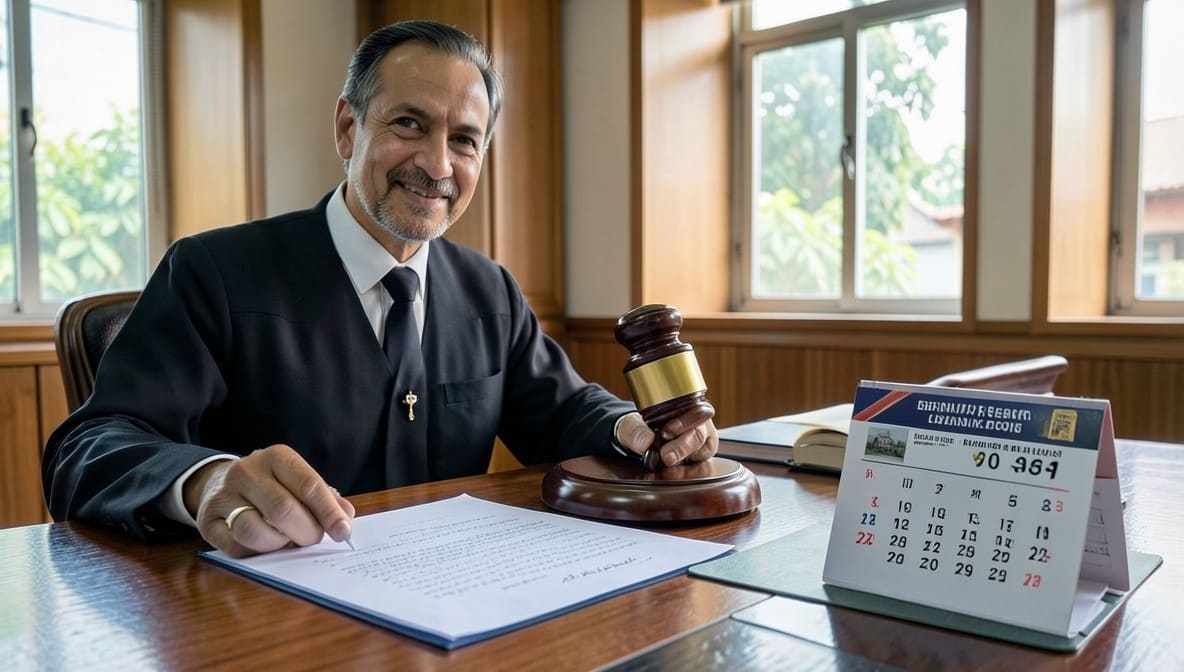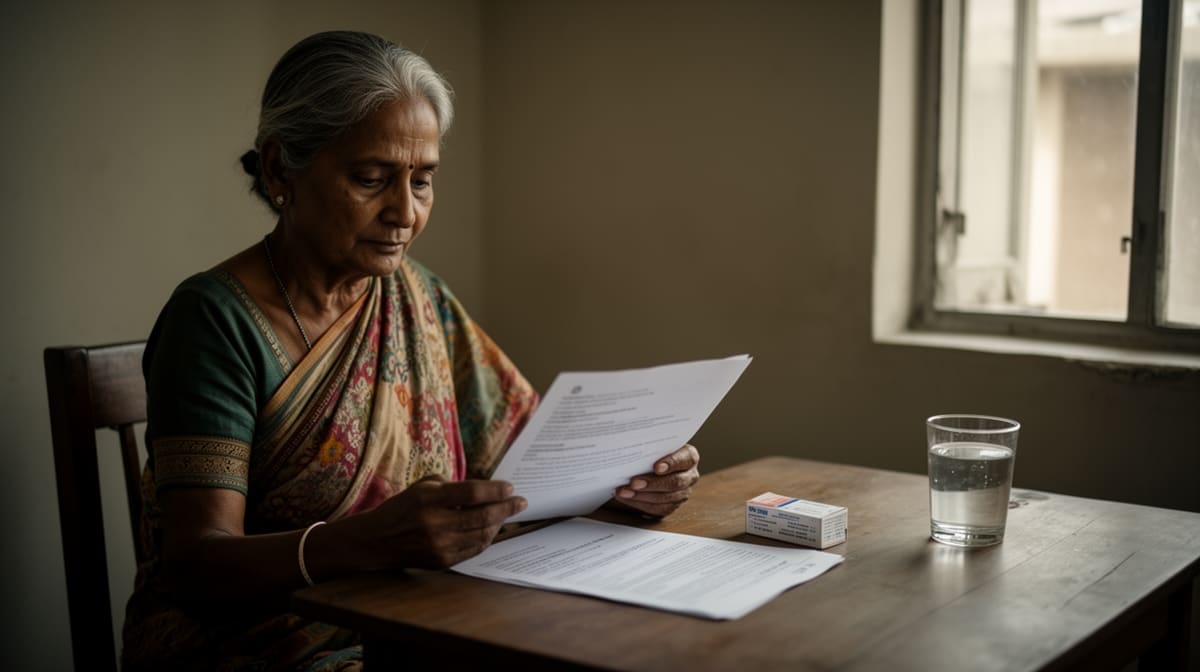
The Himachal Pradesh High Court has reaffirmed that courts must balance procedural rigour with substantive justice, particularly when the State faces genuine logistical barriers in defending claims over government land. In a significant ruling, the Court granted the State a final opportunity to file a written statement despite statutory time limits, emphasizing that mechanical application of deadlines must yield to equitable considerations.
Background & Facts
The Dispute
The respondent-plaintiff, Ram Kishan, filed Civil Suit No. 45/2024 before the Senior Civil Judge, Nalagarh, seeking a declaration and consequential relief challenging two orders dated 15.09.2021 and 28.02.2024, which pertained to his possession of government land measuring 00-06 Biswansi, bearing Khasra No. 178/1 and 178, comprised in Kh./Kht. No. 41min/44, 45min/48 in village Paundi (Chhachhi), Tehsil Ramshehar. The suit land was originally vested in the State of PEPSU under the Punjab Village Common Land Act, 1961, and later transferred to the State of Himachal Pradesh under the Himachal Pradesh Village Common Land (Vestings and Utilisation) Act, 1974.
Key Facts
- The State of Himachal Pradesh, as defendant, sought to file a written statement contesting the plaintiff’s claim of ownership.
- The defence required access to historical land records, some of which were maintained in Urdu language.
- No certified Urdu translator was available in Tehsil Ramshehar, causing unavoidable delay in document translation and preparation of the written statement.
- The trial court, on 25.03.2025, struck off the defendant’s right to file a written statement under Order VIII Rule 1 CPC for non-compliance with the time limit.
- The State filed a revision petition challenging this order, arguing that the delay was not due to negligence but due to administrative and linguistic constraints beyond its control.
Procedural History
- 15.09.2021: Ejectment order issued by the State against the plaintiff’s possession.
- 28.02.2024: Second order reaffirming State’s claim over the land.
- 2024: Civil Suit No. 45/2024 filed by Ram Kishan.
- 25.03.2025: Trial Court struck off the State’s defence for failure to file written statement within time.
- 2025: Revision petition filed before the High Court (CMP(M) No. 2133 of 2025).
- 21.01.2026: CR No. 21 of 2026 filed challenging the trial court’s order.
- 19.03.2026: Judgment delivered by the High Court.
Relief Sought
The petitioner-defendant sought setting aside of the order dated 25.03.2025, restoration of the right to file a written statement, and direction to the trial court to permit filing of the written statement upon payment of costs.
The Legal Issue
The central question was whether the trial court was justified in striking off the defence of the State under Order VIII Rule 1 of the Code of Civil Procedure when the delay in filing the written statement arose due to the unavailability of Urdu translators and the need to access archival records, and whether the principles laid down in Kailash v. Nanhku permit such an exception in the interest of justice.
Arguments Presented
For the Petitioner (State of HP)
The learned Deputy Advocate General submitted that the delay was not attributable to negligence or laxity but to genuine administrative constraints: the land records were in Urdu, a language not routinely understood by court staff in Tehsil Ramshehar, and no certified translator was available locally. The State had made efforts to procure translations but required time. Reliance was placed on Aditya Hotel (P) Ltd. v. Bombay Swadeshi Stores Ltd. and Kailash v. Nanhku to argue that extension of time must be granted where the delay is caused by circumstances beyond the defendant’s control and where refusal would result in grave injustice.
For the Respondent (Ram Kishan)
The respondent’s counsel did not contest the factual basis of the delay but argued that procedural compliance is sacrosanct under Order VIII Rule 1 CPC. He contended that allowing an extension after the expiry of the statutory period would set a precedent undermining the efficiency of civil litigation and prejudice the plaintiff who had waited for over a year for a defence to be filed.
The Court's Analysis
The Court examined the binding precedent in Kailash v. Nanhku (2005) 4 SCC 480, which holds that extensions under Order VIII Rule 1 CPC are permissible only as exceptions, not as a matter of routine, and must be granted only when the delay is occasioned by reasons beyond the defendant’s control and where refusal would cause grave injustice. The Court noted that the trial court had failed to record any reasons for rejecting the State’s application, thereby violating the mandatory requirement under Kailash.
"The extension of time shall be only by way of exception and for reasons to be recorded in writing, howsoever brief they may be, by the court. In no case, shall the defendant be permitted to seek extension of time when the court is satisfied that it is a case of laxity or gross negligence on the part of the defendant or his counsel."
The Court observed that the State’s inability to access and translate Urdu records was not a matter of indifference but a systemic limitation in a remote tehsil. The Court further noted that the suit concerned government land, the ownership of which is a matter of public interest. Denying the State a fair opportunity to defend its title would amount to a denial of natural justice.
The Court also relied on its own coordinate bench’s decision in CR No. 6 of 2026, where a similar situation involving government land and language barriers led to the grant of a last opportunity to file a written statement, subject to costs.
The Verdict
The petition was allowed. The order dated 25.03.2025 of the Senior Civil Judge, Nalagarh, striking off the State’s defence was modified to grant the State of Himachal Pradesh one last opportunity to file the written statement, subject to payment of a cost of ₹5,000 to the respondent-plaintiff. The cost was imposed to compensate for delay and deter future non-compliance. The State was directed to file the written statement on or before the next date of hearing, scheduled for 20.04.2026. Failure to file by that date will result in the permanent closure of the right to file a written statement.
What This Means For Similar Cases
Government Entities Are Not Automatically Disqualified from Extensions
- Practitioners representing government departments must document and formally record all administrative barriers (e.g., language, archival access, inter-departmental delays) when seeking extensions under Order VIII Rule 1 CPC.
- Courts are now bound to consider systemic constraints, not just individual negligence, when evaluating delays by public authorities.
Language Barriers Can Justify Procedural Relief
- Where records are in non-official or regional languages (e.g., Urdu, Punjabi, Bhojpuri) and no certified translators are available locally, this constitutes a valid ground for extension under Kailash.
- Courts must not treat linguistic challenges as mere excuses; they must assess whether the barrier is structural or circumstantial.
Costs Are Mandatory, Not Discretionary
- Any extension granted under Order VIII Rule 1 CPC must be accompanied by an award of costs to the plaintiff, as a deterrent and compensation.
- The amount of cost must be reasonable and proportionate to the delay and inconvenience caused.
Last Chance Doctrine Is Now Codified in Practice
- The Court’s use of the phrase "one last opportunity" signals a judicial preference for finality with fairness: defendants get one final shot, but no further chances.
- Practitioners must treat such orders as binding deadlines - failure to comply will result in automatic dismissal of defence.