The Chhattisgarh High Court has reaffirmed that a litigant cannot be punished for the negligence or inaction of their legal counsel when seeking to set aside an ex parte decree. This judgment reinforces the principle that procedural technicalities must not override substantive justice, particularly where the party acted in good faith and the underlying claim involves serious allegations of forgery.
Background & Facts
The Dispute
The dispute arose from a civil suit filed by Kamal Prasad Kasar, the plaintiff, seeking declaration of title, possession, and permanent injunction over agricultural lands in Village Kirwai and Village Darchura, Tahsil Simga, District Baloda Bazar, Chhattisgarh. The plaintiff alleged that defendant No.2, Jairam Dubey, fraudulently obtained a registered power of attorney dated 26.10.2010 bearing forged signatures and thumb impressions of the plaintiff, and subsequently sold portions of the plaintiff’s land to multiple purchasers, including defendant No.1, Ramkrishn Sahu.
Key Facts
- The plaintiff claimed he never executed any power of attorney in favor of Jairam Dubey.
- The alleged power of attorney was registered at the Sub-Registrar Office, Raipur, on 26.10.2010.
- Defendant No.1, Ramkrishn Sahu, purchased land from Jairam Dubey based on this power of attorney and registered the sale deed on 15.03.2011.
- The plaintiff filed the suit on 12.01.2012, alleging forgery and fraud.
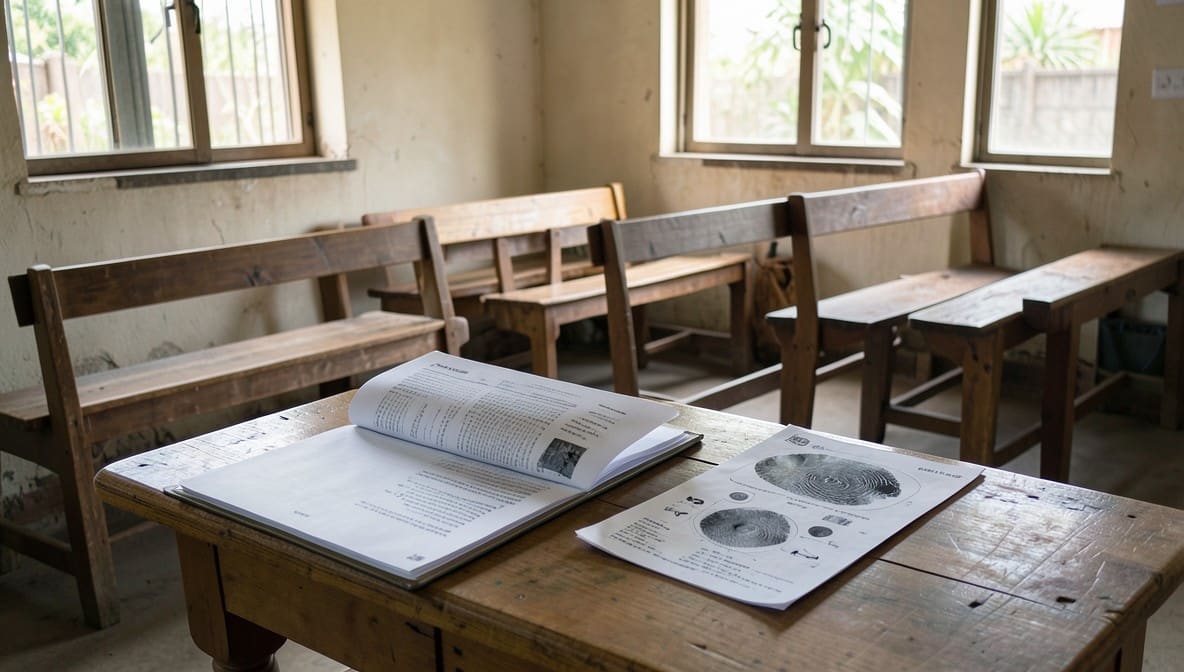
- Forensic expert Dr. Kumari Sunanda Denge (PW-2) examined the questioned signatures and thumb impressions and opined they did not match the plaintiff’s admitted specimens.
- The trial court relied on this expert opinion under Section 45 of the Indian Evidence Act and decreed the suit ex parte on 05.01.2022.
- Defendant No.1 was not present during the trial proceedings as his counsel failed to inform him of hearing dates.
- Defendant No.1 became aware of the ex parte decree only in November 2016 upon receiving a notice from the Tahsildar in mutation proceedings.
- Certified copies of the decree were obtained on 10.12.2016.
- Defendant No.1 approached a new advocate in January 2017, who advised filing an appeal in the High Court, which was not filed and documents were returned.
- The application under Order 9 Rule 13 CPC was filed on 28.02.2021, over four years after discovery of the decree.
Procedural History
- 12.01.2012: Civil suit filed by plaintiff Kamal Prasad Kasar before the MJC, Baloda Bazar.
- 05.01.2022: Trial Court passed ex parte decree in favor of plaintiff based on expert evidence.
- 28.02.2021: Defendant No.1 filed application under Order 9 Rule 13 CPC before the same MJC.
- 05.01.2022: Trial Court dismissed the application under Order 9 Rule 13 CPC solely on ground of delay.
- 15.03.2022: Multiple appeals filed under Order 43 Rule 1(d) CPC by various defendants challenging the dismissal order.
- 08.04.2026: Hearing before the Chhattisgarh High Court.
The Parties' Positions
For the Appellants (Defendants)
- Argued that their absence was due to negligence of their former counsel, not willful disobedience.
- Claimed they acted promptly upon discovering the decree in November 2016.
- Contended that the delay was caused by misadvice from counsel who mistakenly pursued an appeal instead of an Order 9 Rule 13 application.
- Relied on Dwarika Prasad v. Prithvi Raj Singh (2024 INSC 1030) and Rafiq v. Munshilal (1981 AIR SC 1400) to assert that litigants should not suffer for counsel’s default.
For the Respondent (Plaintiff)
- Supported the trial court’s dismissal on technical grounds of delay.
- Argued that the appellants failed to show sufficient cause under Section 5 of the Limitation Act.
- Contended that the delay of nearly five years was unexplained and prejudicial to the plaintiff’s rights.
Relief Sought
The appellants sought setting aside of the trial court’s order dated 05.01.2022 dismissing their applications under Order 9 Rule 13 CPC, condonation of delay, and remand of the matter for adjudication on merits.
The Legal Issue
Can an application under Order 9 Rule 13 of the CPC be dismissed solely on the ground of delay when the delay is attributable to the negligence of the party’s counsel, and the party acted bona fide upon discovering the ex parte decree?
Arguments Presented
For the Appellant/Petitioner
The appellants relied on the Supreme Court’s rulings in Rafiq v. Munshilal and Dwarika Prasad v. Prithvi Raj Singh to argue that a litigant is entitled to presume that their counsel will diligently represent them. They emphasized that the delay was neither intentional nor mala fide, and that the application under Order 9 Rule 13 inherently contained sufficient grounds for condonation of delay. They contended that the trial court erred in adopting a hyper-technical approach by refusing to examine the merits of the case, especially where the underlying claim involved forgery of a registered document.
For the Respondent/State
The respondent argued that the delay of over four years in filing the application was unexplained and unjustified. They contended that the appellants failed to file a separate application under Section 5 of the Limitation Act, thereby violating mandatory procedural requirements. The plaintiff maintained that the trial court was justified in rejecting the application on procedural grounds, as the appellants had ample opportunity to act promptly after discovering the decree in 2016.
The Court's Analysis
The Chhattisgarh High Court examined the settled legal position that Order 9 Rule 13 CPC is a remedial provision designed to prevent injustice to parties who are deprived of a fair hearing due to circumstances beyond their control. The Court emphasized that the purpose of civil procedure is to serve justice, not to entrap litigants in procedural technicalities.
"A litigant should not be made to suffer for the fault, negligence or inaction of his counsel. Once a party has engaged an advocate and entrusted him with the conduct of the case, he is entitled to presume that the advocate will properly represent him before the Court."
The Court cited Dwarika Prasad v. Prithvi Raj Singh to hold that an application under Order 9 Rule 13 CPC inherently includes the prayer for condonation of delay. There is no legal requirement to file a separate application under Section 5 of the Limitation Act when the reasons for delay are adequately explained within the Order 9 Rule 13 application itself.
The Court observed that the appellants acted promptly upon discovering the decree in November 2016, and the subsequent delay was caused by erroneous legal advice from their former counsel, who advised filing an appeal instead of an application under Order 9 Rule 13. The Court noted that the appellants did not delay in approaching a new advocate and filed the application within a reasonable time after realizing the mistake.
The Court further held that the trial court’s refusal to examine the merits of the case - particularly in light of the forensic evidence of forgery - was contrary to the spirit of justice. The Court stressed that procedural rules are the handmaid of justice and must not be used to defeat it.
The Verdict
The appeals were allowed. The impugned order dated 05.01.2022 dismissing the applications under Order 9 Rule 13 CPC was set aside. Delay in filing the applications was condoned. All matters were remanded to the trial court with directions to decide the applications afresh on merits within 30 days of the parties’ appearance on 21.04.2026. The parties were directed to appear before the trial court on 21.04.2026. The High Court clarified that it expressed no opinion on the merits of the underlying suit.
What This Means For Similar Cases
Counsel’s Negligence Cannot Be Imputed to the Client
- Practitioners must argue that clients are not liable for counsel’s failure to monitor court dates or provide timely advice.
- Applications under Order 9 Rule 13 CPC must be evaluated on the totality of circumstances, not isolated delays.
- Courts must distinguish between deliberate non-appearance and genuine oversight by legal representatives.
Order 9 Rule 13 Applications Are Self-Sufficient for Condonation
- A separate application under Section 5 of the Limitation Act is not mandatory if the reasons for delay are adequately pleaded in the Order 9 Rule 13 application.
- The Supreme Court has consistently held that procedure must not obstruct substantive justice.
- Legal practitioners should ensure that applications under Order 9 Rule 13 clearly articulate the cause of delay, the bona fides of the party, and the merits of the case.
Merits Must Be Examined in Cases Involving Alleged Forgery
- Where the underlying suit involves allegations of forged documents, courts must be especially cautious before dismissing applications on technical grounds.
- Forensic evidence, such as expert reports on signatures and thumb impressions, must be weighed in the context of the party’s right to be heard.
- Ex parte decrees based on unchallenged expert testimony should not be allowed to stand if the defendant was deprived of a fair opportunity to contest.