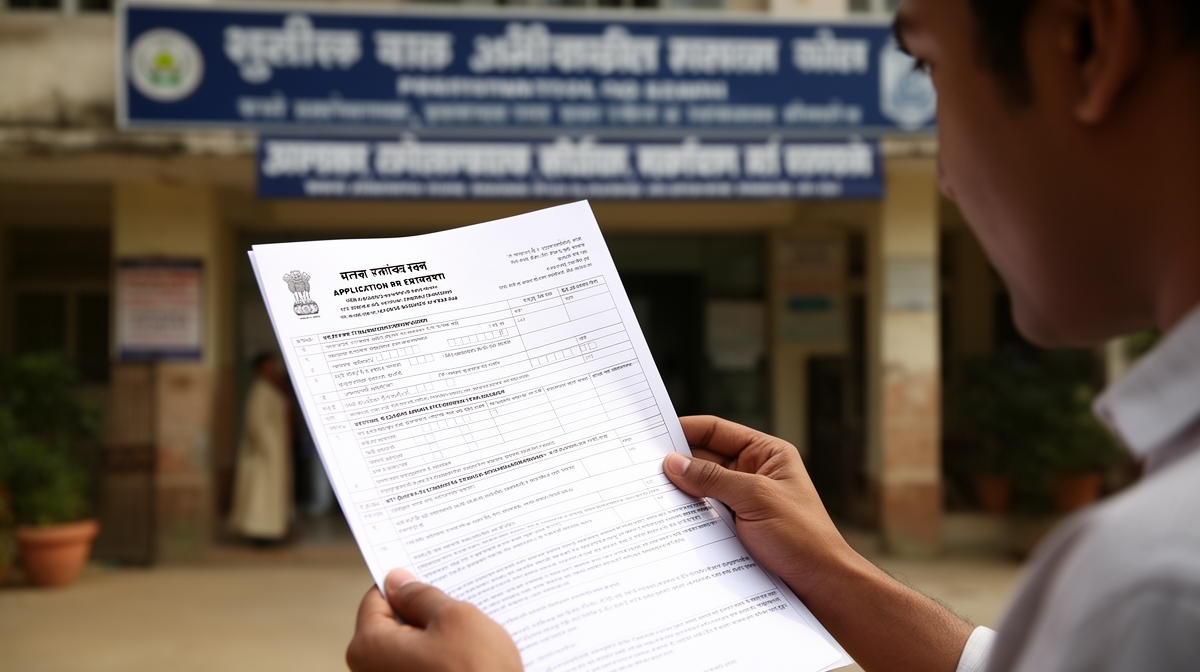

The Andhra Pradesh High Court has clarified that a judicial order cannot be set aside merely because it cites non-existent judgments generated by Artificial Intelligence, provided the legal principles applied are correct and their application to the facts is sound. This decision underscores the distinction between procedural irregularities in citation and substantive legal error.
The Verdict
The petitioners lost. The Andhra Pradesh High Court dismissed the civil revision petition challenging an order that relied on AI-generated fake citations. The core legal holding is that a judicial order is not vitiated by the inclusion of non-existent case law if the underlying legal principles applied are correct and properly reasoned. The court directed that the advocate commissioner’s report remain part of the evidentiary record to be assessed at trial, affirming its non-binding, advisory nature under Order XXVI Rule 10 CPC.
Background & Facts
The dispute arose from a suit for permanent injunction concerning property boundaries. The plaintiffs sought the appointment of an advocate commissioner to determine whether the suit property fell within land acquired by the first defendant under Document No. 6404 of 1989. The High Court, in a prior civil revision petition, directed the appointment of the commissioner with specific instructions to engage a Town/Mandal Surveyor for technical assistance.
The commissioner conducted the inspection and submitted a report on 7 July 2025, but failed to involve the surveyor as mandated. The defendants filed an application under Section 151 CPC seeking to strike down the report, alleging collusion with the plaintiffs and deviation from judicial directions. The trial court dismissed the application, holding that the report was merely evidence to be weighed at trial and that allegations of misconduct required proof through cross-examination, not mere assertion.
The defendants then filed a civil revision petition under Article 227, challenging the trial court’s order. Their primary contention was not about the commissioner’s conduct, but that the trial judge had cited four non-existent judgments in her order - judgments that were later confirmed to have been fabricated by an AI tool.
The Legal Issue
The central legal question was whether a judicial order can be set aside solely on the ground that it references non-existent case law generated by an Artificial Intelligence tool, when the legal principles articulated and applied in the order are otherwise correct and consistent with binding precedent.
Arguments Presented
For the Petitioner
The petitioners’ counsel argued that the trial court’s order was fundamentally flawed because it relied on four non-existent judgments. He contended that judicial orders must be grounded in authentic legal authority, and the use of fabricated citations - regardless of intent - undermines the legitimacy of the decision. He urged the High Court to set aside the order on the basis of procedural illegality and lack of judicial integrity.
For the Respondent
The respondents did not file a written response, but the court noted that the trial court’s reasoning on the evidentiary value of the commissioner’s report was consistent with settled law. The court itself, in its analysis, implicitly supported the respondent’s position by affirming that the substance of the order, not the faulty citations, determined its validity.
The Court's Analysis
The court acknowledged the serious nature of AI-generated fake citations, citing English authorities such as Venkateshwarlu Bandla and Frederick Ayinde, which condemned the practice as a threat to judicial integrity. It recognized that such practices waste judicial time, mislead opposing parties, and erode public trust in the legal system.
"Citing fake authority is prima facie only explicable as either a conscious attempt to mislead or an unacceptable failure to exercise reasonable diligence to verify the material relied upon."
However, the court drew a critical distinction between the source of error and the substance of the decision. It held that while the trial judge’s reliance on AI without verification was negligent and unacceptable, the legal principles she articulated - namely, that a commissioner’s report is not binding but merely evidentiary, and that allegations of bias require concrete proof - were entirely consistent with binding precedents from the Supreme Court and the Andhra Pradesh High Court.
The court cited Order XXVI Rule 10 CPC, which provides that the commissioner’s report forms part of the record but is not conclusive. It further relied on Bandhua Mukti Morcha and M.P. Rajya Tilhan Utpadak Sahakari Sangh to affirm that such reports are advisory, subject to scrutiny, and must be weighed alongside other evidence. The trial court’s conclusion - that the report could not be struck down on mere allegations - was legally sound.
"The Commissioner's report is only an opinion or noting... Such a report does not automatically form part of the court's opinion... the court has the power to confirm, vary or set aside the report."
The court concluded that the error in citation was procedural, not substantive. The order’s reasoning was correct, its application of law was valid, and its outcome was just. Therefore, the presence of fake citations, however regrettable, did not warrant interference under Article 227.
What This Means For Similar Cases
This judgment establishes a crucial precedent for practitioners: the validity of a judicial order hinges on the correctness of its legal reasoning, not the authenticity of every cited authority. Lawyers may no longer successfully challenge orders merely on the basis of non-existent citations if the underlying law is correctly applied.
However, this does not condone the use of AI without verification. Practitioners must now treat AI-generated citations with extreme caution. Any reliance on such tools must be followed by independent verification through official databases like SCC Online, Manupatra, or the Supreme Court’s e-Courts portal. Failure to do so risks professional misconduct, as seen in the English cases cited.
For trial courts, the judgment serves as a stern warning: while AI may assist in drafting, it cannot substitute judicial application of mind. Judges must personally verify every citation before including it in orders. The court’s directive that AI be used with "great care, caution and wisdom" signals that future negligence may attract disciplinary action.
This ruling also reinforces the evidentiary framework for commissioner’s reports. Parties must now focus their challenges on the substance of the report - through cross-examination, affidavits, or rebuttal evidence - not on procedural irregularities in the trial court’s order dismissing objections.