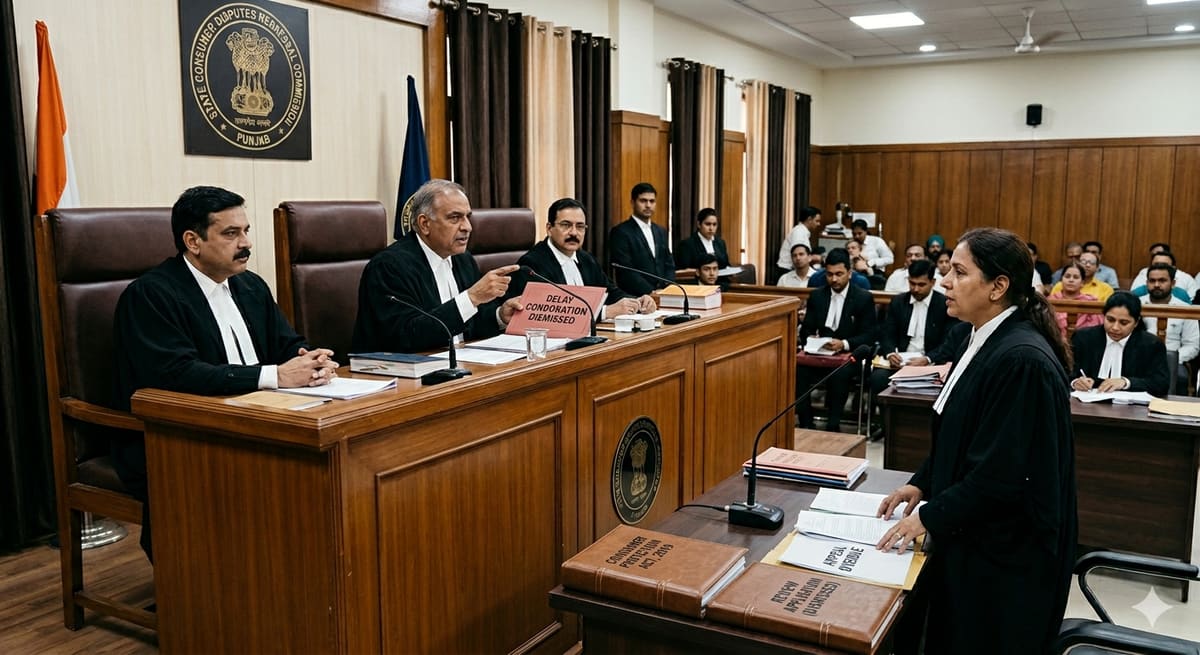
The Uttarakhand High Court has clarified that the absence of a statutory limitation period under the Uttarakhand Police Act, 2007 renders any time-bound appeal rule framed under the repealed Police Act, 1861 inapplicable. This judgment restores the right of police personnel to have disciplinary appeals adjudicated on merit, irrespective of procedural delay.
Background & Facts
The Dispute
The petitioner, Pradeep Singh Bhauryal, Constable No. 3554 in the Indian Reserve Battalion, was dismissed from service by order dated 05.09.2012 issued by the Commandant, IRB, Bailparaw, Nainital. The dismissal was based on unauthorized absence between 07.04.2012 and 19.05.2012. The petitioner filed an appeal against this order, which was dismissed on 05.05.2014 by the Deputy Inspector General of Police, P.A.C. Uttarakhand, solely on the ground of delay.
Key Facts
- The petitioner was dismissed on 05.09.2012 for unauthorized absence from 07.04.2012 to 19.05.2012
- The appeal was filed on 14.04.2014, which was 1 year, 7 months, and 24 days after the dismissal order
- The Appellate Authority invoked Clause (6) of Rule 20 of the Uttar Pradesh Police Officers of the Subordinate Ranks (Punishment and Appeal) Rules, 1991, which prescribed a 3-month limitation period
- The Rules of 1991 were framed under the Police Act, 1861, which was repealed by the Uttarakhand Police Act, 2007
- The petitioner had no prior knowledge of the limitation period under the 1991 Rules, and no notice of limitation was provided at the time of dismissal
Procedural History
- 05.09.2012: Dismissal order passed by Commandant, IRB, Bailparaw
- 14.04.2014: Appeal filed before Appellate Authority
- 05.05.2014: Appellate Authority dismissed appeal on ground of delay
- 17.07.2014: Petitioner filed writ petition before the High Court
- 07.04.2026: Judgment delivered by Justice Manoj Kumar Tiwari
Relief Sought
The petitioner sought quashing of the order dated 05.05.2014 dismissing his appeal on limitation grounds, and directed the Appellate Authority to decide his appeal on merits.
The Legal Issue
The central question was whether the limitation period of three months prescribed under Clause (6) of Rule 20 of the Uttar Pradesh Police Officers of the Subordinate Ranks (Punishment and Appeal) Rules, 1991, continues to apply to appeals filed after the enforcement of the Uttarakhand Police Act, 2007, despite the absence of any limitation in the parent Act.
Arguments Presented
For the Petitioner
The petitioner’s counsel argued that the Police Act, 1861, under which the 1991 Rules were framed, was repealed by the Uttarakhand Police Act, 2007. Section 26 of the 2007 Act provides for the right of appeal against punishment but does not prescribe any limitation period. Therefore, the limitation under the 1991 Rules cannot survive. He relied on the latter half of Section 86(2) of the 2007 Act, which states that saved rules are valid only if they are not inconsistent with the new Act. Since the 1991 Rules impose a limitation not found in the 2007 Act, they are inconsistent and must yield.
For the Respondent
The State Counsel contended that Section 86(2) of the Uttarakhand Police Act, 2007, saves all rules and regulations framed under the repealed Police Act, 1861, and they continue to have the same force as if framed under the new Act. Therefore, the 3-month limitation under Rule 20(6) of the 1991 Rules remains applicable. He argued that the saving clause was intended to ensure continuity of administrative procedures and that the absence of a limitation in the 2007 Act was an oversight, not an intention to remove all time bars.
The Court's Analysis
The Court examined the interplay between Section 26 of the Uttarakhand Police Act, 2007, and Section 86(2), which deals with the saving of existing rules. It observed that while Section 86(2) preserves rules framed under the repealed Act, it does so conditionally: "...provided that such rules or regulations are not inconsistent with the provisions of this Act." The Court emphasized that subordinate legislation cannot override or contradict the parent statute.
"Rules framed under a legislation are subservient to the parent legislation."
The Court noted that Section 26 of the 2007 Act grants a statutory right of appeal without any time limit. By contrast, Rule 20(6) of the 1991 Rules imposes a 3-month limitation. This creates a direct inconsistency. The Court held that where the parent statute is silent on limitation, no subordinate rule can introduce one. To hold otherwise would effectively amend the statute through subordinate legislation, which is impermissible.
The Court further observed that the legislative intent behind the 2007 Act was to modernize police administration and ensure fairness in disciplinary proceedings. Imposing a rigid limitation period, especially one not mentioned in the statute, would undermine this intent and deprive officers of their statutory right to appeal.
The Verdict
The writ petition was allowed. The order dated 05.05.2014 dismissing the appeal on grounds of delay was set aside. The Appellate Authority was directed to decide the petitioner’s appeal on its merits within two months from the date of presentation of the certified copy of this judgment.
What This Means For Similar Cases
Limitation Rules Cannot Override Statutory Silence
- Practitioners must now argue that any limitation period in subordinate rules is void if the parent statute is silent on time limits
- This principle applies to all service rules framed under repealed central or state enactments
- Administrative authorities cannot invoke outdated time bars to dismiss appeals on procedural grounds
Right to Appeal Is Statutory and Non-Derogable
- The right to appeal under Section 26 of the Uttarakhand Police Act, 2007, is substantive and cannot be curtailed by procedural rules
- Disciplinary authorities must now examine appeals on merit, regardless of delay, unless a specific limitation is provided in the parent Act
- This judgment reinforces the doctrine that procedural rules cannot defeat substantive rights
Precedent for Other Repealed Acts
- Similar challenges may arise under other state police acts that replaced older central acts (e.g., Tamil Nadu Police Act, 2019 replacing Police Act, 1861)
- Officers dismissed under repealed regimes may now seek revival of dismissed appeals on the ground of inconsistent limitation rules
- Legal advisors should review all service rules framed under repealed statutes for potential conflicts with current parent laws