The Bombay High Court’s grant of ad interim anticipatory bail in a case involving alleged forgery and fraud underscores a critical shift toward contextual evaluation of bail applications, particularly where no actual financial gain materialized and procedural irregularities persist. This order reinforces that the gravity of allegations alone cannot override the presumption of innocence, especially when the state’s case lacks evidentiary completion.
Background & Facts
The Dispute
The applicant, Ku. Komal d/o Shrikrishna Sable, is accused in Crime No. 354/2024 for allegedly forging a Sammatipatra - consent letter - purportedly issued by Shri Maruti Sansthan, Taroda. The prosecution claims the forged document was used to fraudulently claim a government subsidy of Rs. 40,528. However, the court noted that the subsidy amount was never disbursed, meaning no financial benefit accrued to the applicant or co-accused.
Procedural History
- 2024: Crime No. 354/2024 registered at PS Dahihanda, Akot, Akola District
- 2026: Applicant filed Criminal Application (ABA) No. 186 of 2026 seeking anticipatory bail
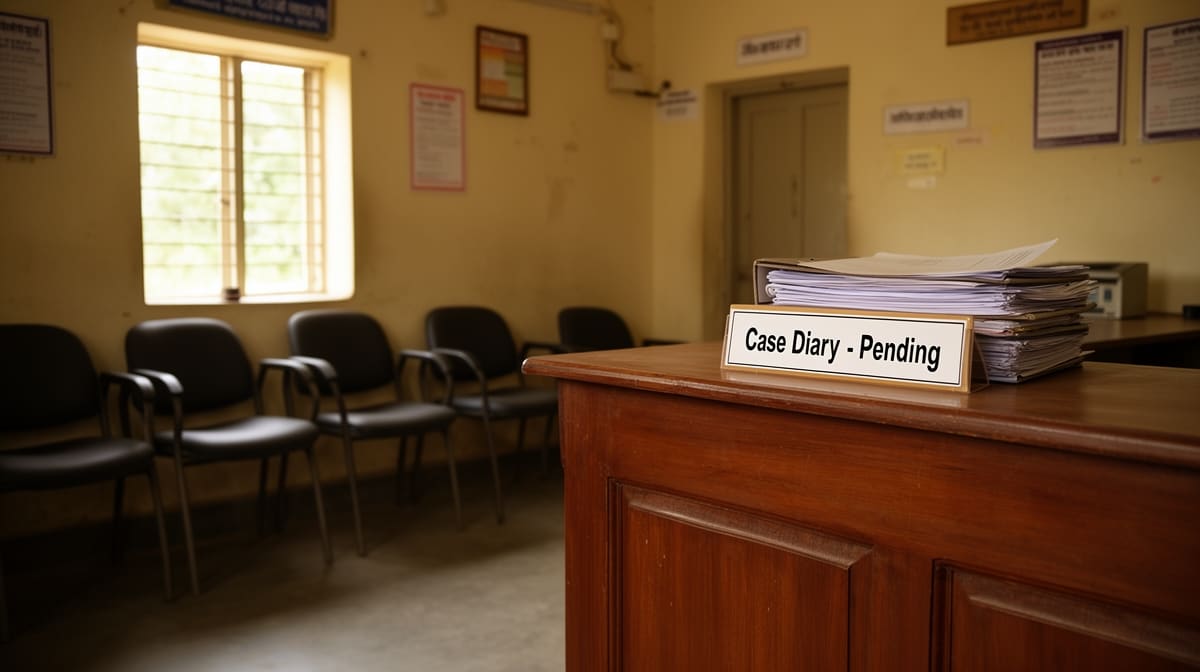
- 11.03.2026: Court heard arguments; State waived notice; case diary not available for review
Relief Sought
The applicant sought protection from arrest pending investigation, arguing that the allegations are unsubstantiated, the alleged fraud yielded no benefit, and she is a woman with no prior criminal record.
The Legal Issue
The central question was whether anticipatory bail can be granted at the interim stage when the alleged offence under Sections 420, 468, 471, and 34 IPC involves forgery but no actual loss or gain, and the prosecution has not yet completed its evidentiary record.
Arguments Presented
For the Petitioner
Counsel P.U. Kavishwar argued that the absence of any disbursement of the subsidy negates the essential ingredient of dishonest intent under Section 420 IPC. He relied on Arnesh Kumar v. State of Bihar to emphasize that arrest is not automatic even for non-bailable offences, and that the applicant, a woman with no criminal antecedents, deserves protection from unnecessary detention. He further contended that the state had not produced the case diary, indicating incomplete investigation.
For the Respondent/State
The Additional Public Prosecutor, Ms. M.R. Kavimandan, waived notice and did not oppose the bail application. The State did not contest the applicant’s request, implicitly acknowledging the lack of urgency or risk of evidence tampering.
The Court's Analysis
The Court conducted a pragmatic assessment of the facts, rejecting a mechanical application of the seriousness of the charges. It emphasized that Section 420 IPC requires proof of dishonest intention and inducement to deliver property, neither of which occurred here since the subsidy was never paid. The court observed that the prosecution’s case remains inchoate, with the case diary unavailable for scrutiny.
"Considering these aspects as well as the fact that the applicant is a lady, she can be granted ad interim protection."
The Court applied the triple test for anticipatory bail - nature of accusation, likelihood of flight, and risk of evidence tampering - and found that while the charges are serious, the absence of actual harm, the applicant’s non-fugitive status, and the State’s non-opposition tilted the balance in her favor. The Court also noted that the applicant’s cooperation with investigation could be ensured through conditions, not custodial detention.
The Verdict
The applicant won. The Court granted ad interim anticipatory bail, holding that non-disbursement of the alleged fraudulent amount negates the core element of gain under Section 420 IPC, and that interim protection is warranted where investigation is incomplete and the accused is a woman with no prior record.
What This Means For Similar Cases
Non-Disbursement Undermines Fraud Allegations
- Practitioners must now argue that Section 420 IPC requires actual inducement and delivery of property; mere intent without execution weakens the prosecution’s case
- In cheque fraud, subsidy scams, or contract fraud cases, the absence of financial transfer must be highlighted as a decisive factor in bail arguments
- Courts are increasingly receptive to this distinction, especially where the accused has no prior history
Procedural Gaps Favor Interim Relief
- When the case diary or key documents are unavailable, courts may treat the investigation as incomplete and grant interim protection
- This creates a tactical opening for counsel to request time for investigation before opposing bail
- The State’s waiver of notice, while not binding, signals judicial tolerance for leniency where procedural compliance is lacking
Gender and Non-Fugitive Status as Mitigating Factors
- The Court’s explicit reference to the applicant’s gender reinforces that women accused in non-violent economic offences are entitled to greater leniency under Article 21
- Conditions like periodic police reporting are now a recognized alternative to arrest
- This sets a precedent for similar applications involving elderly, disabled, or first-time female accused in white-collar cases