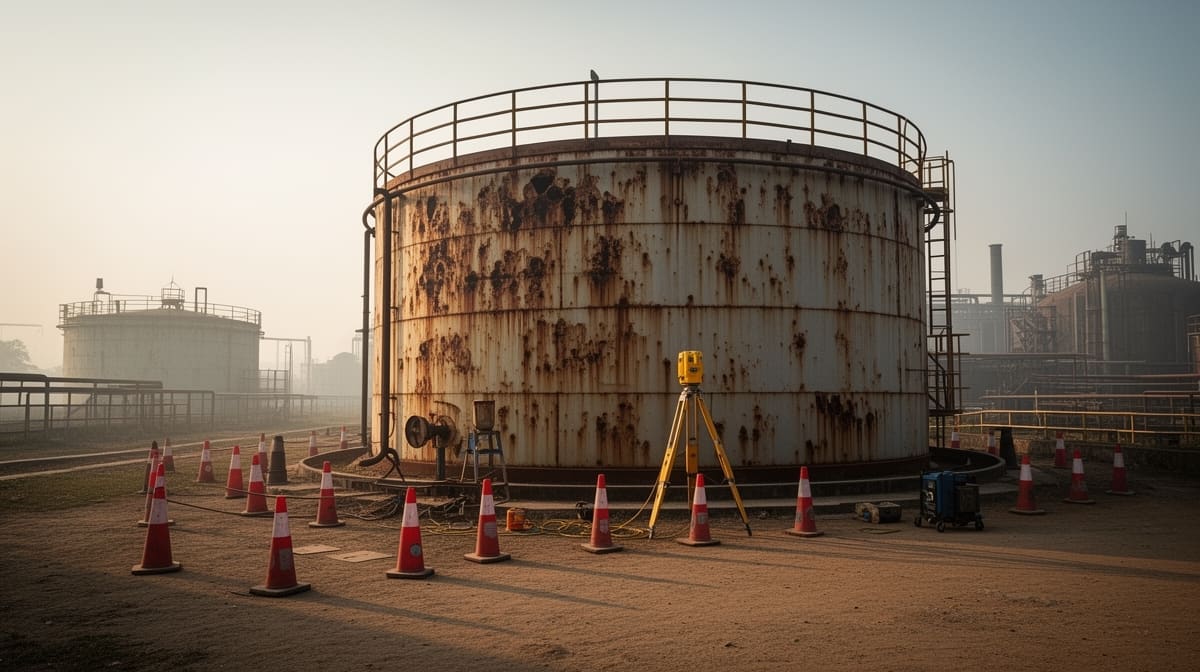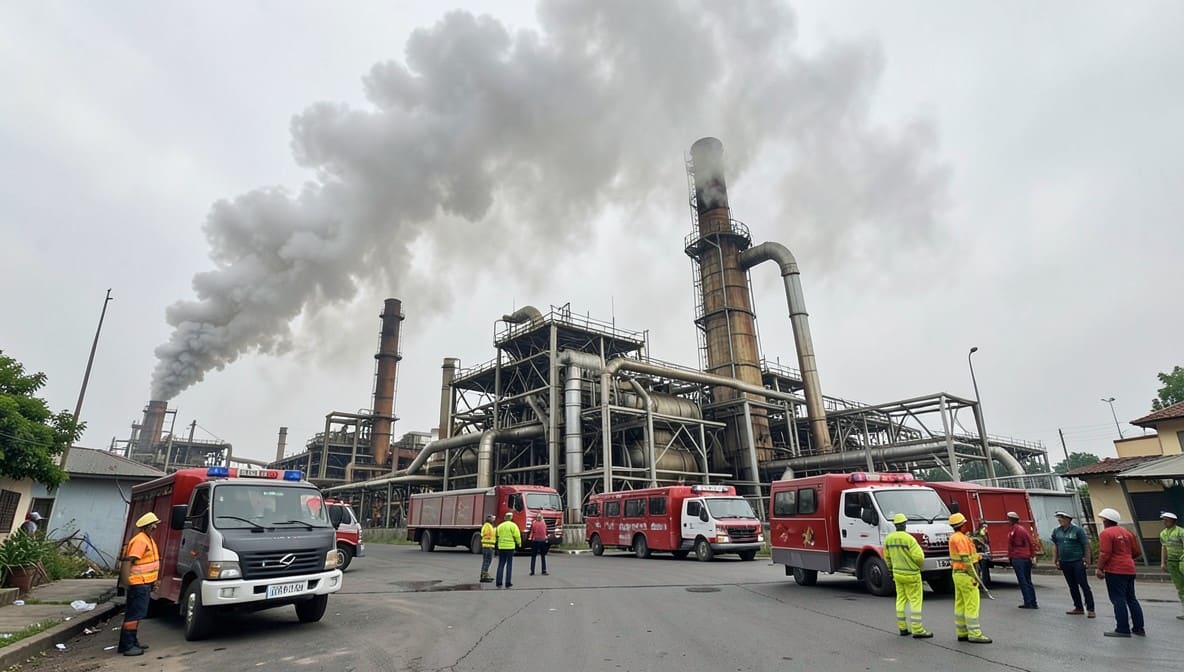
A boiler blast at Vedanta Limited’s thermal power plant in Sakti, Chhattisgarh, which killed at least 13 workers and injured 21 others, has triggered the National Green Tribunal to invoke its suo moto powers under the National Green Tribunal Act, 2010. The Tribunal has ordered a comprehensive technical and environmental investigation, emphasizing that industrial disasters of this scale raise substantial questions of environmental harm and regulatory failure.
Background & Facts
The Dispute
A major industrial accident occurred on Tuesday, 14 April 2026, at Unit No. 01 of the Vedanta Limited thermal power plant in Singhitarai Village, Sakti District, Chhattisgarh. The incident involved a tube rupture in the coal-fired boiler system, leading to a high-pressure steam leak and subsequent explosion around 2:30 pm. The blast resulted in the immediate death of 13 workers and severe injuries to 21 others, with over 34 workers reported to have suffered serious burns. The plant, with an installed capacity of 1200 MW, was operating normally at the time of the incident.
Key Facts
- The incident was first reported in The Times of India on 15.04.2026
- At least 13 fatalities and 21 critical injuries were confirmed
- The explosion originated from a boiler tube rupture in Unit No. 01
- The plant has been operational under statutory environmental clearances
- No formal complaint or application was filed by any party prior to the Tribunal’s intervention
Procedural History
- 14.04.2026: Boiler blast occurs at Vedanta power plant, Sakti, Chhattisgarh
- 15.04.2026: The Times of India publishes news report detailing the incident
- 23.04.2026: National Green Tribunal, Central Zone Bench, Bhopal, takes cognizance suo moto of the incident based on media report
- 23.04.2026: Tribunal issues notice to State of Chhattisgarh and other respondents
- 23.04.2026: Tribunal directs formation of a Joint Technical Committee
- 08.05.2026: Deadline for site inspection by the Committee
- 08.06.2026: Deadline for submission of the Committee’s report
- 03.07.2026: Next hearing date for review of report and further directions
Relief Sought
Though no formal applicant appeared, the Tribunal, acting suo moto, sought:
- A detailed technical report on the sequence and cause of the blast
- Identification of responsible persons and authorities
- Assessment of environmental damage to air, water, and soil
- Quantification of compensation for victims and families
- A restoration plan for damaged environment
- Recommendations to prevent recurrence
- Action against officials for non-compliance with environmental clearances
The Legal Issue
The central question was whether the National Green Tribunal can invoke its suo moto jurisdiction under the National Green Tribunal Act, 2010, based solely on a media report of an industrial disaster causing death and potential environmental harm, and whether such invocation justifies the constitution of a technical committee to investigate environmental violations.
Arguments Presented
For the Appellant/Petitioner
No party appeared for the applicant. The Tribunal acted without adversarial submissions.
For the Respondent/State
No party appeared for the respondents. The Tribunal proceeded ex parte, relying on the factual narrative in the media report and its statutory mandate to protect the environment.
The Court's Analysis
The Tribunal relied on the precedent set by the Supreme Court in Municipal Corporation of Greater Mumbai v. Ankita Sinha & Ors. (2021 SCC Online SC 897), which affirmed that the National Green Tribunal possesses inherent powers to take cognizance of environmental issues suo moto, particularly where public interest and ecological harm are evident from credible public reports.
"The Tribunal is not a passive forum; it is a statutory body mandated to safeguard the environment and public health, and its jurisdiction extends to situations where the state or affected parties fail to initiate proceedings."
The Tribunal emphasized that the scale of the incident - 13 deaths, 21 critical injuries, and the potential for widespread environmental contamination from a coal-fired boiler explosion - constitutes a substantial question relating to the environment under Section 14 of the NGT Act, 2010. The Tribunal noted that the incident raises concerns about compliance with environmental clearances, safety protocols under the Environment (Protection) Act, 1986, and the failure of regulatory oversight by state agencies.
It further held that the absence of a formal petitioner does not preclude intervention when the gravity of the incident implicates public health and ecological integrity. The Tribunal reasoned that the media report, published in a reputable national newspaper, provided sufficient prima facie grounds to initiate proceedings.
The Tribunal also stressed the need for technical expertise in assessing the cause of the blast and its environmental impact, hence the constitution of a multidisciplinary committee including representatives from MoEF&CC, CPCB, NIT Raipur, and CECB.
The Verdict
The National Green Tribunal invoked its suo moto jurisdiction and ordered:
- Formation of a Joint Technical Committee to inspect the site by 08.05.2026 and submit a report by 08.06.2026
- The Committee to determine the sequence of events, causes, responsible parties, and extent of environmental damage to air, water, and soil
- Quantification of compensation for victims and families, and preparation of a restoration plan in coordination with the District Magistrate
- The nodal agency for restoration to be the MoEF&CC representative
- The Chief Secretary of Chhattisgarh to identify and take action against officials responsible for non-compliance with environmental clearances within two months
- All hazardous chemical industries to conduct mandatory mock drills and safety audits
- The next hearing scheduled for 03.07.2026
What This Means For Similar Cases
Suo Moto Powers Are Activable on Credible Media Reports
- Practitioners must now treat credible media reports of industrial disasters as valid triggers for NGT intervention
- No formal complaint is required if the incident raises substantial environmental questions
- The Tribunal may act even in the absence of petitioners or respondents
Environmental Accountability Extends Beyond Operators
- Regulatory authorities (CECB, CPCB, State Environment Departments) are now explicitly liable for oversight failures
- The Tribunal has directed action against officials for permitting operations without statutory clearances
- Failure to enforce environmental conditions may now lead to personal accountability
Technical Investigations Are Mandatory in Industrial Disasters
-
Future NGT proceedings involving industrial accidents will require multidisciplinary technical reports
-
Reports must be in searchable PDF format, not image-based scans
-
Nodal agencies must coordinate with district administration for compensation and restoration
-
Practitioners representing industries must now proactively demonstrate compliance with safety audits and mock drills
-
The requirement for restoration plans and compensation quantification sets a new precedent for post-accident remediation