The Rajasthan High Court has clarified that mere recovery of commercial quantity narcotics from an abandoned vehicle, without evidence linking the accused to its exclusive possession, does not justify denial of bail under the NDPS Act. This ruling reinforces the principle that bail cannot be withheld solely on the basis of quantity, especially where the prosecution fails to establish active involvement.
Background & Facts
The Dispute
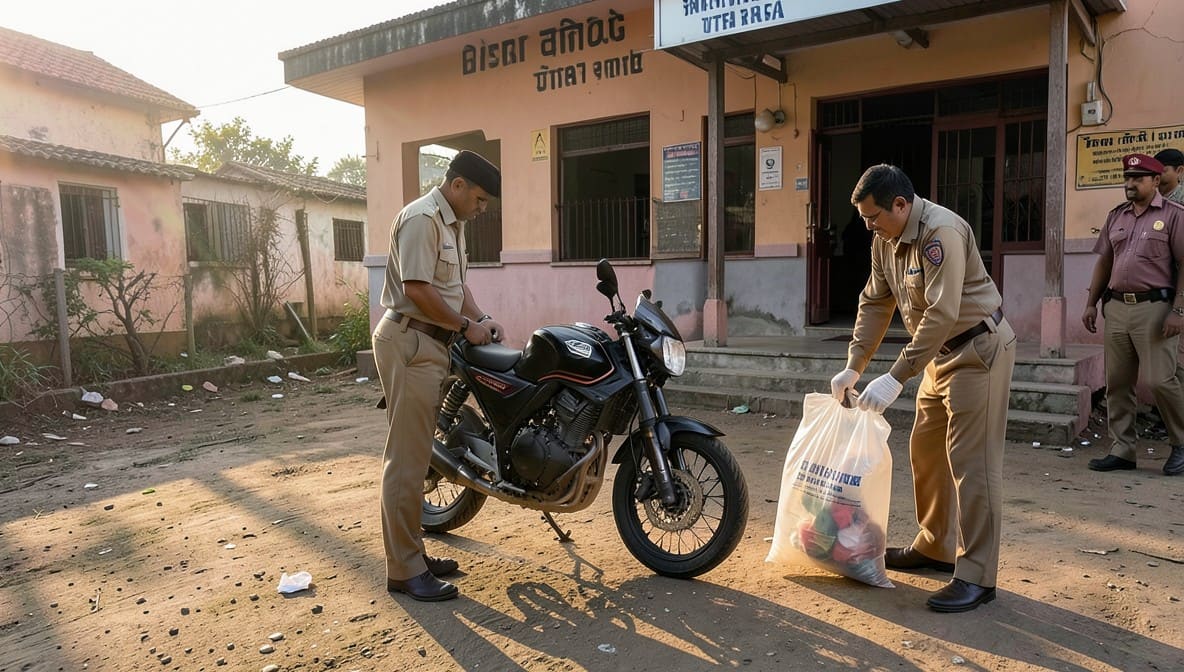
The petitioners, Ashok Panwar and Amrit Lal @ Rahul, were arrested in connection with F.I.R. No. 295/2023 registered at Police Station Bilara, District Jodhpur, for offences under Sections 8 and 15 of the Narcotic Drugs and Psychotropic Substances (NDPS) Act, 1985. The case arose from the recovery of 299.04 kilograms of poppy husk/straw, contained in 15 plastic bags, from an abandoned Hyundai Creta vehicle bearing registration number RJ18-CC-3872.
Key Facts
- The contraband was recovered on an unspecified date prior to the filing of the FIR, but the arrest of the petitioners occurred in 2023.
- The vehicle was found abandoned and unattended at the time of recovery.
- Neither petitioner is the registered owner of the vehicle.
- The FASTag affixed to the vehicle was linked to a mobile SIM card not registered in either petitioner’s name.
- No fingerprints, DNA, CCTV footage, or direct eyewitness testimony placed either petitioner in the vehicle at the time of the offence.
- The prosecution’s case relies primarily on statements of individuals whose SIM cards were linked to the FASTag, with no corroborative evidence tying the petitioners to the contraband.
- The Investigating Officer (PW-01) and Seizure Officer (PW-02) have deposed before the trial court, admitting no cogent material was found to establish the petitioners’ complicity.
Procedural History
- 2023: F.I.R. No. 295/2023 registered at Police Station Bilara, District Jodhpur.
- 2023: Arrest of petitioners Ashok Panwar and Amrit Lal @ Rahul.
- 2025: First bail applications filed before the trial court and rejected.
- 08/05/2025: Second bail applications filed under Section 483 of the Bharatiya Nagarik Suraksha Sanhita (BNSS) before the High Court of Judicature for Rajasthan at Jodhpur.
- 08/05/2026: Hearing conducted before Justice Kuldeep Mathur.
The Parties' Positions
For the Petitioners: The petitioners’ counsel argued that the prosecution has failed to establish any direct or circumstantial evidence linking them to the contraband. They emphasized that the vehicle was abandoned, ownership was not theirs, and the FASTag linkage was to third parties. They contended that the case is built on conjecture and surmise, and continued detention would violate their right to personal liberty under Article 21 of the Constitution.
For the Respondent: The Public Prosecutor opposed bail, asserting that the quantity of poppy husk (299.04 kg) exceeds the commercial quantity threshold under the NDPS Act, thereby invoking the stringent bail conditions under Section 37 of the Act. The State argued that the nature of the offence and the scale of contraband warranted continued custody.
Relief Sought
The petitioners sought bail under Section 483 BNSS, with conditions of personal bond and sureties, pending trial. They requested release from judicial custody on the grounds that the prosecution has failed to make out a prima facie case against them.
The Legal Issue
Can bail be denied under Section 37 of the NDPS Act solely on the ground that the contraband recovered exceeds commercial quantity, when there is no evidence establishing the accused’s exclusive or conscious possession of the contraband?
Arguments Presented
For the Petitioner
The petitioners’ counsel relied on the principle that possession under the NDPS Act must be conscious and exclusive. They cited judicial precedents holding that recovery from an abandoned vehicle, without corroboration linking the accused to its use or control, cannot sustain a charge of trafficking or possession. They emphasized that the burden of proof lies on the prosecution to establish active involvement, and that mere proximity or association with the vehicle is insufficient. They further argued that the trial is likely to take years, and prolonged pre-trial detention without prima facie evidence violates the presumption of innocence.
For the Respondent
The Public Prosecutor contended that the quantity of poppy husk (299.04 kg) is well above the commercial quantity limit under Section 2(ii) of the NDPS Act, triggering the mandatory bar on bail under Section 37. They argued that the location of recovery (abandoned vehicle) does not negate the seriousness of the offence, and that the petitioners’ arrest was justified based on the investigation’s trajectory, including FASTag data and witness statements.
The Court's Analysis
The Court examined the nature of possession required under the NDPS Act and distinguished between mere proximity and conscious control. It noted that while the quantity of contraband is substantial, the law does not permit automatic denial of bail merely because the weight exceeds commercial limits. The Court emphasized that Section 37 of the NDPS Act requires the court to be satisfied that there are reasonable grounds for believing the accused is not guilty and that they are not likely to commit any offence while on bail. In this case, the Court found no such grounds for denial.
"It is also not disputed that neither are the petitioners the registered owners of the offending vehicle nor is the mobile SIM linked with the FASTag affixed on the vehicle registered in their names."
The Court further observed that the prosecution’s case rests on indirect and speculative evidence - namely, the FASTag linkage to third parties - without any physical, digital, or testimonial evidence placing the petitioners in the vehicle or connecting them to the contraband. The Court held that the Investigating Officer’s own deposition confirmed the absence of cogent material linking the petitioners to the offence.
The Court concluded that the rigours of Section 37 of the NDPS Act are satisfied because the prosecution has not established a prima facie case of possession or control by the petitioners. The Court explicitly stated that its observations are for the limited purpose of bail adjudication and shall not prejudice the trial court.
The Verdict
The bail applications of Ashok Panwar and Amrit Lal @ Rahul are allowed. The petitioners shall be released on bail, provided each furnishes a personal bond of Rs. 1,00,000 and two sureties of Rs. 50,000 each, to the satisfaction of the trial court. They must appear before the trial court on all hearing dates and whenever called upon until the conclusion of the trial. The order clarifies that no prejudice shall attach to the trial court from the bail observations.
What This Means For Similar Cases
Possession Must Be Proven, Not Assumed
- Practitioners must challenge bail denials under NDPS Act where contraband is recovered from vehicles, premises, or containers not owned or controlled by the accused.
- The prosecution must establish conscious and exclusive possession - mere proximity or association is insufficient.
- FASTag data, mobile records, or third-party statements alone cannot substitute for direct evidence of involvement.
Quantity Alone Does Not Override Liberty
- Courts must conduct a fact-specific inquiry even when commercial quantities are involved.
- Section 37 of the NDPS Act does not create an automatic bar to bail; it requires the court to assess whether the accused is likely to commit further offences or tamper with evidence.
- In the absence of prima facie evidence of active participation, prolonged detention violates Article 21.
Bail Applications Under Section 483 BNSS Are Viable Tools
- Section 483 BNSS empowers High Courts to grant bail in cases where lower courts have erroneously denied it.
- This judgment reinforces that bail is the rule, not the exception, even in serious drug cases, if the prosecution’s case is speculative.
- Defence counsel should routinely file second bail applications under Section 483 BNSS where the trial court ignores the absence of direct evidence.