The Punjab & Haryana High Court has reaffirmed that repeated involvement in narcotics cases, even without physical recovery from the accused, disqualifies an individual from bail if they are named only in the disclosure statement of a co-accused. The judgment underscores the stringent application of Section 37 of the NDPS Act against habitual offenders, prioritizing investigative integrity over procedural delays.
Background & Facts
The Dispute
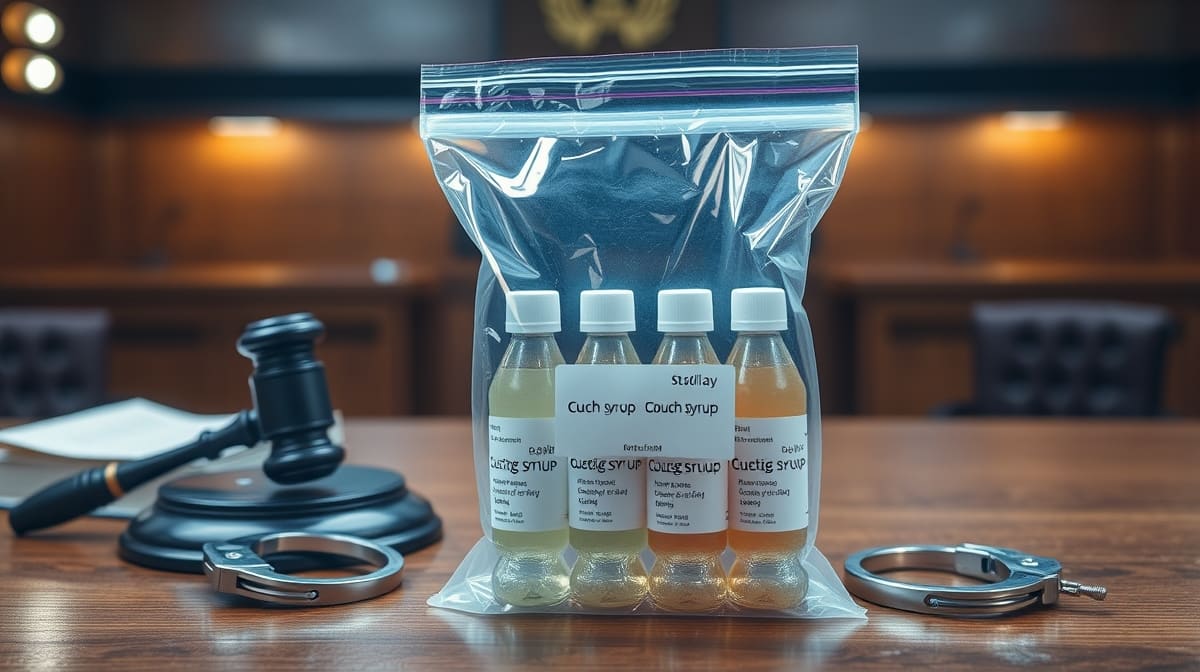
The petitioner, Ajay, seeks regular bail in connection with FIR No. 407 dated 12.12.2025 registered at Police Station City, Tohana, District Fatehabad, under Section 21(B) of the Narcotic Drugs and Psychotropic Substances Act, 1985 (NDPS Act). The case arises from the arrest of Satish Kumar @ Bhajji, who was found in possession of 7 grams 25 milligrams of heroin. Satish Kumar disclosed the petitioner’s name as the seller of the contraband. No recovery was made from the petitioner, and no independent evidence links him to the offence.
Key Facts
- The petitioner was named solely in the disclosure statement of co-accused Satish Kumar @ Bhajji, made on 12.12.2025.
- No contraband was recovered from the petitioner’s person, residence, or vehicle.
- The petitioner has been in judicial custody since 06.01.2026.
- The prosecution has not examined any of the 13 named witnesses as of the date of hearing.
- The petitioner is also an accused in three other pending NDPS Act cases:
- FIR No. 176/2025 dated 08.05.2025 under Sections 21B, 61, 85 NDPS Act
- FIR No. 17/2023 dated 15.01.2023 under Sections 21A, 61, 85, 29 NDPS Act
- FIR No. 431/2025 dated 30.12.2025 under Sections 21B, 27A, 61, 85 NDPS Act
- All three prior cases remain pending trial.
- No transcript of any communication (call records, WhatsApp chats) between the petitioner and co-accused has been produced by the prosecution.
Procedural History
- 12.12.2025: FIR No. 407 registered against Satish Kumar @ Bhajji and unnamed accused.
- 06.01.2026: Petitioner arrested and taken into custody.
- Pending: Trial has not commenced; no prosecution witness examined.
- 12.05.2026: Present petition under Section 483 of BNSS, 2023 (equivalent to Section 439 Cr.P.C.) filed before the High Court seeking regular bail.
Relief Sought
The petitioner seeks regular bail on the grounds that:
- He was named only in the disclosure statement of a co-accused.
- No recovery was effected from him.
- No corroborative evidence exists.
- The trial is unlikely to conclude soon due to non-examination of witnesses.
- He has been in custody since 06.01.2026.
The Parties' Positions
For the Petitioner
The petitioner’s counsel relied on multiple judgments including Tofan Singh v. State of Tamil Nadu, Rakesh Kumar Singla v. Union of India, Surinder Kumar Khanna v. Intelligence Officer, State by (NCB) Bengaluru v. Pallulabid Ahmad Arimutta, Sanjeev Chandra Agarwal v. Union of India, Vijay Singh v. State of Haryana, Vikrant Singh v. State of Punjab, and Soni Singh @ Chamkaur Sahib. The core contention was that where an accused is named only in a disclosure statement and no recovery or corroborative evidence exists, bail must be granted under the principles laid down in Tofan Singh. The delay in trial and absence of witness examination were emphasized as factors favoring bail.
For the Respondent-State
The State, represented by Sr. DAG T.P. Singh, conceded that no recovery was made from the petitioner and that no witness had been examined. However, it argued that the petitioner’s repeated involvement in three other pending NDPS Act cases establishes him as a habitual offender. The State relied on State of Haryana v. Samarth Kumar, Ranjit Singh v. State of Punjab, and Soni Singh @ Chamkaur Sahib to contend that multiple pending cases negate the presumption of innocence and justify continued custody for investigative purposes.
The Legal Issue
Can an accused, named solely in the disclosure statement of a co-accused with no recovery or corroborative evidence, be granted regular bail under Section 483 of BNSS, 2023, despite being implicated in three other pending NDPS Act cases?
Arguments Presented
For the Petitioner
The petitioner’s counsel contended that the Supreme Court in Tofan Singh v. State of Tamil Nadu held that disclosure statements under Section 27 of the Evidence Act are inadmissible as substantive evidence. Relying on Vikrant Singh v. State of Punjab and Vijay Singh v. State of Haryana, the counsel argued that absence of recovery and lack of independent evidence mandates bail, even under the NDPS Act. The prolonged custody without trial, coupled with non-examination of witnesses, was cited as grounds for invoking the principle of uti possidetis juris and the right to speedy trial. The counsel further submitted that the three other cases, though pending, do not constitute convictions and cannot be used to deny bail under Section 439 Cr.P.C.
For the Respondent-State
The State countered that Section 37 of the NDPS Act imposes additional restrictions on bail beyond those under Cr.P.C., particularly for habitual offenders. Citing State of Haryana v. Samarth Kumar, the State emphasized that the Supreme Court has held that multiple FIRs over time indicate a pattern of criminal conduct, making it impossible to satisfy the twin conditions under Section 37 - that the accused has not committed the offence and is not likely to commit one in future. The State relied on Ranjit Singh v. State of Punjab and Soni Singh @ Chamkaur Sahib to argue that repeated allegations, even without conviction, justify denial of bail to prevent interference with investigation and to deter recidivism.
The Court's Analysis
The Court undertook a detailed review of the precedents cited by both parties. It acknowledged the principle established in Tofan Singh and reaffirmed in Vikrant Singh and Vijay Singh that mere mention in a disclosure statement, without corroborative evidence or recovery, may warrant bail. However, the Court distinguished these cases on a critical factual ground: the presence of multiple pending NDPS Act cases against the petitioner.
"In cases of this nature, the respondents may be able to take advantage of the decision in Tofan Singh v. State of Tamil Nadu (supra), perhaps at the time of arguing the regular bail application or at the time of final hearing after conclusion of the trial."
The Court noted that while Vijay Singh granted anticipatory bail despite a prior NDPS case, that case involved only one prior case and no evidence of habitual conduct. In contrast, the petitioner here faces three active, pending NDPS cases spanning over two years, all registered at the same police station and involving similar allegations. The Court held that such a pattern cannot be dismissed as coincidental or the result of arbitrary investigation.
The Court further emphasized the Supreme Court’s ruling in State of Haryana v. Samarth Kumar, which clarified that Section 37 of the NDPS Act imposes cumulative restrictions - meaning that even if bail is otherwise permissible under Cr.P.C., the additional conditions under Section 37 must be satisfied. The Court observed:
"When there are multiple FIRs against a person over a significant period of time... the twin conditions as envisaged under Section 37 of the NDPS Act that he has not committed an offence and was not likely to commit an offence cannot be satisfied."
The Court rejected the argument that acquittals in prior cases negate habitual offender status, noting that Ranjit Singh held that repeated implication, even with acquittals, indicates a propensity for involvement in such offences. The absence of call transcripts or communication records was noted but deemed insufficient to overcome the weight of multiple pending cases.
The Court concluded that the petitioner’s continued custody is necessary to ensure the integrity of ongoing investigations in all four cases and to prevent potential tampering or flight.
The Verdict
The petition was dismissed. The petitioner is not granted regular bail. The Court held that the petitioner’s involvement in three other pending NDPS Act cases establishes him as a habitual offender under Section 37 of the NDPS Act, overriding the absence of recovery or corroborative evidence in the present case. The petitioner shall remain in custody pending trial in all four cases. No interim relief was granted.
What This Means For Similar Cases
Multiple Pending NDPS Cases Override Disclosure-Only Allegations
- Practitioners must now treat multiple pending NDPS cases as a decisive factor in bail applications, even where the accused was named only in a disclosure statement.
- The mere absence of recovery or independent evidence will not suffice to secure bail if the accused has a history of involvement in similar offences.
Section 37 NDPS Act Creates a Cumulative Bar to Bail
- Section 37 of the NDPS Act operates in addition to Cr.P.C. provisions - it is not displaced by Tofan Singh or Vikrant Singh when habitual offender status is established.
- Courts will now examine the totality of pending cases, not just the merits of the current FIR, when applying Section 37.
Investigative Necessity Trumps Trial Delay
-
Delay in trial due to non-examination of witnesses does not automatically entitle an accused to bail if the accused is a habitual offender.
-
Custodial interrogation remains justified to pursue recoveries and complete investigations across multiple linked cases.
-
In NDPS cases, always compile a complete history of prior FIRs, acquittals, and bail grants - these are now central to bail arguments.
-
For petitioners with multiple pending cases, focus on demonstrating lack of criminal intent or absence of pattern, not just absence of recovery.
-
Prosecutors may now use prior pending cases as a standalone ground to oppose bail, even without convictions.