The Bombay High Court has clarified that prior criminal antecedents, even under the NDPS Act, cannot override the absence of prima facie evidence linking an accused to the specific offense. In granting bail, the Court emphasized that pre-trial detention cannot be justified without a direct connection between the accused and the recovered contraband.
Background & Facts
The Dispute
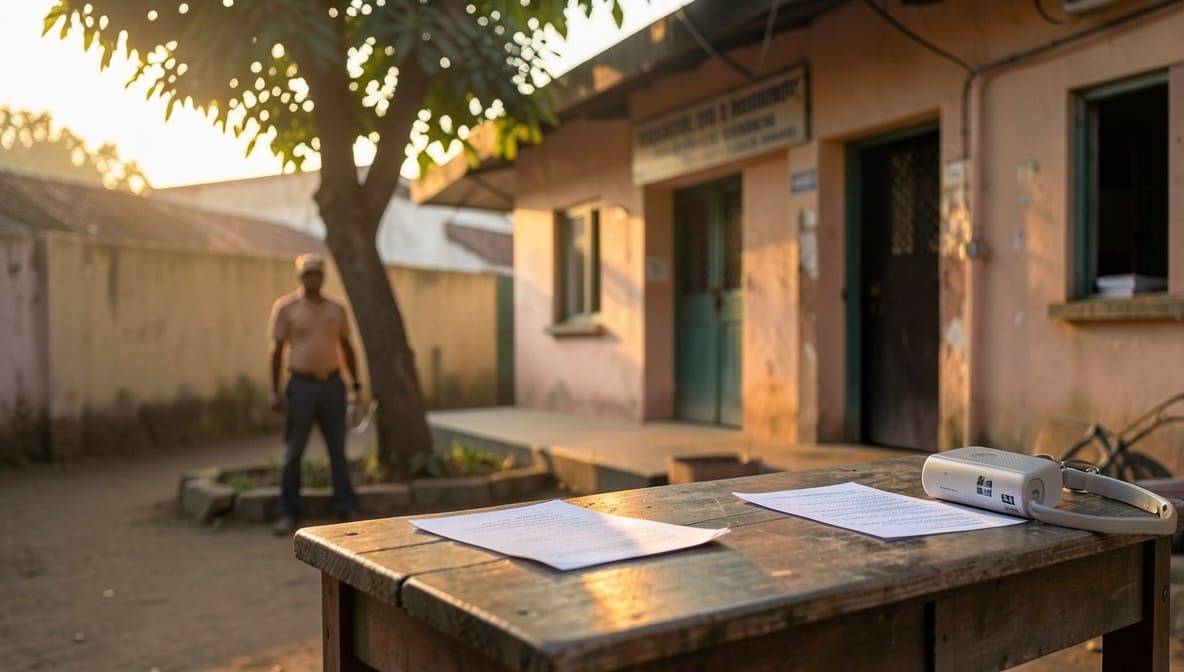
The applicant, Shamshad Fajlu Shaikh, seeks bail in connection with Crime No. 0113 of 2025, registered on 20th February 2025 at Meghwadi Police Station, Mumbai, for offences under Sections 8(c) and 22(c) of the Narcotic Drugs and Psychotropic Substances Act, 1985. The prosecution alleges that on 19th February 2025, secret information led to a raid on premises at Amir Khan Chawl, Prem Nagar, Jogeshwari (East), Mumbai, where 1,195 sealed bottles of 'Onerex' cough syrup containing contraband were recovered. The applicant was allegedly present outside the premises and fled upon seeing police. He was later arrested in Goa.
Key Facts
- The raid occurred on 19th February 2025 based on secret information.
- 1,195 bottles of 'Onerex' cough syrup, later confirmed to contain contraband, were seized from the premises.
- The applicant was not found inside the premises at the time of raid.
- The premises were not shown to be owned, leased, or occupied by the applicant.
- Seizure panchanama was signed by the sister of the applicant and another individual, Irshad, but their statements were not recorded during investigation.
- No evidence in the charge-sheet links the applicant to possession, control, or knowledge of the recovered contraband.
- The applicant has seven pending criminal cases, five of which are under the NDPS Act.
Procedural History
- 19th February 2025: Raid conducted and contraband recovered.
- 20th February 2025: Crime No. 0113 of 2025 registered.
- Date unknown: Investigation concluded and charge-sheet filed.
- Date unknown: Applicant arrested in Goa.
- 2026: Bail application filed before Bombay High Court.
Relief Sought
The applicant seeks bail on the grounds that there is no prima facie evidence connecting him to the offense, and that his detention amounts to pre-trial punishment.
The Legal Issue
The central question was whether Section 37 of the NDPS Act bars bail when the prosecution fails to establish a prima facie link between the accused and the recovered contraband, despite the existence of prior criminal antecedents.
Arguments Presented
For the Applicant
Learned counsel argued that the prosecution has not established any connection between the applicant and the premises from which the contraband was recovered. No evidence shows ownership, tenancy, or control over the premises. The signatures on the seizure panchanama belong to third parties whose statements were not recorded. The applicant’s absence from the premises at the time of raid and his subsequent flight do not, by themselves, establish guilt. The applicant’s prior cases cannot substitute for evidence in the present case.
For the Respondent
The learned Additional Public Prosecutor opposed bail by highlighting the applicant’s five prior NDPS cases, suggesting a pattern of involvement in drug trafficking. It was submitted that witness statements in the charge-sheet indicate the applicant’s role in the sale of contraband. However, the Court specifically asked for evidence linking the applicant to exclusive possession of the premises, and the prosecution could not produce any.
The Court's Analysis
The Court examined the requirements of Section 37 of the NDPS Act, which imposes a stringent condition for bail, requiring the Court to be satisfied that there are reasonable grounds to believe the accused is not guilty and that he is not likely to commit any offence while on bail. However, the Court held that this stringent condition cannot override the fundamental principle that bail is the rule and jail is the exception.
"In absence of any evidence to connect the Applicant with the present crime, merely on the ground there are antecedents against him, the bail cannot be rejected to him."
The Court noted that the prosecution’s case rests entirely on recovery from a premises not attributable to the applicant. The absence of any testimony or documentary evidence placing the applicant in possession or control of the seized items renders the charge speculative. The Court distinguished between general criminal history and specific evidentiary linkage to the current offense. While prior cases may be relevant for sentencing or bail conditions, they cannot substitute for proof of involvement in the instant offense.
The Court further emphasized that the embargo under Section 37 applies only when the prosecution establishes a prima facie case. Where the evidence is insufficient to connect the accused to the contraband, the threshold for bail under Section 37 is not triggered.
The Verdict
The bail application is allowed. The applicant shall be released on bail upon furnishing a personal bond of Rs. 30,000 with one or two sureties in the like amount, to the satisfaction of the Trial Court. The applicant is directed to report to the concerned police station once every month, on the first Monday of each month, for a period of one year from today. He must attend all hearing dates before the Trial Court unless specifically exempted. The Court clarified that its observations are prima facie and shall not influence the Trial Court’s final determination.
What This Means For Similar Cases
Bail Cannot Be Denied Solely on Antecedents
- Practitioners must challenge bail denials under Section 37 NDPS Act where the prosecution fails to establish a prima facie link between the accused and the contraband.
- Prior NDPS cases, however numerous, cannot substitute for evidence in the current charge.
- Courts must distinguish between propensity and proof.
Recovery from Third-Party Premises Requires Corroboration
- In NDPS cases involving recovery from premises not owned or occupied by the accused, the prosecution must adduce evidence of control, knowledge, or access.
- Seizure panchanamas signed by third parties without recorded statements are insufficient to establish guilt.
- Absence of possession evidence renders the charge legally unsustainable.
Procedural Safeguards Trump General Suspicion
- Courts must apply the triple test for bail: seriousness of offense, likelihood of flight, and risk of tampering - but only after assessing evidentiary sufficiency.
- The burden remains on the prosecution to establish a prima facie case before invoking stringent bail provisions.
- Flight from the scene, without more, does not equate to guilt in the absence of corroborative evidence.