The Bombay High Court has reaffirmed that procedural fairness is not a formality but a constitutional imperative when planning authorities issue show-cause notices under the Maharashtra Regional and Town Planning Act. The judgment underscores that failure to disclose evidence or provide adequate opportunity to respond renders such notices legally unsustainable, regardless of the underlying alleged violation.
Background & Facts
The Dispute
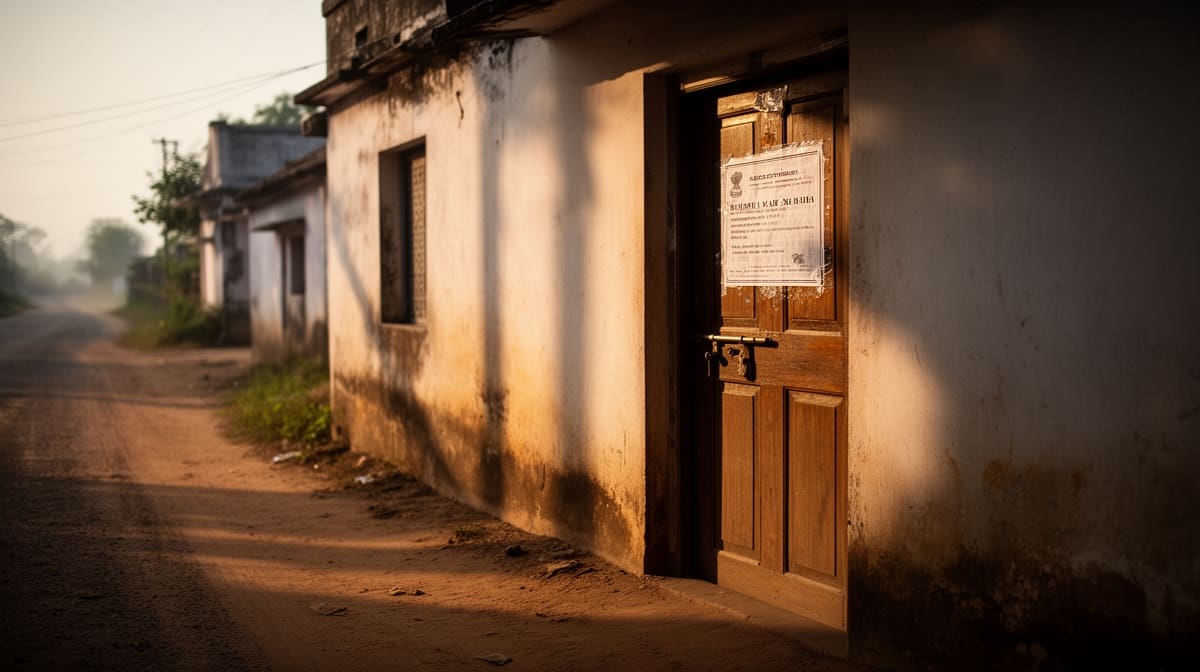
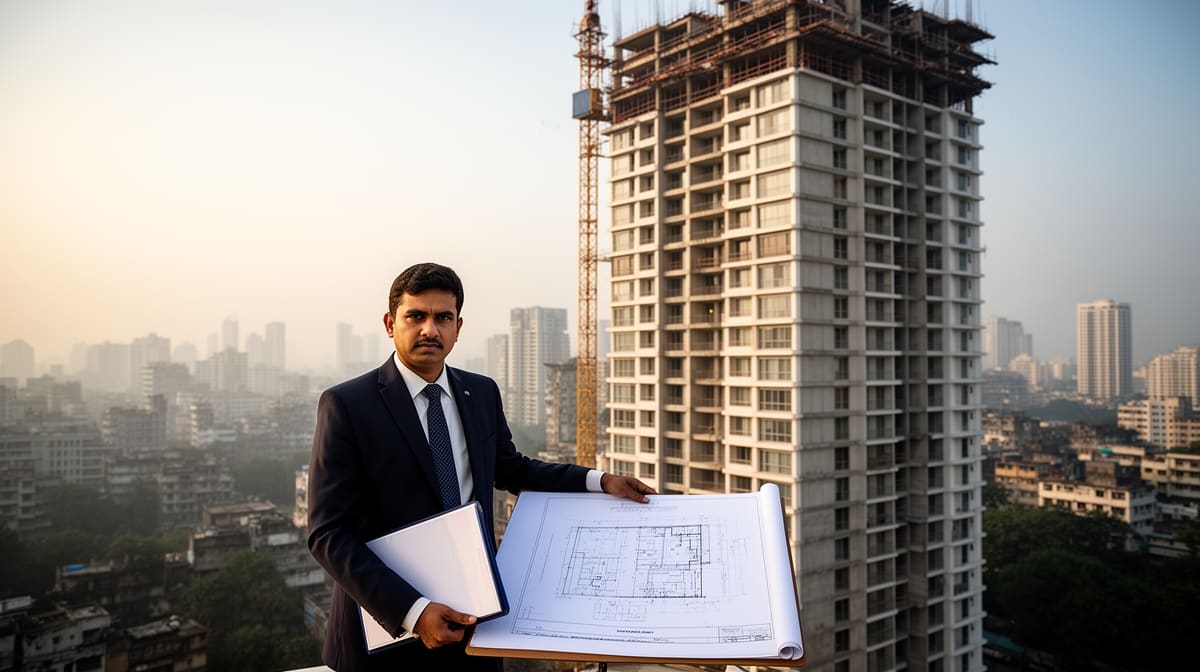
The petitioner, a developer, completed construction of two 22-storey residential towers in Goregaon, Mumbai, with sanctioned plans approved by the Maharashtra Housing and Area Development Authority (MHADA). Subsequently, the Brihanmumbai Municipal Corporation (BMC), acting on a direction from MHADA, issued a show-cause notice under Section 52 and Section 53(1) of the Maharashtra Regional and Town Planning Act, 1966 (MRTP), alleging unauthorized construction. The notice claimed the structures were built without permission, despite prior approvals.
Procedural History
- December 2025: MHADA appointed an Enquiry Officer to investigate the construction.
- January 14, 2026: Impugned notice issued, citing an undisclosed report by the Enquiry Officer.
- January 16, 2026: Hearing date fixed in the notice - two days before the petitioner received it on January 22, 2026.
- February 4, 2026: BMC issued an order for demolition of the structures.
- February 12, 2026: Writ petition filed challenging the notice and demolition order.
Relief Sought
The petitioner sought quashing of the show-cause notice and demolition order, along with a stay on all coercive action, on grounds of violation of natural justice and lack of procedural fairness.
The Legal Issue
The central question was whether a planning authority can issue a show-cause notice under Section 52 of the MRTP Act without disclosing the underlying report or evidence relied upon, and whether fixing a hearing date prior to service constitutes a violation of the right to be heard.
Arguments Presented
For the Petitioner
The petitioner’s counsel argued that the notice was legally defective because:
- It referenced a confidential report from the Enquiry Officer that was never shared with the petitioner.
- The hearing date (January 16, 2026) preceded the date of receipt (January 22, 2026), making a meaningful hearing impossible.
- This violated the principles of audi alteram partem and the requirement of prima facie fairness under Article 14 and Article 21 of the Constitution.
- Reliance was placed on State of U.P. v. Mohammad Noor and Maneka Gandhi v. Union of India to establish that procedural fairness is integral to administrative action.
For the Respondent
The respondents did not file a detailed counter-affidavit. The Court noted that no evidence was presented to justify the non-disclosure of the report or the scheduling of the hearing before service. The Advocate General’s office appeared only to seek time, without contesting the procedural irregularities.
The Court's Analysis
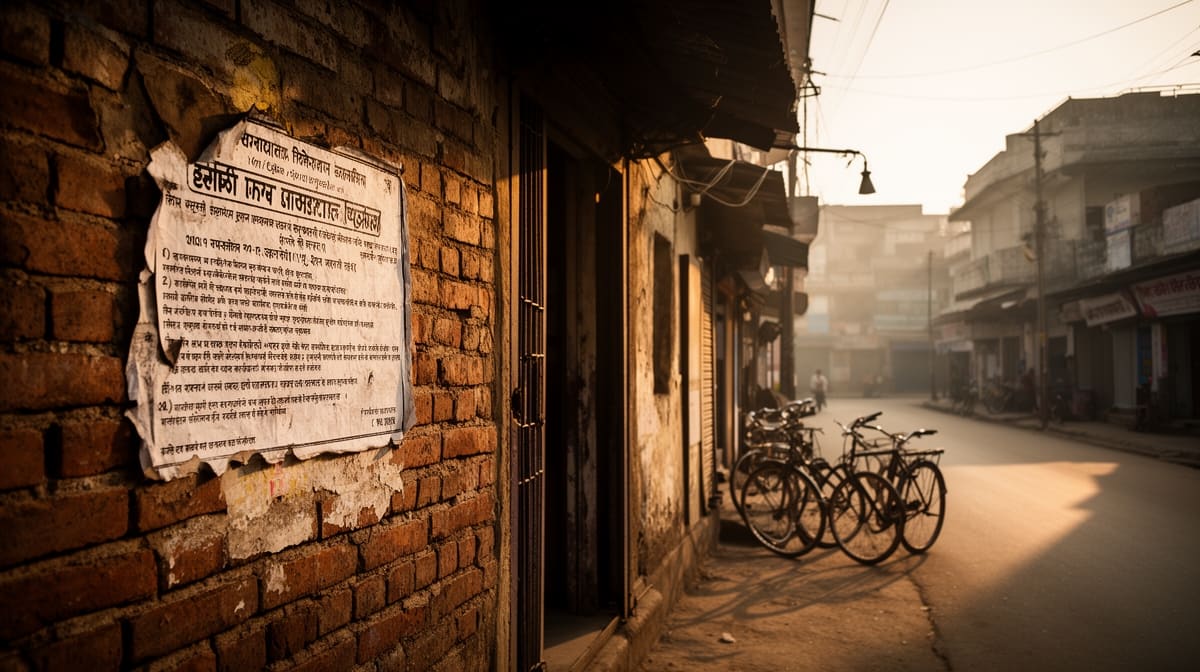
The Court conducted a rigorous review of the notice and its procedural context. It observed that the notice, while citing statutory provisions, failed to articulate any specific violation or factual basis beyond the vague phrase "EgkMkekQZr fjrlj ijokuxh u ?ksrk" - a phrase the Court found incomprehensible and legally meaningless.
"Prima facie, after perusal of documents... the cause of action stated in the impugned notice appears to be completely incoherent."
The Court emphasized that natural justice demands that a person against whom allegations are made must be given access to all material relied upon by the authority. The failure to provide the Enquiry Officer’s report deprived the petitioner of the ability to rebut the allegations effectively.
Further, the Court held that fixing a hearing date before the notice was received was not merely an administrative oversight but a fundamental breach of fair procedure. The Court cited S. R. Batra v. Union of India to affirm that procedural defects in administrative action are not curable by subsequent compliance.
The Court also noted that the demolition order issued on February 4, 2026, was issued without affording the petitioner any opportunity to be heard after the notice, compounding the illegality.
The Verdict
The petitioner succeeded. The Court held that the show-cause notice and demolition order violated natural justice and procedural fairness under Article 14. All coercive action, including demolition, was stayed. The respondents were directed to file a detailed affidavit-in-reply and appear with instructions to address the procedural deficiencies.
What This Means For Similar Cases
Disclosure of Evidence Is Mandatory
- Practitioners must challenge any show-cause notice under MRTP or similar statutes that withholds supporting documents.
- Authorities cannot rely on secret reports or undisclosed investigations to justify penalties.
- Failure to disclose evidence renders the notice voidable, not merely irregular.
Hearing Dates Must Follow Service
- Setting a hearing date before service of notice is legally impermissible.
- Courts will treat such notices as nullities, regardless of the gravity of the alleged violation.
- Practitioners should immediately seek stay on demolition or penalty proceedings where service and hearing dates are misaligned.
Vague Notices Are Unenforceable
- Notices using ambiguous or untranslated phrases (e.g., Hindi/Marathi terms without translation) lack legal precision.
- Administrative notices must state the nature of the violation with sufficient clarity to enable a meaningful response.
- Courts will not uphold notices that are incomprehensible or lack specificity, even if the underlying construction is questionable.