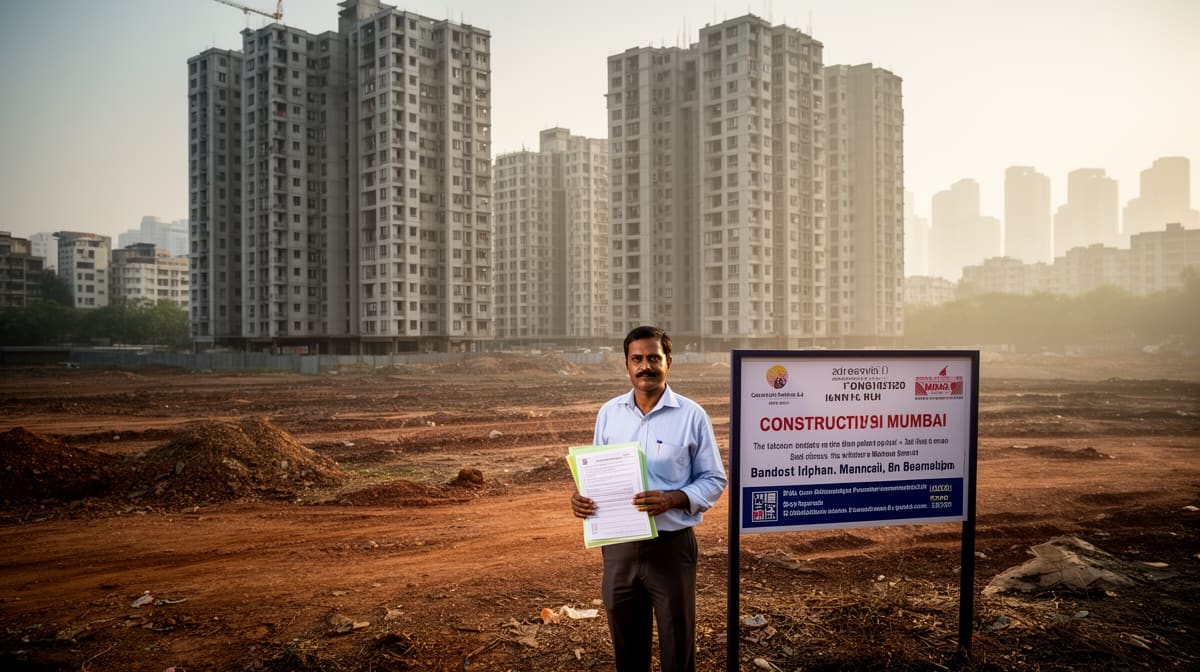
The Bombay High Court has clarified that the absence of a registered agreement under the Maharashtra Ownership Flats Act (MOFA) does not automatically defeat a claim for deemed conveyance when the cumulative documentary record establishes a clear housing transaction, possession, and statutory obligations. This ruling reinforces the principle that substantive rights prevail over technical non-compliance, particularly where promoters and landowners have benefited from statutory exemptions and induced flat purchasers to invest.
Background & Facts
The Dispute
The petitioner, Vakil Nagar Sahakari Gruhrachana Sanstha Maryadit, a registered cooperative housing society, sought deemed conveyance of land and buildings under Section 11(3) of the Maharashtra Ownership Flats Act, 1963. The society was formed by flat purchasers who had paid consideration to promoters between 1987 and 1991 for the development of a housing project on land originally owned by the Zurange family. The application for deemed conveyance was dismissed by the Competent Authority on 27 September 2022 on the sole ground that no registered agreement under Section 4 of MOFA existed between the promoters and the flat purchasers.
Key Facts
- The original landowners, the Zurange family, entered into an Agreement for Sale-cum-Development on 1 April 1974 with Kalpanamiti Co-operative Housing Society and construction firms.
- On 25 December 1983, the landowners applied for exemption under Section 20 of the Urban Land (Ceiling and Regulation) Act, 1976 (ULC Act).
- The State Government granted in-principle exemption on 30 May 1985 for construction of tenements for weaker sections.
- A formal exemption order under Section 20 of the ULC Act was issued on 30 September 1988, which explicitly required the landowners to execute conveyance in favour of the society or beneficiaries.
- A Development Agreement dated 28 December 1986 conferred development rights upon Gopal Krishna Dharane (promoter), with consent from landowners and construction entities.
- A further Development Agreement was executed on 29 March 1989, naming Dharane and Prakash Auti as promoters, with landowners as parties.
- A Power of Attorney dated 4 April 1989, executed by the landowners, authorized Dharane and another to obtain building sanctions, construct, sell flats, and execute conveyance.
- Physical possession of the land was handed over to the promoters on 4 April 1989, as recorded in a possession letter.
- A commencement certificate was obtained on 24 April 1989.
- The petitioner society was registered on 2 June 1990, with Dharane acting as its Chairman.
- Allotment letters dated 8 July 1990 were issued to flat purchasers, referencing annexures detailing construction specifications, price, possession timeline, and eventual conveyance.
- The allotment letters were issued on the society’s letterhead, signed by Dharane as Chairman and Waikar as Secretary.
- On 20 February 2021, the society issued a legal notice demanding conveyance.
- The application for deemed conveyance was filed on 8 October 2022.
Procedural History
- 27 September 2022: Competent Authority dismissed the application for deemed conveyance (Application No. 1006820 of 2021) on the ground of absence of a registered agreement under Section 4 of MOFA.
- 26 October 2022: Petitioner filed Review Petition before the Competent Authority, which was dismissed.
- 27 March 2024: Writ Petition No. 2659 of 2024 filed before the Bombay High Court under Articles 226 and 227 of the Constitution.
- 18 April 2026: Judgment reserved.
- 28 April 2026: Judgment pronounced.
The Parties' Positions
Petitioner (Vakil Nagar CHS): Argued that the totality of documents - including the ULC exemption order, development agreements, power of attorney, possession letter, and allotment letters - collectively establish a concluded housing transaction. The promoter, G.K. Dharane, acted in dual capacities as promoter and society Chairman, which is legally permissible. The exemption order under Section 20 of the ULC Act imposed a statutory obligation to convey, which cannot be evaded due to non-registration of a MOFA agreement.
Respondents (Landowners and Legal Heirs): Contended that no registered agreement under Section 4 of MOFA existed. The allotment letters were internal documents, unregistered, unstamped, and lacked mandatory particulars under Form V of the MOFA Rules. The signatures on the allotment letters were as Chairman and Secretary of the society, not as promoter. The landowners were never signatories to any flat purchase agreement. The absence of an occupation certificate and non-compliance with exemption conditions further invalidated the claim.
Relief Sought
The petitioner sought:
- Quashing of the Competent Authority’s order dated 27 September 2022.
- Declaration that the society is entitled to unilateral deemed conveyance of the land and building measuring 11,300 square meters, bearing Survey Nos. 14/1 (Part) and 14/2+3+6+7 (Part), Erandwane, Pune.
- Direction to the Competent Authority to issue a certificate under Section 11(3) of MOFA.
- Direction to the Sub-Registrar to register the deemed conveyance deed.
- Direction to revenue and municipal authorities to mutate the society’s name in property records.
The Legal Issue
The central question was whether the absence of a registered agreement under Section 4 of the Maharashtra Ownership Flats Act conclusively bars a claim for deemed conveyance under Section 11(3), when the cumulative documentary record, statutory exemption, possession, and conduct of the parties establish a clear housing transaction and promoter obligations.
Arguments Presented
For the Petitioner
The petitioner relied on the totality of documents - the ULC exemption order dated 30 September 1988, development agreements dated 28 December 1986 and 29 March 1989, Power of Attorney dated 4 April 1989, possession letter, and allotment letters dated 8 July 1990 - to demonstrate a continuous, integrated housing transaction. It was argued that Section 2(c) of MOFA defines promoter broadly to include those who cause construction, and that landowners who grant development rights and benefit from exemption are equally bound. Reliance was placed on Prakash Arun Apte v. Narendra CHS (2015), Writ Petition No. 8735 of 2024 (Ravi Agarwal), and ALJ Residency CHS v. State of Maharashtra (2024), which held that deemed conveyance cannot be denied merely due to non-registration where substantive rights are established. The Supreme Court’s judgment in Aloka Bose v. Parmatadevi (2009) was cited to support reading documents as a whole. It was further contended that Section 4A of MOFA permits unregistered agreements to be used as evidence of contract, and that Section 11(3)’s reference to "other relevant documents" allows for flexibility.
For the Respondent
The respondents argued that Section 11(3) mandates production of registered agreements under Section 4, and that the absence of such documents is jurisdictional. They contended that the allotment letters were internal, unregistered, unstamped, and lacked mandatory clauses under Form V of the MOFA Rules, including precise carpet area, possession date, and common area details. They relied on Navi Mumbai Municipal Corporation v. Arjun Krishnarao Deshmukh (2025) to argue that allotment letters do not confer title. They further asserted that Mr. Dharane acted only as Chairman of the society, not as promoter, and that the landowners were never signatories to any flat purchase agreement. The absence of an occupation certificate and non-compliance with the ULC exemption condition (delivery of 48 flats to the State) were cited as fatal defects. Uncertified photocopies were challenged as inadmissible under Arunkumar H. Shaha v. Avon Arcade (2025).
The Court's Analysis
The Court undertook a comprehensive review of the statutory framework under MOFA, particularly Sections 2(c), 4, 4A, and 11(3). It emphasized that the Act is a welfare legislation designed to protect flat purchasers from promoter defaults, not to provide a shield for those who have already benefited from the transaction.
"The Legislature was conscious that business of housing construction is carried through different arrangements and different legal persons. Therefore, broad words were employed so that persons operating through family entity, partnership names, nominees or unregistered bodies may come within the purview of the statute."
The Court held that the definition of "promoter" under Section 2(c) is expansive and includes not only the builder but also the landowner who permits development, grants rights, and receives benefit. The landowners, by executing the Power of Attorney and accepting the ULC exemption, became participants in the housing scheme and cannot now disclaim responsibility.
The Court rejected the notion that documents must be read in isolation. The allotment letters, though unregistered, were not standalone instruments but formed part of a larger transaction supported by development agreements, possession letters, commencement certificates, and the statutory exemption order. The Court observed:
"The allotment letters derive meaning from the surrounding circumstances. They refer to construction obligations, price aspects, handing over possession and eventual conveyance. These are legal indicators of a housing transaction."
The Court further held that dual capacity - acting as promoter and society Chairman - is not legally invalid, especially in older housing schemes where promoters often formed the society and managed its affairs. The Court noted:
"Continuity of role appears rather than contradiction of role. The Court must see whether authority existed and whether transaction was acted upon."
The Court also addressed the absence of Form V compliance and lack of an occupation certificate. It held that these are not jurisdictional bars where the transactional history is clear and the promoter’s default caused the deficiency:
"If mandatory forms were imperfect because promoter failed in duty, he cannot get benefit of his own lapse."
The exemption order under Section 20 of the ULC Act was held to be a statutory instrument imposing a binding obligation to convey. The landowners, having accepted the benefit of retaining land otherwise declared surplus, were estopped from denying the corresponding obligation.
The Court concluded that the Competent Authority erred in dismissing the application on a technical ground, ignoring the substance of the transaction and the legislative intent behind Section 11(3).
The Verdict
The writ petition succeeded. The Court:
- Quashed and set aside the Competent Authority’s order dated 27 September 2022.
- Allowed the deemed conveyance application (No. 1006820 of 2021).
- Declared the petitioner society entitled to unilateral deemed conveyance of the land and building measuring 11,300 square meters, bearing Survey Nos. 14/1 (Part) and 14/2+3+6+7 (Part), Erandwane, Pune, including appurtenant rights and common areas.
- Directed the Competent Authority to issue a certificate under Section 11(3) of MOFA within four weeks of the order.
- Directed the Authorized Officer to execute and register the unilateral deemed conveyance deed within eight weeks of issuance of the certificate.
- Directed the Sub-Registrar to register the conveyance deed upon submission, subject to payment of stamp duty and registration charges.
- Directed revenue and municipal authorities to mutate the society’s name in property records without requiring consent of erstwhile owners.
What This Means For Similar Cases
Deemed Conveyance Is Not Dependent on Perfect Documentation
- Practitioners must now argue that the absence of a registered MOFA agreement under Section 4 is not fatal if the transactional history - including development agreements, possession letters, allotment letters, and statutory exemptions - collectively establish promoter obligations.
- Courts will examine the substance of the arrangement over the form, especially in older housing projects where documentation was informal.
Landowners Cannot Evade Conveyance Obligations Through Technical Defenses
- Landowners who grant development rights, execute powers of attorney, and benefit from ULC exemptions are bound by the conditions of those exemptions.
- A plea of "non-signatory" to flat purchase agreements will fail if the landowner participated in the development process.
"Other Relevant Documents" Under Section 11(3) Are Broadly Interpreted
- Allotment letters, possession receipts, payment records, commencement certificates, and exemption orders qualify as "other relevant documents" under Section 11(3).
- The phrase "if any" in reference to occupation certificates confirms that their absence does not bar relief.
- Practitioners should compile all available documentary evidence, even if unregistered, to substantiate claims.
Dual Capacity Is Legally Permissible in Housing Projects
- A person acting as both promoter and society office-bearer does not invalidate the transaction if the acts are in furtherance of the same project.
- Courts will look at functional roles, not merely titles on documents.
Non-Compliance with Form V Does Not Nullify Rights
- Minor omissions in Form V (e.g., missing carpet area, possession date) cannot be used to defeat conveyance where the overall intent and conduct of the parties are clear.
- Promoters cannot benefit from their own failure to comply with statutory formalities.
Burden Shifts to Promoters and Landowners to Justify Non-Compliance
- The onus is on the promoter or landowner to explain why registered documents are unavailable.
- Silence or non-production of documents after opportunities to produce them will be viewed adversely.
Practical Takeaway for Practitioners
- In all deemed conveyance applications, file a comprehensive dossier including:
- Development agreements
- Powers of attorney
- Possession letters
- Allotment letters with annexures
- ULC exemption orders
- Commencement certificates
- Payment receipts
- Society registration documents
- Argue that Section 4A and Section 11(3) must be read harmoniously to prevent promoter evasion.
- Cite Prakash Arun Apte, Ravi Agarwal, and ALJ Residency CHS as binding precedents.