The Allahabad High Court has reaffirmed that in matters involving personal liberty and consent, particularly in habeas corpus petitions concerning alleged minors, medical evidence of age takes definitive precedence over documentary records. This judgment reinforces the primacy of individual autonomy when a person, as certified by medical examination, is established as a major.
Background & Facts
The Dispute
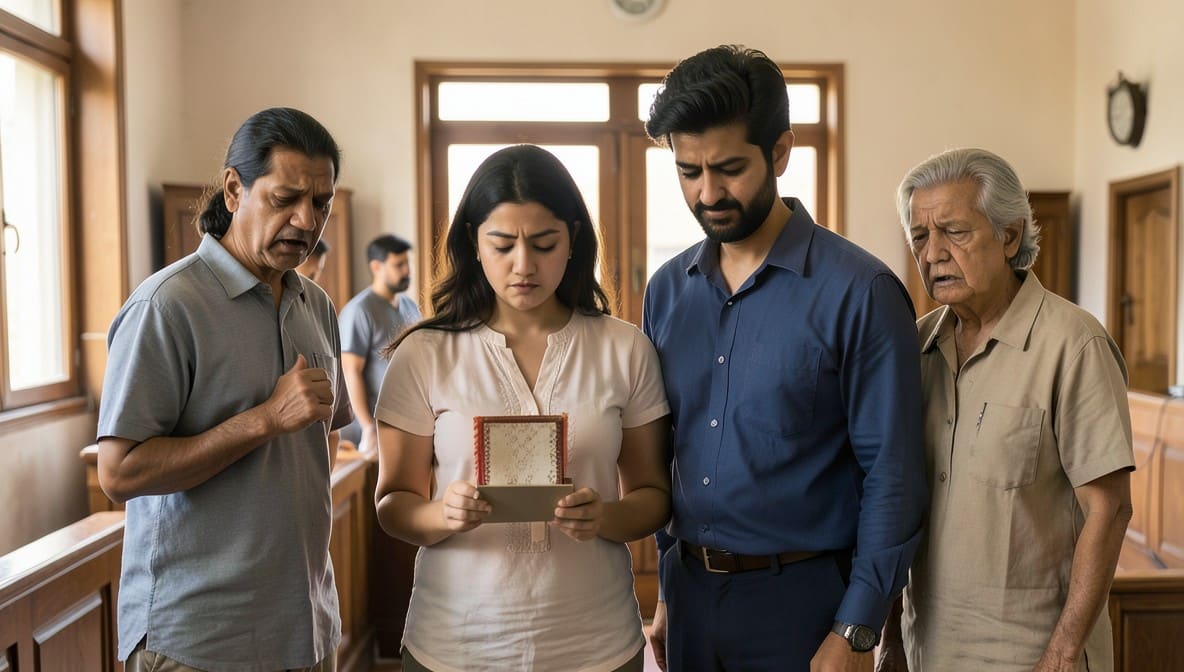
This habeas corpus writ petition was filed by Smt. Versha (Petitioner No. 1) and another (Petitioner No. 2), seeking the release of Smt. Versha, who was allegedly detained by Respondent No. 4, her father-in-law. The petition alleged unlawful confinement and sought her release to live with her husband, Petitioner No. 2. The State and Respondent No. 4 contended that Smt. Versha was a minor, thereby rendering her consent to live with her husband legally invalid under the Prohibition of Child Marriage Act and other protective statutes.
Key Facts
- Smt. Versha was produced before the Court on 16.06.2026
- She made a categorical statement before the Court expressing her willingness to reside with her husband, Praveen Kumar (Petitioner No. 2)
- The Chief Medical Officer, Prayagraj, submitted a sealed medical report on 18.06.2026, opining that Smt. Versha is approximately 19 years of age
- No official documents such as school certificates, birth certificates, or Aadhaar cards were filed by Respondent No. 4 or the State to contradict the medical opinion
- Respondent No. 4, who was present at the previous hearing, failed to appear on the date of final hearing
- The Additional Government Advocate (AGA) confirmed that the State does not intend to file any counter affidavit
Procedural History
- 16.06.2026: Petition listed for hearing; Smt. Versha appeared before the Court and declared her desire to live with her husband
- 16.06.2026: Court directed submission of medical report from Chief Medical Officer, Prayagraj, in sealed cover
- 18.06.2026: Medical report opened in open court; report concluded Smt. Versha is approximately 19 years old
- 18.06.2026: Respondent No. 4 failed to appear despite notice; State declined to file counter affidavit
- 18.06.2026: Final hearing held; arguments concluded
Relief Sought
The petitioners sought the release of Smt. Versha from alleged unlawful detention, recognition of her majority status, and permission for her to live with her husband of her own free will, free from any interference by Respondent No. 4 or the State.
The Legal Issue
The central question was whether the medical evidence of age, when unchallenged and uncontradicted by official documents, is sufficient to establish majority in a habeas corpus proceeding, thereby upholding the individual’s right to choose her residence and partner.
Arguments Presented
For the Petitioner
Counsel for the petitioners relied on Suhani & Another v. State of U.P. & Ors. (Civil Appeal No. 4532 of 2018, decided on 26.04.2018) and Shafin Jahan v. Ashokan K.M. & Others (AIR 2018 SC 1933), arguing that the Supreme Court has consistently held that medical evidence must prevail in age determination disputes where documentary evidence is absent, unreliable, or contradictory. The petitioner emphasized that Smt. Versha, being a major, has an absolute right under Article 21 to personal liberty and choice of partner, and that her voluntary statement before the Court must be respected.
For the Respondent
The State, through the Additional Government Advocate, declined to file any counter affidavit and did not produce any evidence to dispute the medical report. Respondent No. 4, despite being present at the prior hearing, failed to appear and offered no submissions. No argument was advanced to challenge the medical opinion or to assert minority status.
The Court's Analysis
The Court examined the medical report submitted by the Chief Medical Officer, Prayagraj, which conclusively opined that Smt. Versha is approximately 19 years old. The Court noted that no documentary evidence - such as school records, birth certificates, or ration cards - was filed by the State or Respondent No. 4 to contradict this finding. The Court emphasized that in cases where age is disputed, the Supreme Court has laid down a clear hierarchy: medical evidence is superior to documentary proof when the latter is unavailable or unreliable.
"Medical evidence takes precedence in age determination disputes where official documents such as school certificate etc. are contradictory or not reliable."
The Court further held that the categorical statement made by Smt. Versha before the Court on 16.06.2026, affirming her desire to live with her husband, was made in open court, under oath, and without coercion. The absence of any objection from the State or Respondent No. 4, coupled with the medical confirmation of majority, left no legal basis to detain her. The Court underscored that personal liberty under Article 21 includes the right to choose one’s life partner and place of residence, especially when the individual is a major.
The Court rejected any notion that parental or familial opposition could override the autonomous decision of a major adult. It held that the writ petition was not merely about custody but about the fundamental right to freedom from unlawful detention.
The Verdict
The writ petition is allowed. Smt. Versha is set at liberty forthwith and is permitted to go wherever she wishes, with her husband Praveen Kumar or otherwise. No person, including Respondent No. 4, shall hinder her movement or communication. The Court directed that the medical report be placed on record and that the State shall not initiate any proceedings against her or her husband on the basis of alleged minority. The petition is disposed of with no order as to costs.
What This Means For Similar Cases
Medical Evidence Is Conclusive in Age Disputes
- Practitioners must prioritize obtaining a medical age report in any habeas corpus or custody case involving alleged minors
- Documentary evidence (school certificates, birth records) is secondary and cannot override a credible medical opinion
- Courts will not entertain speculative claims of minority without supporting evidence
Consent of a Major Cannot Be Overridden by Family
- The voluntary statement of a major individual before the Court is binding and cannot be nullified by familial opposition
- Habeas corpus petitions filed on behalf of adults must be decided on the basis of their expressed will, not presumed incapacity
- Any detention based on alleged minority without medical proof constitutes unlawful restraint under Article 21
State’s Silence Is Not a Defense
- When the State declines to file a counter affidavit or produce evidence, courts are empowered to rely on available credible evidence
- Non-appearance by the opposing party, especially after prior participation, constitutes waiver of right to contest
- Courts must act decisively to protect liberty when the State abdicates its duty to substantiate claims of illegality