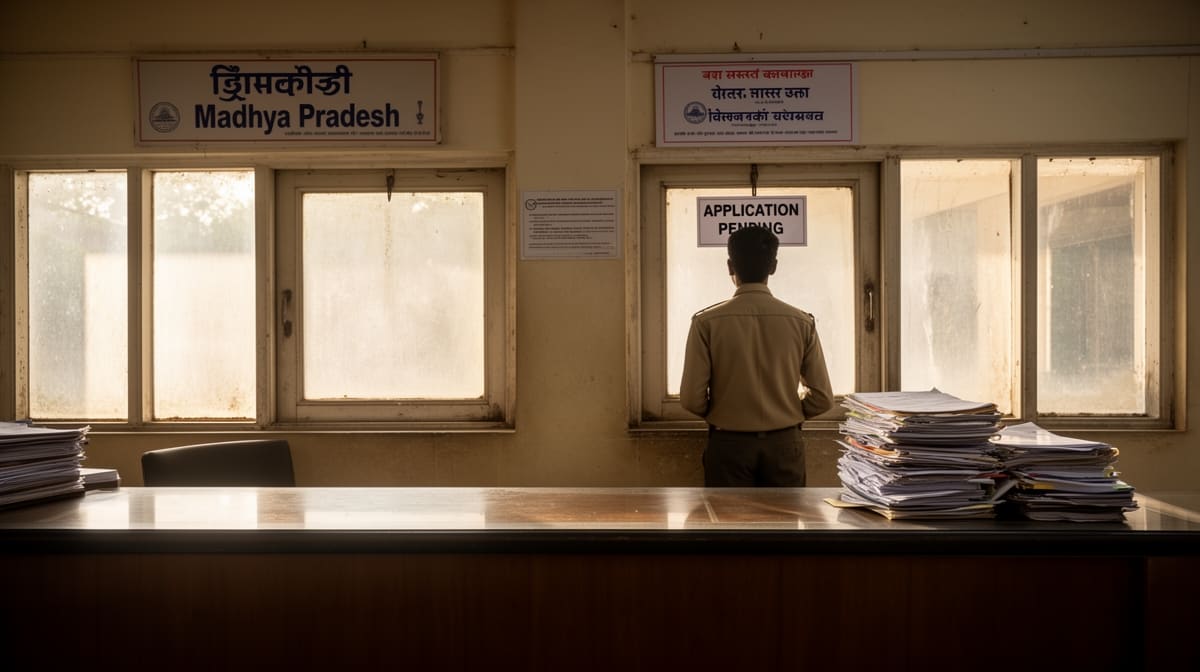
The Bombay High Court, Nagpur Bench, has underscored the accountability of public officials under the Maharashtra Government Servants Regulation of Transfers and Prevention of Delay in Discharge of Official Duties Act, 2005. In a writ petition concerning undue delay in deciding representations, the Court directed the appointing authority to initiate disciplinary action against a Zilla Parishad CEO for failing to act on petitions filed in April and July 2025, despite a judicial directive issued in October 2025. The judgment reinforces the statutory obligation of government servants to discharge duties within reasonable timelines and highlights the legal consequences of administrative lethargy.
Background & Facts
The Dispute
The petitioners, Deepak Pralhad Khokle & Ors., filed a writ petition before the Bombay High Court, Nagpur Bench, challenging the inaction of respondent no. 3, the Chief Executive Officer (CEO), Zilla Parishad, Buldhana, in deciding their representations dated 9.4.2025 and 4.7.2025. The representations pertained to unspecified grievances, likely related to service matters or administrative redressal, given the context of the dispute.
Key Facts
- The petitioners submitted two representations to respondent no. 3 on 9.4.2025 and 4.7.2025.
- Despite the representations, no decision was taken by respondent no. 3 for over a year.
- On 15.10.2025, the High Court issued notices in the writ petition and explicitly granted liberty to respondent no. 3 to decide the pending representations.
- As of 30.6.2026, the representations remained undecided, prompting the Court to intervene.
Procedural History
- 9.4.2025: First representation submitted to respondent no. 3.
- 4.7.2025: Second representation submitted.
- 15.10.2025: High Court issues notices in Writ Petition No. 6346 of 2025 and directs respondent no. 3 to decide the representations.
- 30.6.2026: Matter listed before the High Court; respondent no. 3 admits representations remain undecided.
- 30.7.2026: Next date fixed for arguments.
Relief Sought
The petitioners sought a direction to respondent no. 3 to decide their representations within a stipulated timeframe and, failing that, to initiate disciplinary action under the Maharashtra Government Servants Regulation of Transfers and Prevention of Delay in Discharge of Official Duties Act, 2005.
The Legal Issue
The central question before the Court was whether the inaction of a government servant in deciding representations, despite a judicial directive, constitutes a dereliction of duty under the Maharashtra Government Servants Regulation of Transfers and Prevention of Delay in Discharge of Official Duties Act, 2005, thereby warranting disciplinary action by the appointing authority.
Arguments Presented
For the Petitioners
The petitioners contended that respondent no. 3’s failure to decide the representations for over a year, despite a specific directive from the High Court, amounted to a prima facie dereliction of duty. They relied on the provisions of the Maharashtra Government Servants Regulation of Transfers and Prevention of Delay in Discharge of Official Duties Act, 2005, which mandates timely discharge of official duties and prescribes disciplinary action for delays. The petitioners argued that the Act imposes a statutory obligation on government servants to act within reasonable timelines and that respondent no. 3’s conduct fell squarely within the ambit of the Act.
For the Respondent/State
The learned Assistant Government Pleader (A.G.P.), representing respondent nos. 1 and 2 (the State of Maharashtra), did not contest the delay but submitted that the Court’s order would be communicated to the appointing authority for appropriate action. The counsel for respondent no. 3 did not advance any substantive arguments justifying the delay.
The Court's Analysis
The Court expressed grave concern over the unexplained delay in deciding the representations, noting that the petitions had been pending since April and July 2025 and remained unresolved even after the Court’s directive on 15.10.2025. The Court observed:
"We are at pain to state that the representations were made in the months of April and July - 2025, and same are still not decided. Though this Court, on 15/10/2025, granted liberty to decide representations, the issue still remains unresolved. It was the duty of respondent no.3 to decide the said representations. The aforesaid dereliction of duty on the part of respondent no.3 prima facie attracts the measures to be taken under the Maharashtra Government Servants Regulation of Transfers and Prevention of Delay in Discharge of Official Duties Act, 2005."
The Court emphasized that the Maharashtra Government Servants Regulation of Transfers and Prevention of Delay in Discharge of Official Duties Act, 2005 is designed to ensure accountability and efficiency in public administration. The Act explicitly provides for disciplinary action against government servants who fail to discharge their duties within stipulated timelines. The Court held that respondent no. 3’s conduct constituted a prima facie violation of the Act, warranting intervention by the appointing authority.
The Court further directed the A.G.P. to communicate its order to the appointing authority of respondent no. 3 within one week, with a mandate to take appropriate action within three weeks thereafter. This direction underscores the Court’s expectation that the appointing authority will enforce the statutory provisions and hold respondent no. 3 accountable for the delay.
The Verdict
The Court directed the appointing authority of respondent no. 3 to:
- Initiate disciplinary proceedings under the Maharashtra Government Servants Regulation of Transfers and Prevention of Delay in Discharge of Official Duties Act, 2005 for the prima facie dereliction of duty.
- File a report on the action taken by 30.7.2026, the next date of hearing.
- Ensure the A.G.P. communicates this order to the appointing authority within one week from 30.6.2026.
- Complete any disciplinary action within three weeks of receiving the order.
The Court granted the petitioners two weeks’ time to advance their arguments and listed the matter for further hearing on 30.7.2026.
What This Means For Similar Cases
Disciplinary Action for Administrative Delays Is Non-Negotiable
This judgment reinforces that government servants cannot evade accountability for delays in discharging official duties. Practitioners should note:
- The Maharashtra Government Servants Regulation of Transfers and Prevention of Delay in Discharge of Official Duties Act, 2005 imposes a statutory duty on public officials to act within reasonable timelines.
- Judicial directives to decide representations or dispose of matters must be complied with failing which disciplinary action may follow.
- The Court’s observation that the dereliction of duty "prima facie attracts measures under the Act" sets a precedent for similar cases involving administrative lethargy.
Appointing Authorities Must Enforce Accountability
- The judgment places a clear obligation on appointing authorities to initiate disciplinary proceedings where delays are established.
- Practitioners representing government servants should advise clients that inaction, even in the absence of mala fide intent, can attract disciplinary action under the Act.
- The Court’s direction to file a compliance report ensures that the appointing authority cannot overlook the issue, thereby strengthening enforcement of the Act.
Writ Petitions Can Be an Effective Remedy for Administrative Delays
- This case demonstrates that writ petitions under Article 226 of the Constitution of India can be an effective tool to compel action where representations or grievances are ignored.
- Practitioners should consider filing writ petitions in cases where administrative delays exceed reasonable timelines, especially when statutory provisions like the Maharashtra Government Servants Act, 2005 are violated.
- The Court’s willingness to direct disciplinary action signals that judicial intervention will be robust in cases of persistent administrative failures.