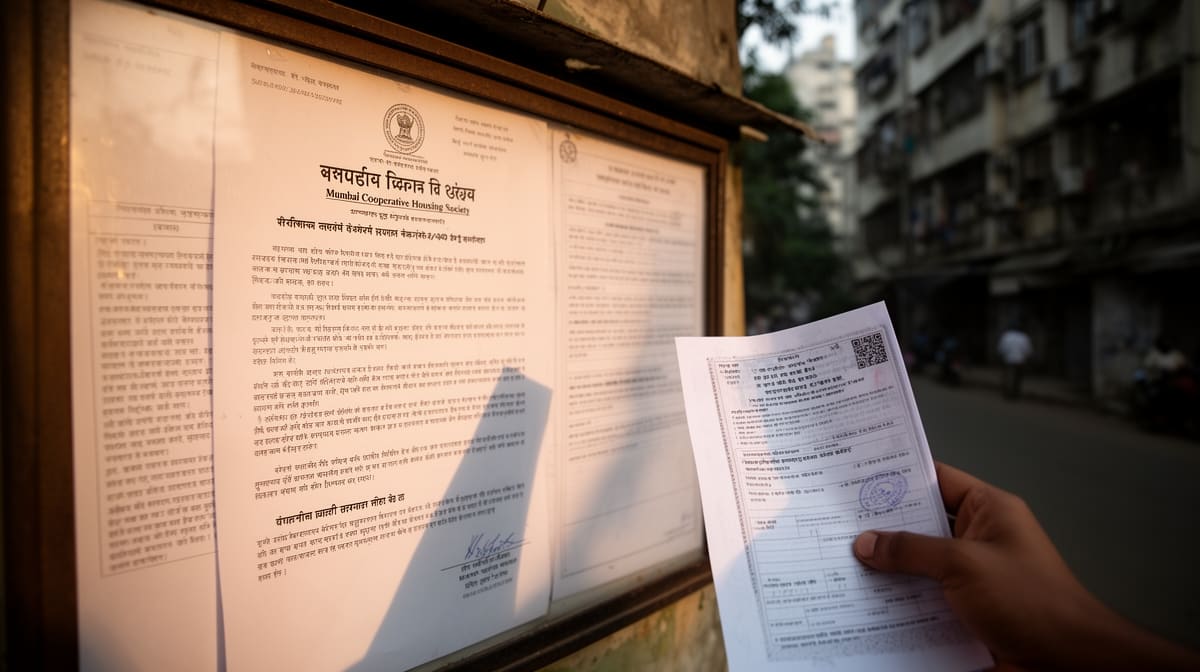
The Bombay High Court has clarified that interim relief seeking recovery of maintenance charges and property tax from flat purchasers in a condominium cannot be granted without proof of the exact quantum due and a prima facie case establishing liability under the Maharashtra Apartment Ownership Act, 1970. The judgment reinforces the principle that monetary claims, even in urgent contexts, require evidentiary substantiation before courts intervene at the interlocutory stage.
Background & Facts
The Dispute
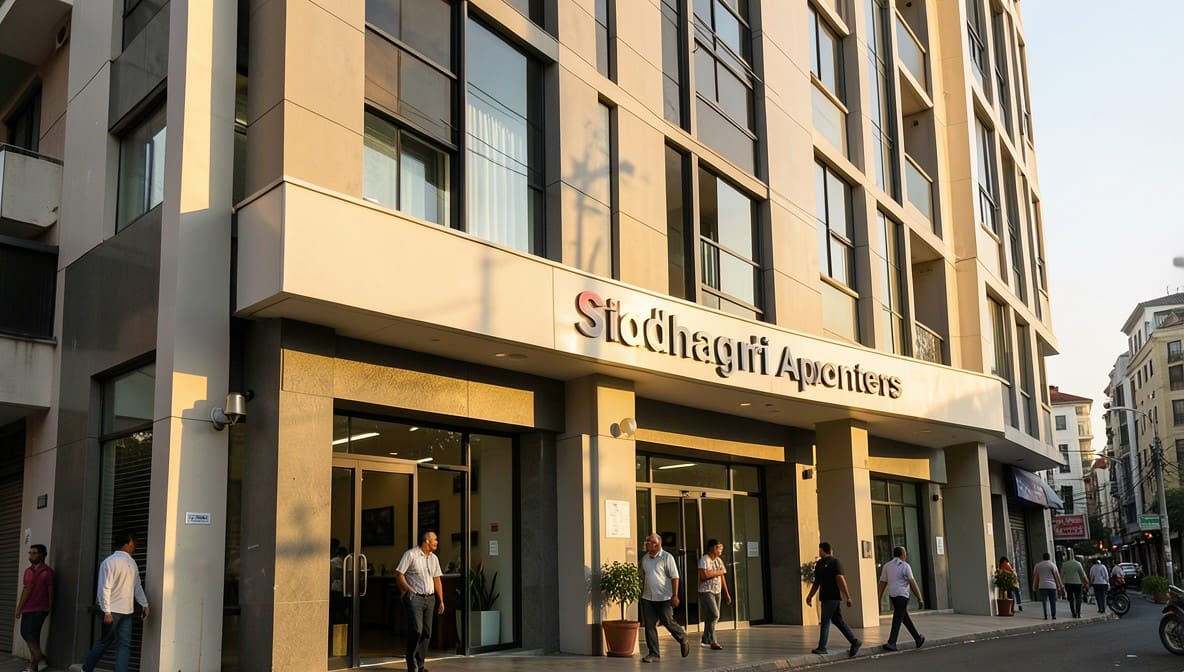
The dispute arose between the Siddhagiri Apartment Condominium, a duly registered association under the Maharashtra Apartment Ownership Act, 1970, and two flat purchasers - Dushyant Haridas Mavani and Shardul Dushyant Mavani - who had purchased Flat No. 701 and Flat No. 801 in the building. The Condominium sought to recover outstanding property tax and maintenance charges from these purchasers, who refused to pay, arguing they were not bound by the Condominium’s formation as they had not executed Deeds of Apartment and their original purchase agreements contemplated a Co-operative Housing Society under the Maharashtra Ownership of Flats Act, 1963 (MOFA).
Key Facts
- The Siddhagiri building, comprising 23 residential units, received an occupancy certificate on 05.06.2010.
- The Condominium was formed via a Declaration dated 15.08.2012, registered under the Maharashtra Apartment Ownership Act, 1970.
- Eighteen of the 23 flat purchasers executed Deeds of Apartment and became members of the Condominium.
- The respondents (Flat No. 701 and 801 purchasers) did not execute Deeds of Apartment and were not signatories to the Declaration.
- The respondents took possession of their flats on or about 10.08.2010, pursuant to a letter acknowledging their obligation to pay maintenance, rent, and taxes to a proposed Co-operative Housing Society.
- The Condominium issued demands for payment of property tax and maintenance charges from 01.09.2018 onwards, which the respondents refused.
- The Condominium filed two suits (Suit No. 2633/2018 and Suit No. 2634/2018) seeking recovery of unpaid dues, interest at 18% per annum, and a declaration of charge on the flats.
- Simultaneously, Notices of Motion were filed seeking interim relief: deposit of outstanding dues, ongoing contributions, and withdrawal of deposited amounts.
- The respondents challenged the validity of the Condominium’s formation through Suit No. 1938/2016 (filed by other residents, not the respondents) and two complaints before the District Consumer Forum (CC/111/2024 and CC/117/2024).
Procedural History
- 05.06.2010: Occupancy certificate issued for Siddhagiri building.
- 10.08.2010: Possession letter issued to respondents, referencing payment to proposed Co-operative Housing Society.
- 15.08.2012: Declaration executed and registered under the Maharashtra Apartment Ownership Act, 1970.
- 20.09.2016 & 06.10.2016: Letters exchanged between parties regarding maintenance dues.
- 2018: Two suits filed before the City Civil Court seeking recovery of dues and declaration of charge.
- 2018: Notices of Motion filed seeking interim relief.
- 01.03.2021: Trial Court dismissed the Notices of Motion.
- 2022: Appeals filed before the Bombay High Court (AO-863/2022 and AO-917/2022).
- 11.03.2026: Judgment reserved.
- 07.04.2026: Judgment pronounced.
The Parties' Positions
Appellants (Condominium): Argued that the Declaration and registration under the Maharashtra Apartment Ownership Act, 1970, bound all flat purchasers. They claimed the respondents were in possession since 2010 and had benefited from common services. They relied on Section 10 of the Act for proportionate liability and cited precedents allowing interim relief even if it amounted to final relief.
Respondents (Flat Purchasers): Contended they were never part of the Condominium’s formation. Their purchase agreements mandated a Co-operative Housing Society under MOFA. They were not signatories to the Declaration or Deeds of Apartment. They argued the Condominium lacked authority to demand payments and that the pending consumer complaints and Suit No. 1938/2016 rendered the Condominium’s legitimacy uncertain.
Relief Sought
The Appellants sought:
- Immediate deposit of outstanding property tax and maintenance charges as per Exhibit ‘K’ to the plaint.
- Ongoing contribution towards property tax and maintenance charges from 01.09.2018.
- Permission to withdraw deposited amounts.
- Declaration of a valid and subsisting charge on the two flats for unpaid dues.
The Legal Issue
The central question was whether a Court may grant interim relief directing deposit of monetary dues in a condominium dispute where the very validity of the association’s authority is under challenge, and the quantum of dues has not been proved by evidence.
Arguments Presented
For the Appellant
Mr. Haresh Jagtiani, Senior Advocate, argued that interim relief was permissible even if it amounted to final relief, citing Deoraj v. State of Maharashtra, Vilas Gopal Dongare v. Municipal Commissioner, and Vishal Gupta v. L&T Finance Limited. He contended that the respondents had been in possession since 2010, benefited from services, and were estopped from denying liability. He asserted that the Trial Court erred in relying on Suit No. 1938/2016, which was not filed by the respondents, and that the respondents’ own consumer complaints confirmed their challenge to the Condominium’s legitimacy, which should not preclude interim relief.
For the Respondent
Dr. V.V.L.N. Sastry argued that the Condominium had not established its legal authority over the respondents, who were not signatories to the Declaration or Deeds of Apartment. He emphasized that the respondents’ purchase agreements under MOFA required formation of a Co-operative Housing Society, not a Condominium. He contended that granting interim relief would effectively decide the suit without trial, violating principles of natural justice. He noted that the quantum of dues was unproven and that the respondents had the right to contest the amounts through evidence and cross-examination.
The Court's Analysis
The Court undertook a detailed examination of the Maharashtra Apartment Ownership Act, 1970, particularly Sections 5, 7, 10, and 24. It held that the Act applies only where all owners submit the property to its provisions by executing a Declaration and Deeds of Apartment. Since the respondents had not executed any such documents, their liability under the Act was not prima facie established.
"The Condominium has not proved the said amounts claimed by them. Whilst it may be that they have produced and relied upon some bill and/or computerised statement in support of the monthly amount, the said amount has not yet been proved by them."
The Court rejected the Appellants’ reliance on precedents permitting interim relief tantamount to final relief, distinguishing them on facts. It emphasized that such extraordinary relief is granted only where denial would defeat justice, and where the claim is not purely monetary. Here, the claim was for recoverable sums, with interest at 18% per annum already claimed, ensuring adequate compensation upon final adjudication.
The Court also noted that the respondents had actively challenged the Condominium’s formation through consumer complaints and a pending civil suit, even if not filed by them directly. This created sufficient uncertainty to justify the Trial Court’s refusal to grant interim relief.
The Court further held that the burden of proving the quantum of dues lay with the Condominium, and mere statements or computer printouts were insufficient without corroboration through witness testimony or audited records. The respondents were entitled to contest the amounts, cross-examine witnesses, and present their own evidence.
The Verdict
The appeals were dismissed. The Bombay High Court upheld the Trial Court’s order dated 01.03.2021 dismissing the Notices of Motion. The Court held that no interim relief for recovery of property tax and maintenance charges could be granted without proof of the exact quantum due and a prima facie case establishing the respondents’ liability under the Maharashtra Apartment Ownership Act, 1970. The Condominium must prove its claims through evidence at trial. There shall be no order as to costs.
What This Means For Similar Cases
Interim Relief Requires Proven Quantum
- Practitioners must ensure that claims for maintenance or property tax in condominium disputes are supported by audited statements, receipts, or witness testimony before seeking interim deposit orders.
- Computer-generated bills or unverified statements alone are insufficient to satisfy the threshold for interim relief.
Validity of Association Must Be Established
- If the legal basis of the managing body (Condominium vs. Co-operative Society) is contested, courts will not grant interim relief that effectively validates the association’s authority.
- Pending litigation challenging the association’s formation - whether by members or third parties - creates sufficient uncertainty to justify denial of interim relief.
Monetary Claims Are Not Automatically Urgent
- Claims seeking only monetary recovery, even if substantial, do not automatically qualify for mandatory interim injunctions.
- Courts will consider whether the claimant will suffer irreparable harm if relief is denied; interest on arrears often suffices as adequate compensation.
Evidence Over Allegation
- In property disputes involving condominiums, documentary evidence of consent (Deeds of Apartment, signed Declaration) is paramount.
- Oral assurances or possession alone cannot override the absence of statutory compliance under the Maharashtra Apartment Ownership Act, 1970.
Burden of Proof Remains on the Claimant
- The burden to prove liability and quantum lies squarely with the association seeking recovery.
- Respondents retain the right to dispute amounts, demand cross-examination, and present counter-evidence without being compelled to deposit funds prematurely.