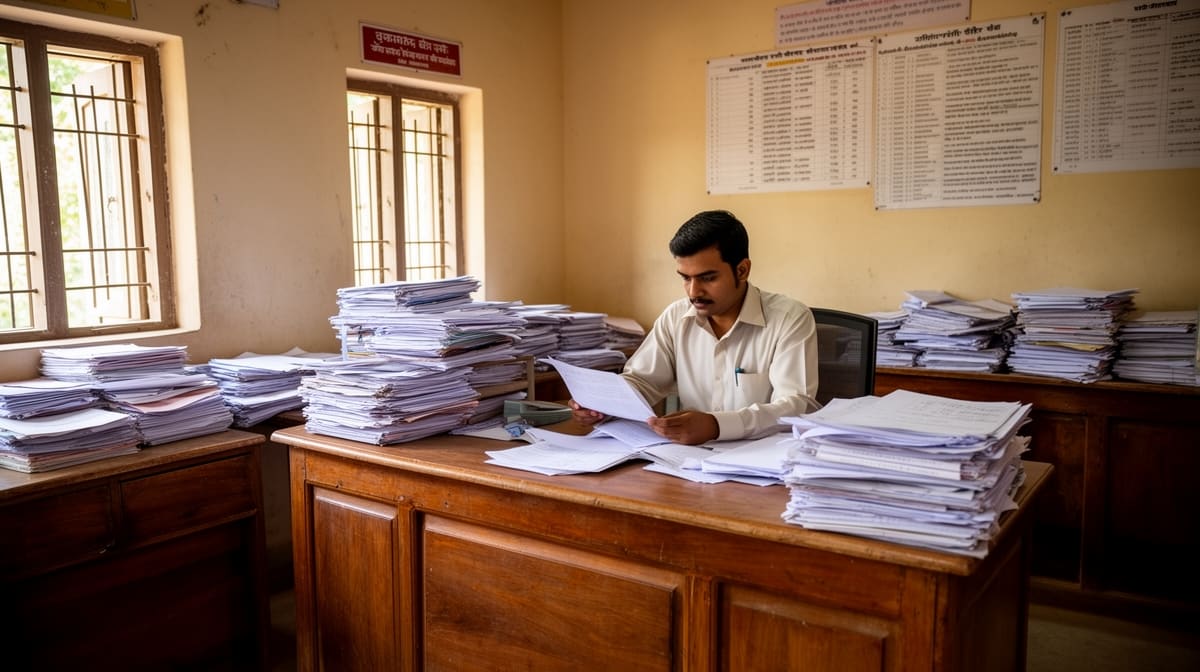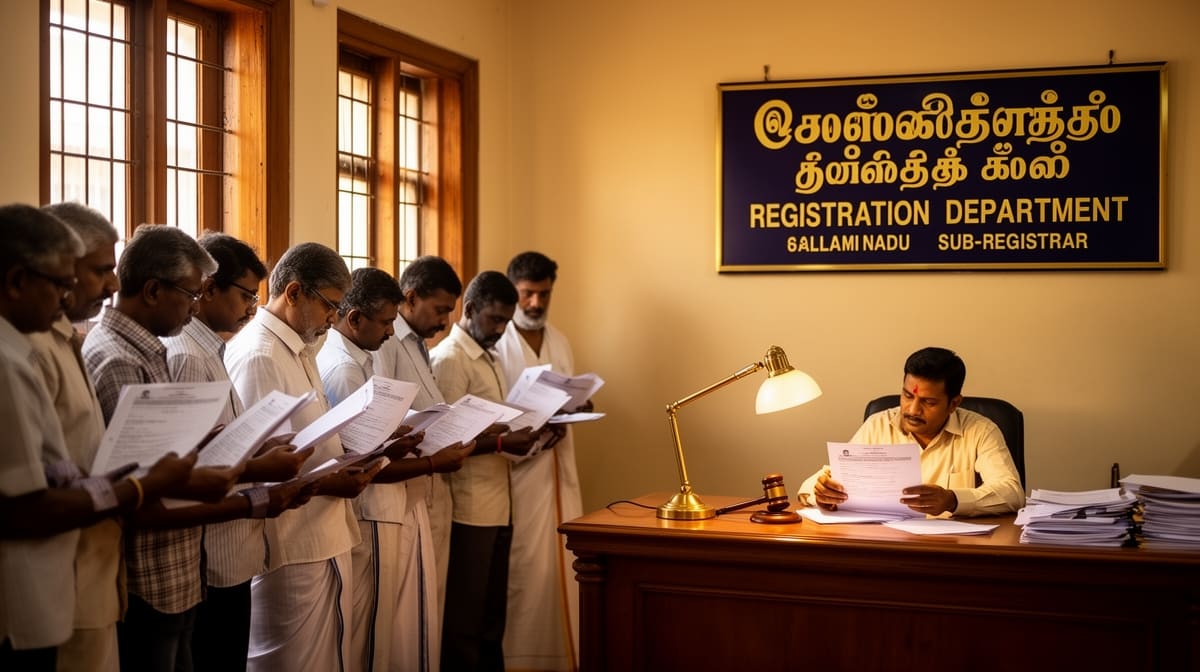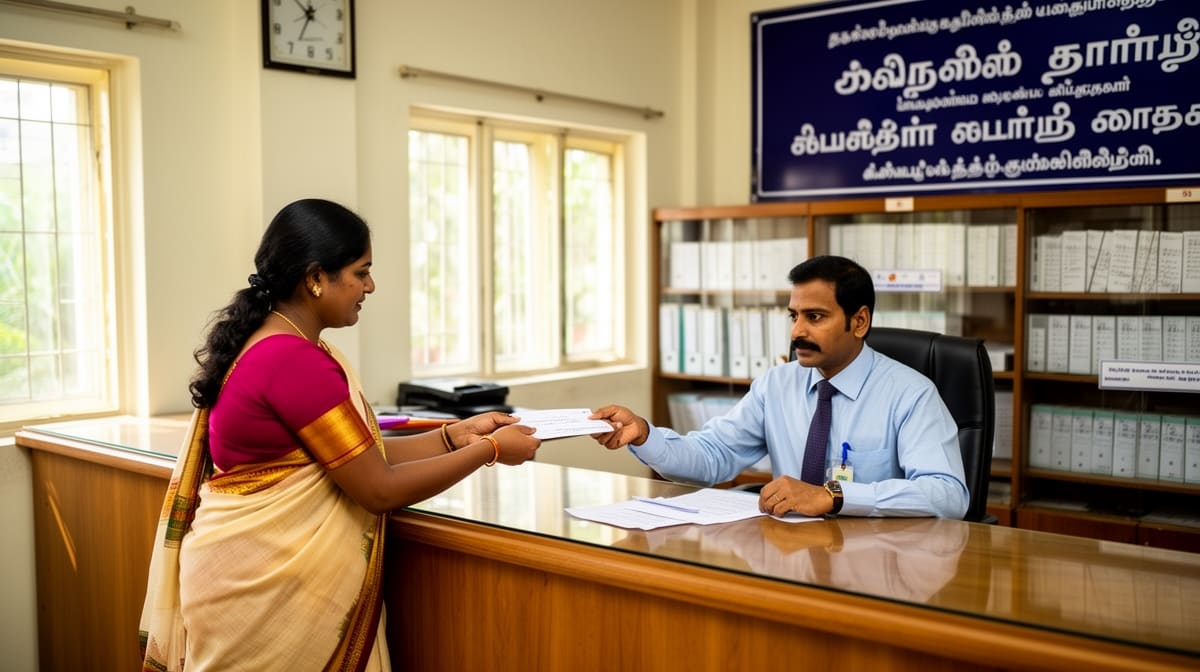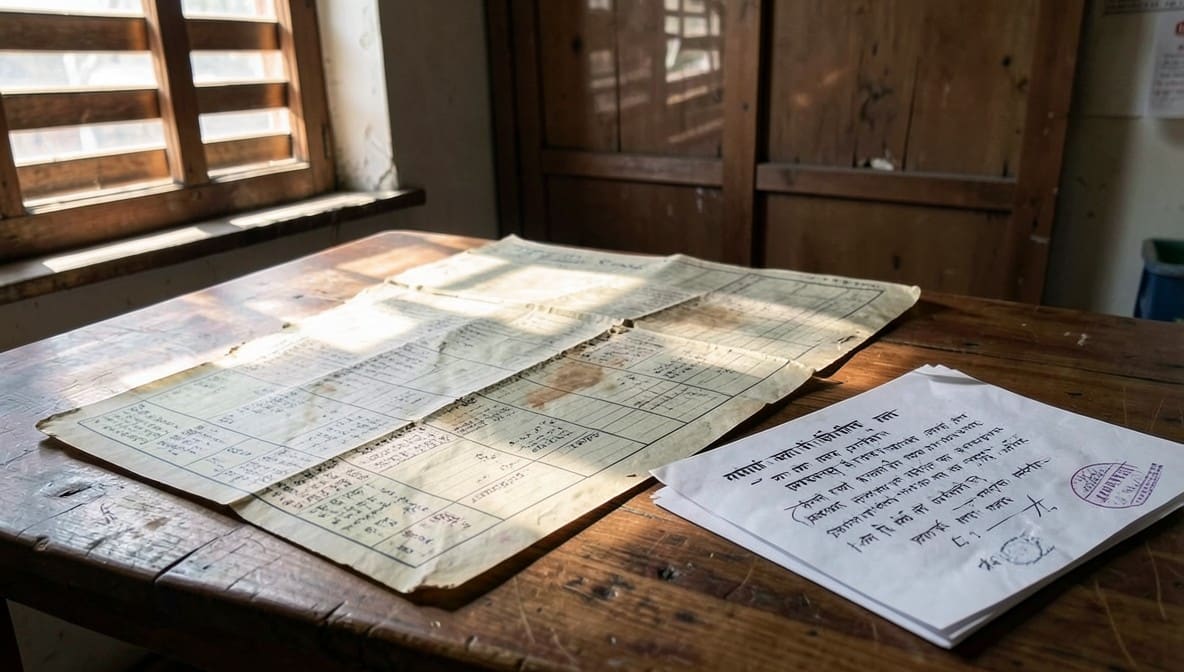
The Madras High Court has reaffirmed that revenue authorities cannot unilaterally alter land records when civil litigation over title is pending, even if interim injunctions have lapsed. This ruling underscores the primacy of judicial proceedings over administrative action in land title disputes.
Background & Facts
The Dispute
The petitioner, Prabavathi, challenged orders dated 18.06.2025 and 19.11.2025 passed by the 4th and 3rd respondents respectively, which rejected her request for cancellation of patta No. 2001 issued in favour of the private respondents (6th and 7th respondents). The petitioner contended that the patta was issued illegally while civil suits concerning the same property were pending before the civil courts, thereby violating her legally protected interest.
Key Facts
- The petitioner had obtained an interim injunction from the Civil Court restraining any mutation or transfer of the property in question
- The interim injunction was in force until 16.07.2025
- Patta No. 2001 was issued to the private respondents on 18.06.2025, after the injunction had expired
- The revenue authorities (respondents 3 to 5) confirmed the patta despite the pendency of civil suits
- Two civil suits are pending: O.S. No. 831 of 2025 before the Additional District Judge (Special Court for SC/ST cases), Tiruppur, and O.S. No. 97 of 2025 before the District Munsif Court, Tiruppur
- The 6th respondent, V.P.M. Manickam, is deceased; the petitioner must bring his legal heirs on record in the civil suits
Procedural History
- 18.06.2025: 4th respondent (Revenue Divisional Officer) issued order rejecting petitioner’s request for cancellation of patta (Pa.Mu.No.3529/2025/A4)
- 19.11.2025: 3rd respondent (District Revenue Officer) confirmed the above order (Ni.Mu.16218/2025/J1)
- 2026: Writ Petition No. 9307 of 2026 filed before the Madras High Court under Article 226 seeking quashing of the impugned orders and restoration of patta in petitioner’s favour
- 17.03.2026: Hearing concluded before the Hon’ble Mr. Justice Abdul Quddhoose
Relief Sought
The petitioner sought:
- Quashing of the impugned orders dated 18.06.2025 and 19.11.2025
- Direction to the 5th respondent (Tahsildar) to restore patta No. 2001 in her favour
- Restraint on further mutation of revenue records pending final adjudication of civil suits
The Legal Issue
The central question was whether revenue authorities may proceed with mutation of land records and issuance of pattas when civil suits concerning title to the same property are pending, even after the lapse of an interim injunction granted by the civil court.
Arguments Presented
For the Petitioner
The petitioner’s counsel argued that the issuance of patta during the pendency of civil suits violated the principle of lis pendens and undermined the authority of the civil court’s interim injunction. Even though the injunction had expired, the underlying dispute remained unresolved, and revenue authorities were bound to refrain from taking any action that could prejudice the outcome of the civil litigation.
For the Respondent
The respondents did not contest the core legal principle but relied on the expiry of the interim injunction as a procedural bar. The learned Government Pleader for respondents 1 to 5 argued that once the injunction lapsed, the revenue authorities were free to act under their statutory powers under the Tamil Nadu Land Revenue Code. The private respondents did not raise substantial objections to the court’s proposed direction.
The Court's Analysis
The Court acknowledged that while the interim injunction granted by the civil court had expired on 16.07.2025, the civil suits themselves remained pending. The Court emphasized that revenue authorities are not adjudicatory bodies and lack jurisdiction to determine title disputes. Their role is administrative, and they must not act in a manner that pre-empts or prejudices the outcome of judicial proceedings.
"In the interest of justice, since the civil suits are pending and since the petitioner was having the benefit of interim injunction from the Civil Court pertaining to the very same property upto 16.07.2025, this Court deems it fit to direct the petitioner as well as the private respondents to maintain the status-quo till the disposal of the civil suits..."
The Court further noted that the private respondents had not objected to the proposed direction, and the death of the 6th respondent did not alter the necessity of preserving the status quo. The Court held that allowing mutation of records while civil suits are pending would render the judicial process ineffective and invite multiplicity of litigation.
The Verdict
The writ petition was disposed of with directions. The Court ordered that the petitioner and private respondents shall maintain the status quo regarding the property in question until final disposal of O.S. No. 831 of 2025 and O.S. No. 97 of 2025. No further mutation of revenue records, including issuance, cancellation, or transfer of patta, shall be permitted by respondents 1 to 5. No costs were awarded.
What This Means For Similar Cases
Revenue Authorities Must Halt Action During Pending Title Suits
- Practitioners must immediately raise lis pendens as a bar to any revenue mutation when civil suits over land title are pending, regardless of whether an injunction is currently in force
- Revenue officials cannot rely on the lapse of an interim injunction to justify unilateral action
- Any mutation during pendency of civil suits is liable to be set aside by the High Court under Article 226
Status Quo Is a Judicial Safeguard, Not a Procedural Technicality
- Courts will impose status quo even without an active injunction if the underlying dispute remains unresolved
- The doctrine of lis pendens applies independently of statutory powers granted to revenue authorities
- Legal heirs of deceased parties must be brought on record in civil suits; failure does not absolve revenue authorities from maintaining status quo
Civil Court’s Jurisdiction Trumps Revenue Administration
- Title disputes are exclusively within the domain of civil courts
- Revenue records are prima facie evidence only and cannot override judicial findings
- Practitioners should file applications under Section 151 CPC seeking injunctions or status quo orders in civil suits to prevent revenue action