The Chhattisgarh High Court has delivered a landmark ruling affirming that the state cannot compel ordinary traders to obtain excise licenses for molasses used exclusively in non-intoxicant applications such as cattle feed, gudakhu, or industrial manufacturing. The judgment clarifies that regulatory powers under state excise laws are confined to intoxicating substances and cannot be extended to raw materials merely because they are capable of fermentation.
Background & Facts
The Dispute
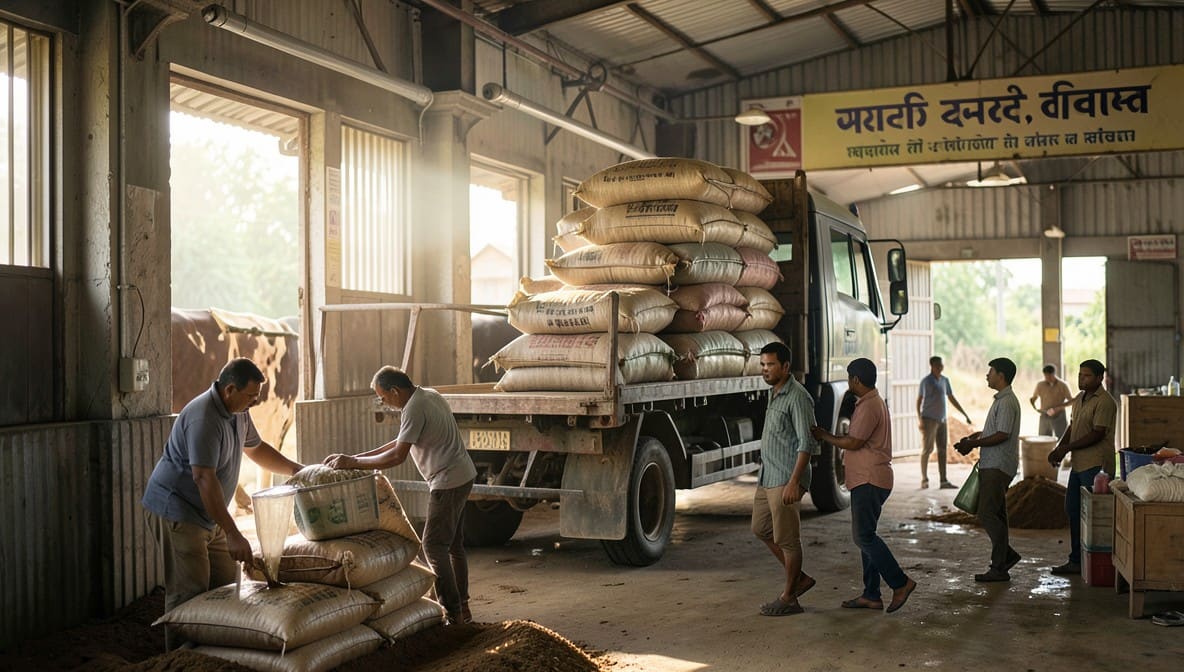
The petitioners, comprising over twenty traders and manufacturers across Chhattisgarh, are engaged in the purchase, storage, and sale of molasses as a raw material for non-intoxicant purposes. These include the production of cattle feed, gudakhu (a traditional fermented product), coal briquettes, animal feed, and industrial chemicals. None of the petitioners are involved in the manufacture, distillation, or sale of alcoholic liquor for human consumption. The State of Chhattisgarh, through its Commercial Tax (Excise) Department, issued notices and circulars under the Chhattisgarh Molasses Control and Regulation Rules, 2022, demanding that these traders obtain excise licenses under Rule 8 and pay molasses duty at Rs. 200 per ton. Failure to comply was met with threats of raids, seizure of stock, and prosecution.
Key Facts
- Molasses is a by-product of sugar and jaggery production, constituting approximately 42% of sugar output.
- In its raw form, molasses contains no alcohol and is unfit for human consumption.
- It can be fermented into alcohol only through a complex industrial process, similar to fruits, grains, or sugar.
- The Central Government levies GST at 28% on molasses under the Central Goods and Services Tax Act, 2017, explicitly excluding intoxicants from its purview.
- The petitioners are GST-registered traders and have no connection with distilleries or liquor manufacturing.
- The State of Chhattisgarh notified the Chhattisgarh Molasses Control and Regulation Rules, 2022, on 12.07.2022, under Sections 8(1)(c) and 62(2)(f), (g), (h) of the Chhattisgarh Excise Act, 1915.
- Rule 2(c) of the Rules defines molasses as "the thick, dark coloured syrup obtained at the end of manufacture of sugar and jaggery which in the liquid form contains sugar, which can be fermented."
- Rule 3 restricts use of molasses to distillation or specified non-intoxicant purposes (scientific, industrial, agricultural, educational, medicinal, cattle feed), requiring Excise Commissioner approval for the latter.
- Rule 11 imposes a duty of Rs. 200 per ton on molasses within the State, payable by the purchaser prior to transportation.
- Rule 19 permits possession and transport of up to 20 kg of molasses for domestic use without a license.
- Petitioners paid over Rs. 9 lakhs in excise duty under duress and sought licenses under protest.
- The petitioners filed RTI applications on 25.04.2019 seeking legal basis for molasses regulation, receiving a response only on 27.05.2019.
Procedural History
- 12.07.2022: Chhattisgarh Molasses Control and Regulation Rules, 2022, notified by the State Government.
- 2019 - 2022: Multiple petitioners received notices demanding excise licenses and payment of molasses duty.
- 2022 - 2024: Writ petitions filed across various districts of Chhattisgarh, including Raipur, Bilaspur, Raigarh, Korba, and Ambikapur.
- WPC No. 3580/2022: Filed by M/s Kedia Trading, Raipur, on grounds of constitutional violation.
- 2023 - 2024: Nine additional writ petitions filed by other traders and manufacturers, raising identical issues.
- 18.03.2026: Batch of 14 writ petitions heard together by the Division Bench.
- 27.03.2026: Judgment delivered by Chief Justice Ramesh Sinha and Justice Ravindra Kumar Agrawal.
The Parties' Positions
For the Petitioners
The petitioners argued that molasses in its raw form is not an intoxicant, excisable article, or liquor under the Chhattisgarh Excise Act, 1915. They contended that the Rules of 2022, by imposing licensing and taxation on non-intoxicant trade, violate:
- Article 19(1)(g): Right to carry on any trade or business.
- Article 14: Equality before law, as it treats non-intoxicant traders identically to liquor manufacturers without rational basis.
- Legislative competence under Entry 8 and 51 of List II: These entries empower the State only over intoxicating liquors and alcoholic liquors for human consumption, not raw materials.
- Entry 84 of List I: The Union has exclusive power to tax industrial alcohol, and the GST regime confirms molasses is not an intoxicant.
- Doctrine of ultra vires: The Rules exceed the scope of the parent Excise Act, which does not define molasses as an excisable article.
They relied on Synthetics & Chemicals Limited v. State of U.P., Lalta Prasad Vaish & Others v. State of U.P., and Kerala Samsthana Chethu Thozhilali Union v. State of Kerala to establish that the State cannot regulate non-intoxicant uses of substances merely because they are potential inputs for intoxicants.
For the Respondent/State
The State contended that:
- Molasses is a key raw material for producing potable alcohol and must be regulated to prevent diversion.
- Entry 8 of List II permits regulation of "any other base" used for manufacture of liquor, which includes molasses.
- The Rules are preventive measures to curb revenue loss from illicit distillation.
- The Orissa High Court had previously upheld similar provisions, though its judgment was stayed by the Supreme Court.
- GST imposition does not negate the State’s power to regulate under excise laws.
- The petitioners failed to challenge specific provisions of the Rules, rendering the petitions non-maintainable.
Relief Sought
The petitioners sought:
- A declaration that the Chhattisgarh Molasses Control and Regulation Rules, 2022, are ultra vires the Constitution to the extent they apply to non-intoxicant trade.
- Quashing of all notices, circulars, and demands for excise licenses related to non-intoxicant molasses use.
- A writ of mandamus restraining the State from conducting raids, seizures, or initiating prosecution against traders for non-possession of excise licenses.
- Declaration that past payments of molasses duty under coercion are void.
- Costs of litigation.
The Legal Issue
The central question was whether the State of Chhattisgarh, under Entry 8 of List II of the Seventh Schedule to the Constitution and the Chhattisgarh Excise Act, 1915, has the legislative competence to impose excise licensing and taxation on traders dealing in molasses exclusively for non-intoxicant purposes such as cattle feed and gudakhu production, when molasses in its raw form is neither an intoxicant nor an excisable article under the Act.
Arguments Presented
For the Appellant/Petitioner
The petitioners relied on the definitions under Section 2 of the Excise Act, which exclude molasses from the categories of "excisable article," "intoxicant," or "liquor." They emphasized that the Act’s preamble limits its scope to intoxicating liquors and drugs. The term "any other base" in Section 8(c) cannot be stretched to include molasses in its unfermented state, as that would nullify the statutory definitions and violate the principle of harmonious construction. They cited Synthetics & Chemicals Limited to argue that the State cannot regulate industrial alcohol or its raw materials under Entry 8, as such regulation falls under Entry 84 of the Union List. The imposition of GST at 28% by the Centre further confirms molasses is not an intoxicant. The Rules of 2022, by requiring licenses for cattle feed traders, impose an unreasonable restriction on trade under Article 19(1)(g) and violate Article 14 by treating dissimilar entities alike.
For the Respondent/State
The State argued that Entry 8 grants broad regulatory power over the entire supply chain of intoxicating liquors, including raw materials like molasses. It contended that the Rules are preventive measures to prevent diversion of molasses into illicit distillation. The State relied on the Orissa High Court’s earlier judgment upholding similar rules, though it acknowledged the Supreme Court had stayed that judgment. It asserted that GST imposition does not preclude excise regulation and that the petitioners’ failure to challenge specific provisions rendered the petitions defective. The State maintained that the Rules merely regulate the movement and use of a substance with potential for misuse, not its end-use.
The Court's Analysis
The Court undertook a meticulous analysis of the constitutional scheme, statutory definitions, and judicial precedents. It began by noting that the Chhattisgarh Excise Act, 1915, defines "excisable article" under Section 2(6) as alcoholic liquor for human consumption, intoxicating drug, or opium - none of which include molasses. Section 2(11-a) defines "intoxicant" as liquor or intoxicating drug, and Section 2(12) defines "intoxicating drug" as cannabis or similar substances - again excluding molasses. The Court held that the Rules of 2022, by bringing molasses within the excise regime, directly contradict these definitions.
The Court then examined Section 8(c) of the Excise Act, which empowers the State to make provisions for the control of "Mahua or any other base which is or can be utilised for the manufacture of liquor." The Court rejected the State’s expansive interpretation, holding that "any other base" must be understood in context - as substances inherently used in liquor production, such as mahua flowers, not as raw materials that require industrial fermentation. To interpret "base" as including molasses would render the statutory definitions meaningless and violate the principle that subordinate legislation cannot override the parent statute.
The Court emphasized the distinction between regulation and taxation. While Entry 8 permits regulation of intoxicating liquors, Entry 51 permits taxation only of "alcoholic liquors for human consumption." Industrial alcohol and its inputs fall under Entry 84 of the Union List, as confirmed by Synthetics & Chemicals Limited. The Court observed that the Union’s imposition of GST on molasses at 28% - a rate applicable to non-intoxicant goods - further demonstrates that the Centre treats molasses as a non-intoxicant commodity.
The Court also rejected the State’s reliance on the Orissa High Court’s judgment, noting that it had been stayed by the Supreme Court and that the Orissa judgment itself had clarified that molasses used for cattle feed or gudakhu is exempt from excise duty.
"The Rules of 2022, by compelling a cattle feed trader to obtain an excise license, equate a legitimate GST-registered trader with a distillery operator. This is not regulation - it is overreach. The Constitution does not permit the State to regulate every substance that can, under complex industrial processes, become an intoxicant."
The Court further held that the Rules violate Article 19(1)(g) by imposing an unreasonable restriction on trade. The burden of compliance - licensing, record-keeping, payment of duty - is disproportionate to the risk of diversion, especially when the petitioners have no involvement in distillation. The absence of any intelligible differentia between a molasses trader and a liquor manufacturer renders the classification arbitrary under Article 14.
The Court concluded that the Rules of 2022, to the extent they apply to non-intoxicant uses of molasses, are ultra vires the Constitution and the parent Excise Act. The State’s power under Entry 8 does not extend to regulating raw materials used in non-intoxicant industries.
The Verdict
The petitioners succeeded. The Court declared the Chhattisgarh Molasses Control and Regulation Rules, 2022, ultra vires the Constitution of India to the extent they apply to the purchase, storage, and sale of molasses for non-intoxicant purposes such as cattle feed, gudakhu, industrial chemicals, and agricultural use. All notices, circulars, demands, and coercive actions by the Excise Department against petitioners for non-possession of excise licenses in relation to such trade are quashed. The State is restrained from initiating any prosecution, seizure, or inspection against petitioners solely on the ground of non-compliance with Rule 8 of the Rules of 2022 in respect of non-intoxicant molasses trade. Any excise duty paid by petitioners under coercion shall be refunded within 8 weeks. No costs are awarded.
What This Means For Similar Cases
Regulation Cannot Extend to Raw Materials Without Direct Nexus to Intoxication
- Practitioners must now argue that any state regulation of a substance must be directly tied to its intoxicating use, not its potential for fermentation.
- GST classification of a product as non-intoxicant (e.g., molasses at 28%) is strong evidence that it falls outside the excise domain.
- Licensing requirements imposed on traders of raw materials like molasses, sugar, or fruit pulp for non-intoxicant uses are likely ultra vires.
Legislative Competence Under Entry 8 Is Not Unlimited
- Entry 8 permits regulation of intoxicating liquors, not their inputs. The Court clarified that "intoxicating liquor" refers to the final product intended for consumption, not its precursors.
- States cannot use "any other base" clauses to expand excise jurisdiction beyond the statutory definitions.
- Any rule that imposes taxation or licensing on non-intoxicant trade under the guise of "preventing diversion" is constitutionally suspect.
GST and Excise Regimes Are Not Mutually Exclusive But Must Respect Constitutional Boundaries
-
The imposition of GST does not automatically validate excise regulation, but its application to a product signals legislative intent that the product is not an intoxicant.
-
States cannot layer excise duties on goods already taxed under GST if the product is not an intoxicant under the Excise Act.
-
Traders should challenge excise demands on raw materials by invoking Synthetics & Chemicals Limited and Lalta Prasad Vaish as binding precedent.
-
Practitioners representing traders in molasses, sugar, or similar commodities should immediately file writ petitions where excise authorities are demanding licenses for non-intoxicant use.
-
Revenue departments must now amend circulars and training manuals to exclude non-intoxicant molasses traders from excise compliance requirements.