A significant precedent has been set by the Punjab and Haryana High Court on the doctrine of estoppel in insurance claims involving mortgagees. The Court held that a bank, having expressly disclaimed any interest in insurance proceeds in prior litigation, cannot later assert a claim to those proceeds merely because it holds a mortgage over the insured asset. This ruling clarifies the limits of equitable claims against insurers where conduct undermines legal rights.
Background & Facts
The Dispute
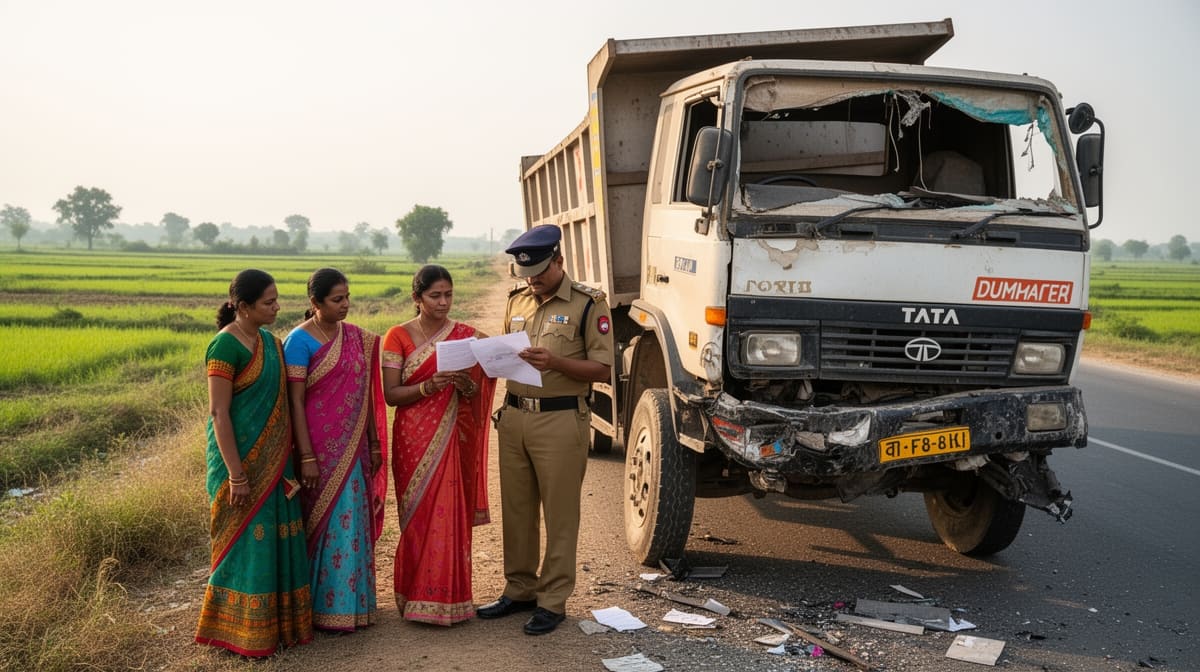
The dispute arose from a loan transaction in which Indian Overseas Bank (plaintiff/respondent) extended a loan of Rs. 90,000 to Defendant No. 1 for the purchase of a truck. The loan was secured by an equitable mortgage of land owned by Defendant No. 3 and a hypothecation of the truck. To mitigate risk, the Bank procured an insurance policy on the truck from United India Insurance Co. Ltd. (defendant/appellant). The truck was destroyed during the November 1984 riots. The Bank sought recovery of its outstanding dues through sale of the mortgaged property and claimed entitlement to the insurance proceeds, arguing it was the mortgagee and thus the rightful beneficiary under the policy.
Key Facts
- Loan disbursed: 1983
- Truck destroyed: November 1984
- Insurance policy (Ex. P-14) named the Bank as mortgagee and beneficiary
- Defendant No. 1 filed a separate suit on 01.02.1985 seeking Rs. 2,00,000 compensation from the Insurance Company
- In its written statement (Ex. D-2) in that suit, the Bank stated: "The answering defendant has already instituted a mortgage suit against the plaintiff and has no concern whatsoever with the Insurance Company."
- The Insurance Company, relying on this statement, settled with Defendant No. 1 and paid Rs. 1,50,000 on 15.06.1985
- The suit filed by Defendant No. 1 was withdrawn on 20.06.1985
- The Bank filed its mortgage suit on 18.07.1985, naming the Insurance Company as Defendant No. 4
- The Bank did not file any claim with the Insurance Company before or after the settlement
- The Bank’s suit was filed more than two years after the truck’s destruction
Procedural History
- 18.07.1985: Mortgage suit filed by Indian Overseas Bank against Defendants 1 - 4 in the District Court
- 29.08.1992: Trial Court dismissed claim against Insurance Company (Defendant No. 4) on grounds of estoppel and lack of privity; granted preliminary decree against Defendants 1 - 3 for recovery of Rs. 2,59,944.85
- 13.06.1995: First Appellate Court reversed Trial Court’s findings on Issues 4-A and 4-B; held Insurance Company liable to pay Rs. 1,50,000 to the Bank
- 28.02.1997: Regular Second Appeal admitted by this Court
- 01.04.2026: Oral arguments concluded
- 10.04.2026: Judgment pronounced
The Parties' Positions
Appellant (United India Insurance Co. Ltd.): Contended that the Bank’s written statement (Ex. D-2) in the prior suit constituted a clear, unequivocal disclaimer of any interest in the insurance claim. Acting in good faith, the Company settled with Defendant No. 1. The Bank’s subsequent claim was barred by estoppel, lack of privity, and absence of any prayer in the plaint.
Respondent (Indian Overseas Bank): Argued that the written statement was merely a procedural observation made before the Bank knew the truck was destroyed. It maintained its status as mortgagee under the policy and claimed entitlement to proceeds regardless of prior conduct.
Relief Sought
The Bank sought recovery of Rs. 2,59,944.85 through sale of mortgaged property, with the right to recover any shortfall from other assets of Defendants 1 - 3, and additionally claimed Rs. 1,50,000 from the Insurance Company as insurance proceeds. The Insurance Company sought dismissal of the claim against it.
The Legal Issue
The central question was whether a mortgagee, having categorically disclaimed any interest in insurance proceeds in prior litigation, can later claim those proceeds under the same policy, and whether such conduct attracts the doctrine of estoppel.
Arguments Presented
For the Appellant
The appellant argued that the Bank’s written statement (Ex. D-2) in the earlier suit was a clear, voluntary, and unambiguous representation that it had "no concern whatsoever" with the Insurance Company. This representation induced the Insurance Company to settle with Defendant No. 1, resulting in payment of Rs. 1,50,000. The Bank’s subsequent claim violated the principle of estoppel under Section 115 of the Indian Evidence Act, 1872. Further, the Bank never filed a claim with the insurer, never impleaded it as a party in the prior suit, and did not seek any relief against it in its own plaint. The First Appellate Court’s reversal was based on conjecture, not evidence.
For the Respondent
The Bank contended that its statement in Ex. D-2 was made before it was aware of the truck’s destruction and was merely a procedural response to Defendant No. 1’s suit. It argued that as mortgagee under the policy, it had an independent right to the proceeds, which could not be extinguished by the conduct of a third party. It relied on the policy terms and the settled principle that mortgagees are entitled to insurance proceeds.
The Court's Analysis
The Court undertook a meticulous review of the written statement (Ex. D-2) and the surrounding circumstances. It emphasized that estoppel arises not merely from silence or ambiguity, but from a clear, intentional representation upon which another party acts to their detriment.
"The plaintiff-Bank, in its written statement (Ex. D-2), categorically stated that it had no concern whatsoever with the Insurance Company. This was not a casual observation but a formal legal assertion made in a judicial proceeding."
The Court noted that the Bank’s statement was not made under duress or misunderstanding. It was made after the truck’s destruction and before the settlement. The Insurance Company, acting on this representation, settled the claim with Defendant No. 1 and withdrew the suit. The Bank, despite having a direct interest under the policy, took no steps to intervene or assert its rights.
The First Appellate Court’s reasoning - that the Bank was unaware of the destruction at the time of filing Ex. D-2 - was rejected. The Court observed that the truck was destroyed in November 1984, the Bank filed its suit in July 1985, and the written statement was filed in the interim. The Bank had ample opportunity to assert its claim but chose not to.
The Court further held that the doctrine of estoppel applies even when the representation is not made directly to the party affected. The Insurance Company was entitled to rely on the Bank’s judicial admission. The reversal of the Trial Court’s finding was therefore a misappreciation of evidence.
On limitation, the Court agreed with the Bank that the primary relief - enforcement of mortgage - invoked a 12-year limitation period. However, this did not override the bar of estoppel.
The Verdict
The appeal was allowed. The judgment and decree of the First Appellate Court dated 13.06.1995, insofar as it held the Insurance Company liable to pay Rs. 1,50,000 to the Bank, is set aside. The Trial Court’s order dated 29.08.1992 is restored. The claim against the Insurance Company is dismissed. The Bank’s recovery of Rs. 2,59,944.85 from Defendants 1 - 3 through sale of mortgaged property remains unaffected.
What This Means For Similar Cases
Estoppel Can Bar Even Statutory Rights
- Practitioners must treat judicial admissions in pleadings as binding, even when they relate to rights under insurance policies
- A mortgagee’s failure to assert its interest in prior litigation may extinguish its claim, regardless of policy terms
- Insurance companies may rely on such admissions to settle claims with third parties without fear of subsequent claims
Pleadings Trump Policy Terms
- The terms of an insurance policy do not override conduct that amounts to estoppel
- If a mortgagee disclaims interest in court, it cannot later invoke policy benefits
- Always ensure that any claim under an insurance policy is formally asserted in writing and in all relevant proceedings
Timing of Representation Is Critical
- A representation made after the event of loss (e.g., destruction of insured property) carries greater weight than one made before
- Delay in asserting rights, even if unintentional, may be construed as acquiescence
- Legal notices or claims must be filed promptly and consistently across all forums