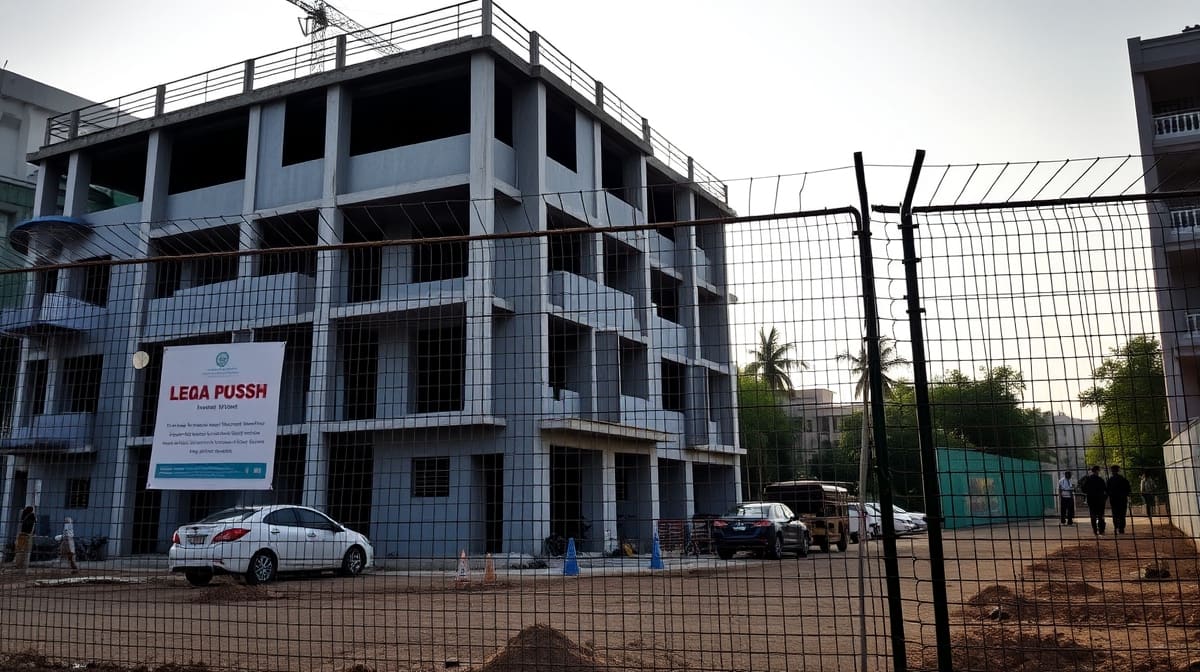
The National Green Tribunal has affirmed that procedural irregularities in e-filing must not defeat substantive justice, particularly when irreversible environmental or property harm is imminent. In an exceptional order, the Tribunal granted interim relief despite a defective interim application, reinforcing that access to justice cannot be contingent on technical compliance when lives and livelihoods hang in the balance.
Background & Facts
The Dispute
The appellant, Sandeep Arolkar, challenges an order issued by the Goa Coastal Zone Management Authority (GCZMA) directing the demolition of a structure on his property. The appellant contends that the demolition order violates environmental norms and procedural fairness, and that immediate execution would cause irreparable loss.
Procedural History
- The appeal was originally listed for final hearing on 15 January 2026 but was adjourned to 8 June 2026.
- On 23 February 2026, the appellant’s counsel emailed the Tribunal seeking urgent hearing, citing that demolition was scheduled for 24 February 2026.
- An interim application (I.A.) was filed on 6 February 2026 seeking preponement of hearing, but it was rejected by the e-filing portal due to a technical defect.
- The appellant’s counsel reported that the defect could not be rectified due to a system error on the NGT’s e-filing platform, and the I.A. was never allotted a regular application number.
Relief Sought
The appellant sought immediate interim relief to restrain the demolition of the structure until the appeal could be heard on its merits, arguing that the loss would be irreversible and that the delay in hearing would violate principles of natural justice.
The Legal Issue
The central question was whether a litigant may be denied interim relief on account of a technical defect in filing an interim application, when the defect arises from a system failure and the subject matter involves imminent, irreversible harm.
Arguments Presented
For the Petitioner
The appellant’s counsel argued that the defect in the I.A. was not due to negligence or delay on the part of the litigant, but due to a documented technical failure in the NGT’s own e-filing portal. They relied on the principle that courts must not allow procedural technicalities to defeat substantive rights, especially in environmental matters where harm is often irreversible. They cited M.C. Mehta v. Union of India to underscore the Tribunal’s duty to act proactively in cases of environmental urgency.
For the Respondent
The respondent, GCZMA, contended that the I.A. was never formally admitted due to its defective filing and therefore could not be considered. They argued that allowing relief in such circumstances would set a precedent undermining procedural discipline and encourage litigants to bypass proper filing protocols.
The Court's Analysis
The Tribunal rejected the notion that technical filing failures should operate as a bar to urgent relief. It emphasized that the NGT, as a specialized environmental tribunal, is vested with broad powers under the National Green Tribunal Act, 2010 to ensure justice is not delayed or denied due to procedural infirmities. The Court noted that the appellant had acted promptly upon discovering the defect, communicated urgency through email, and provided evidence of the impending demolition.
"The e-filing system is a facilitative tool, not a gatekeeper of justice. When its failure deprives a litigant of access to remedy, the Tribunal must step in to prevent injustice."
The Court held that the appellant’s conduct demonstrated bona fide intent and reasonable diligence. The defect was neither intentional nor attributable to laches. The Tribunal further observed that the principle of actus curiae neminem gravabit - the act of the court shall prejudice no one - applied squarely. Denying relief on technical grounds would have rendered the Tribunal’s remedial jurisdiction illusory in cases of imminent environmental or property harm.
The Verdict
The appellant succeeded. The National Green Tribunal granted interim relief by restraining GCZMA from demolishing the structure until the appeal is heard on 26 February 2026. The Court held that procedural defects arising from system failures cannot override the right to urgent relief in matters of irreparable harm, and directed that the appeal be listed at the top of the next hearing board.
What This Means For Similar Cases
Procedural Defects Must Not Bar Urgent Relief
- Practitioners may now invoke this judgment to seek interim stays even when I.A.s are technically defective, provided the defect is system-induced and harm is imminent.
- Courts and tribunals must assess the substance of urgency over formality, especially in environmental, land, and heritage cases.
E-Filing Failures Are Not Litigant Faults
- Where e-filing portals malfunction, litigants must document the error (screenshots, emails, registry communications) and immediately notify the court.
- Tribunals are now obligated to treat such cases as exceptional and grant relief on merits, not technicalities.
Timely Communication Can Substitute Formal Filing
- In urgent matters, email notifications to the registry and opposing counsel, coupled with a mention, may suffice to trigger judicial intervention if supported by credible evidence of imminent harm.
- This reduces the risk of losing rights due to administrative glitches beyond the litigant’s control.