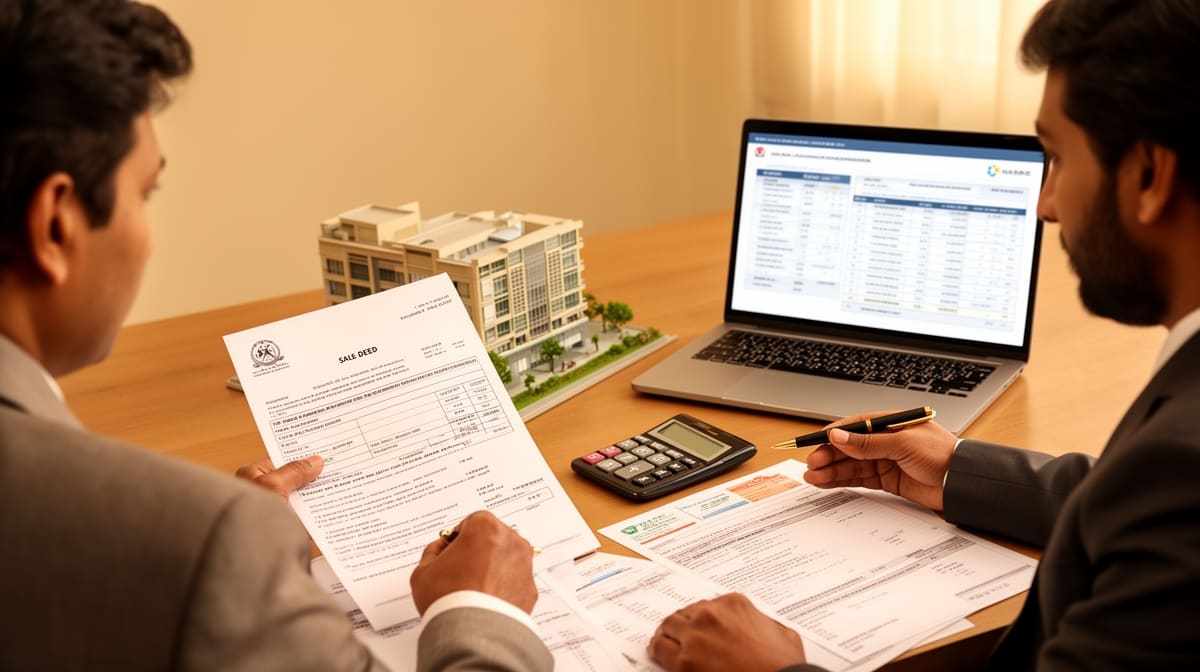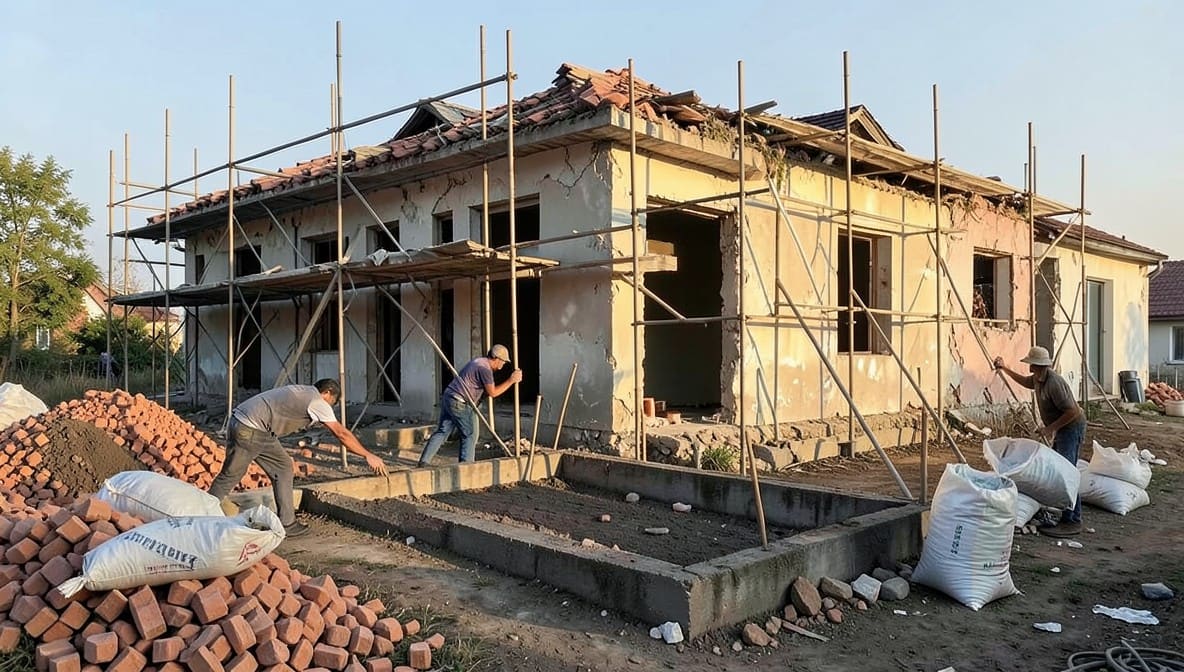
The Income Tax Appellate Tribunal, Bangalore, has clarified that the mere omission of a building’s mention in a sale deed cannot override a preponderance of documentary evidence establishing its existence for the purpose of computing indexed cost of construction under capital gains provisions. This ruling reinforces the principle that tax authorities must evaluate all available evidence rather than rely solely on the form of a single document.
Background & Facts
The Dispute
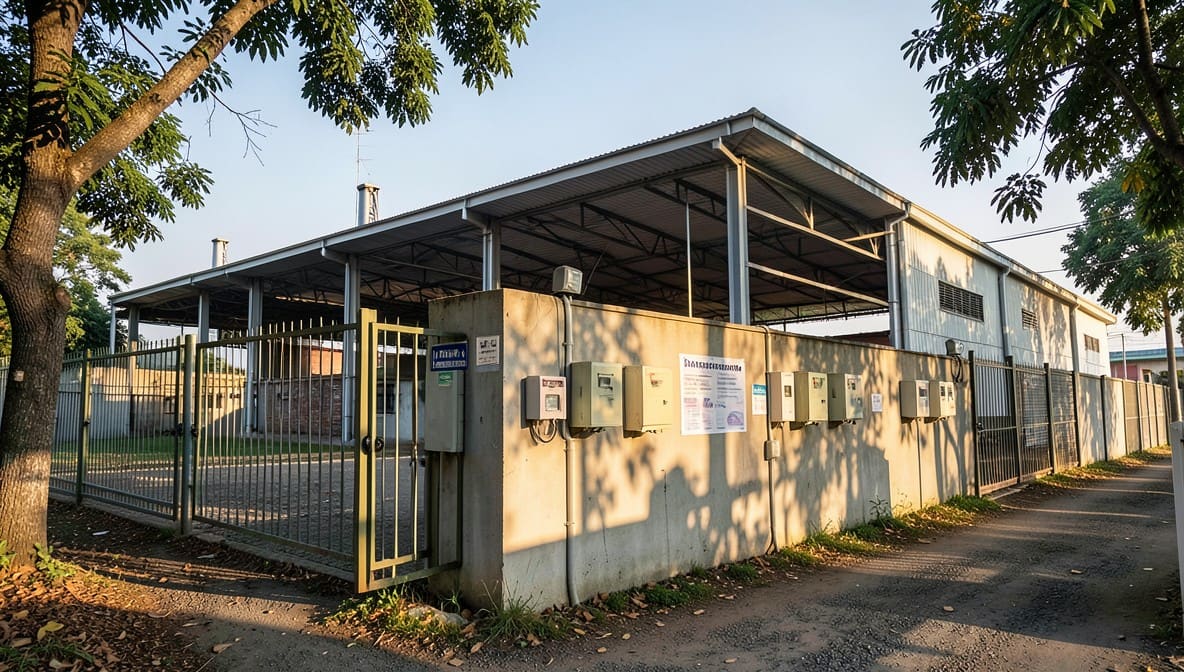
The dispute centers on whether the assessee, an individual, is entitled to claim the indexed cost of construction of a factory shed on plot no. 7A, Bommasandra Industrial Area, Bengaluru, for the assessment year 2018-19. The Assessing Officer (AO) disallowed the claimed cost of Rs. 1,50,00,000/- on the ground that the sale deed dated 26.10.2017, which transferred the property to M/s. GEA Westfalia Separator India Pvt. Ltd., made no reference to any building or structure.
Key Facts
- The assessee filed his return of income on 28.08.2018, declaring long-term capital gains from the sale of the plot.
- He claimed construction of a factory shed in the financial year 2005-06 at a cost of Rs. 1,50,00,000/-, which he sought to index under Section 48 of the Income Tax Act, 1961.
- The sale deed, registered on 26.10.2017, described only a vacant plot of 25,000.331 sq.ft. without mentioning any construction.
- The assessee submitted multiple documents to substantiate construction:
- Sanction plan from Karnataka Industrial Areas Development Board dated 18.03.2009
- Loan sanction letters from Punjab National Bank and LIC against the property
- Confirmation letter from the contractor who built the shed
- Invoices and ledger entries from suppliers of raw materials (e.g., AVS Ready Mix Concrete Products Pvt. Ltd.) with address 7A, Bommasandra
- BESCOM electricity bills in the name of the tenant, M/s. GEA Westfalia Separator India Pvt. Ltd.
- Building tax receipts paid by the tenant
- Rental income statements for A.Y. 2015-16, 2016-17, and 2017-18, accepted by the AO in prior years
- TDS certificates issued by the tenant under Section 194-I for rent payments
- The assessee explained that the building was not mentioned in the sale deed to avoid higher stamp duty under the Karnataka Stamp Act, and that the Sub-Registrar did not physically inspect the property.
Procedural History
- 28.08.2018: Assessee filed return of income for A.Y. 2018-19.
- 2019: Notice under Section 143(2) issued for limited scrutiny under CASS.
- 28.12.2020: Show cause notice issued by AO disallowing indexed cost of construction.
- 03.02.2021: Further notice under Section 142(1) issued seeking details of construction.
- 11.12.2020: Assessee submitted detailed reply with supporting documents.
- 26.06.2025: Commissioner of Income Tax (Appeals) [CIT(A)] upheld AO’s order.
- 15.03.2025: Appeal filed before ITAT Bangalore (ITA No. 1539/Bang/2025).
- 02.03.2026: Hearing held before ITAT.
- 26.05.2026: Judgment pronounced.
Relief Sought
The assessee sought:
- Allowance of indexed cost of construction of Rs. 1,50,00,000/- for computing long-term capital gains.
- Setting aside of the orders of the AO and CIT(A).
- Rectification of the assessed capital gain amount.
The Legal Issue
The central question was whether the absence of a building’s mention in a sale deed is sufficient to disallow the indexed cost of construction under Section 48 of the Income Tax Act, 1961, when the assessee has produced multiple corroborative documents proving the existence and use of the structure.
Arguments Presented
For the Appellant
The assessee’s counsel argued that:
- The sale deed is merely a conveyance document and not conclusive proof of physical condition at the time of sale.
- The cumulative weight of documents - including contractor’s certificate, supplier invoices, electricity bills, rental income records, and TDS deductions - collectively establish the existence of a factory shed.
- The AO failed to conduct any independent verification, such as summoning the contractor, tenant, or suppliers, despite having the opportunity.
- The rental income and TDS deductions for three prior assessment years were already accepted by the AO, confirming the presence of a structure.
- The omission in the sale deed was a deliberate act to evade stamp duty, which is irrelevant to income tax liability.
For the Respondent
The Revenue contended that:
- The sale deed, being a registered document, is the primary evidence of the property transferred.
- Since the deed described only a vacant plot, no building was legally transferred, and therefore no cost of construction could be claimed.
- The other documents submitted were not sufficient to override the clear terms of the sale deed.
- The burden of proof lay with the assessee, and the documents were not authenticated or verified.
The Court's Analysis
The Tribunal emphasized that Section 48 permits deduction of the indexed cost of acquisition or improvement of a capital asset. The term "improvement" includes construction of a building on land. The Tribunal held that the AO and CIT(A) erred in treating the sale deed as the sole determinant of the asset’s nature.
"When there are number of documents furnished by the assessee in support of their claim that there was a building which was also transferred by way of the sale deed... to disprove the said claim, the authorities should have some other evidences. In the present case, there are no such evidences except the sale deed."
The Tribunal noted that the AO had accepted rental income and TDS deductions for prior years, which logically presupposed the existence of a building. The fact that the tenant paid rent and deducted TDS under Section 194-I was decisive - no rent would be payable, and no TDS would be deductible, for a vacant plot.
The Tribunal further criticized the AO for failing to exercise due diligence:
"The AO had not initiated any steps to summon the said contractor and examine him on oath... No such exercise was done by the AO."
It held that the burden of proof, once a prima facie case is made, shifts to the department to disprove the claim through independent inquiry. The department’s failure to examine witnesses or verify documents rendered its denial arbitrary and contrary to principles of natural justice.
The Tribunal also rejected the argument that stamp duty evasion by the parties should impact income tax liability, stating:
"In the present case, we are concerned about the payment of the income tax on the capital gains and therefore the mischiefs done under the different Act could not be a valid reason for imposing the income tax on the assessee."
The Verdict
The appeal was allowed. The ITAT set aside the orders of the AO and CIT(A) dated 26.06.2025 and earlier. The assessee is entitled to claim the indexed cost of construction of Rs. 1,50,00,000/- for computing long-term capital gains on the sale of plot no. 7A, Bommasandra. The capital gains amount shall be recomputed accordingly, with interest payable under Section 220(2) at 1% per month from the due date of filing return until payment. The AO is directed to pass a fresh order within 6 weeks.
What This Means For Similar Cases
Documentary Evidence Trumps Formal Omissions
- Practitioners must now argue that the absence of a structure in a sale deed is not conclusive if supported by contemporaneous, corroborative documents.
- Rental income records, TDS deductions, utility bills, and contractor affidavits are admissible and weighty evidence of construction.
Tax Authorities Must Conduct Due Diligence
- AO’s duty to verify claims under Section 142(1) requires active inquiry - summoning witnesses, verifying supplier records, or inspecting premises.
- Failure to investigate corroborative evidence renders disallowances arbitrary and liable to be set aside.
Stamp Duty Irrelevance in Income Tax
- Tax evasion under state stamp laws cannot be used to justify disallowance under the Income Tax Act.
- The two regimes are independent; income tax liability must be determined on the basis of actual asset ownership and improvement, not conveyance form.