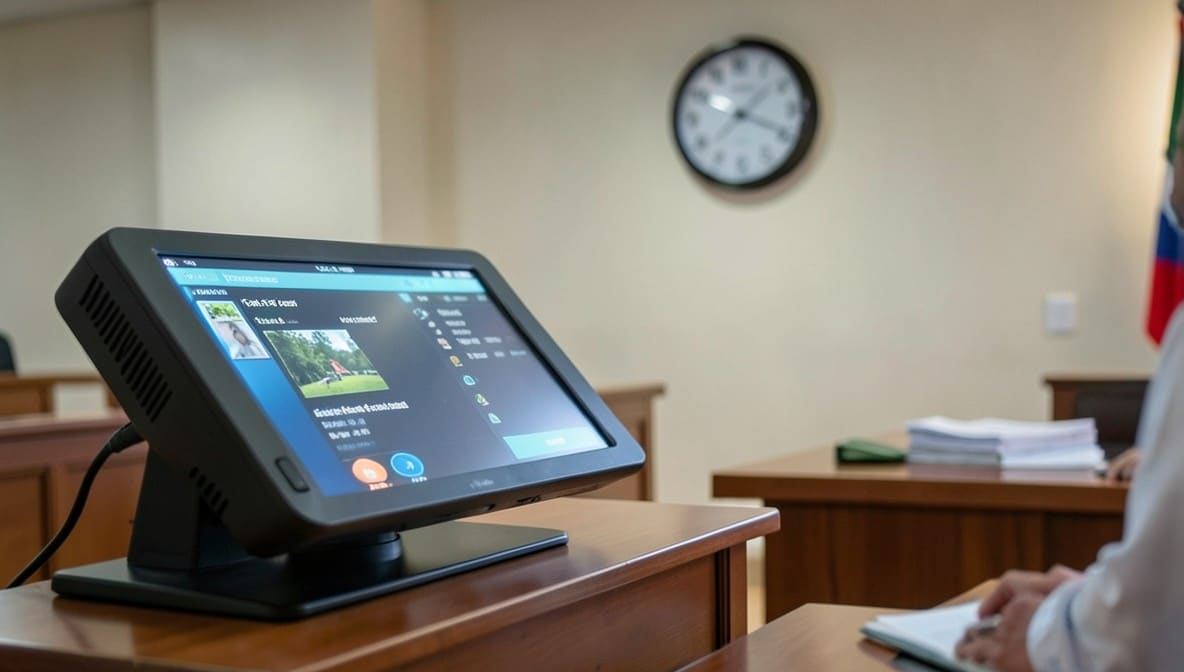
The National Company Law Appellate Tribunal has clarified that for appeals under the Insolvency and Bankruptcy Code, the limitation period begins from the date the order is uploaded on the e-filing portal, not from the date it was pronounced. This ruling significantly alters procedural practice for operational creditors and other non-parties to insolvency proceedings.
Background & Facts
The Dispute
The appellant, Fiza Constructions, is an operational creditor in a corporate insolvency resolution process. It was not a party to the proceedings before the National Company Law Tribunal (NCLT) that led to the approval of a resolution plan. The appellant claims it only became aware of the NCLT’s order approving the resolution plan upon receiving communication from the Resolution Professional on 04.11.2025.
Key Facts
- The NCLT order approving the resolution plan was pronounced on 06.10.2025.
- The order was uploaded on the e-filing portal on 28.10.2025.
- The appellant filed the appeal on 11.12.2025, which is 44 days after the pronouncement and 44 days after the upload.
- The appellant did not apply for a certified copy of the order at the time of filing the appeal.
- The appellant filed I.A. No. 236/2026 seeking exemption from filing the certified copy of the order.
- Respondent No. 2 (Successful Resolution Applicant) filed a separate appeal (Comp. App. (AT) (Ins.) No. 1828/2025) against the same order, also seeking condonation of delay, and relied on the upload date of 28.10.2025.
Procedural History
- 06.10.2025: NCLT pronounces order approving resolution plan.
- 28.10.2025: Order uploaded on the e-filing portal.
- 04.11.2025: Appellant receives communication from Resolution Professional about the order.
- 11.12.2025: Appeal filed before NCLAT.
- 11.12.2025: I.A. No. 235/2026 (condonation of delay) and I.A. No. 236/2026 (exemption from certified copy) filed simultaneously.
- 24.11.2025: NCLAT condones delay in Respondent No. 2’s appeal, accepting upload date of 28.10.2025 as commencement of limitation.
- 22.05.2026: NCLAT delivers judgment on I.A. No. 235/2026.
The Parties' Positions
For the Appellant
- Argues limitation should be computed from 28.10.2025 (date of upload), not 06.10.2025 (date of pronouncement).
- Submits that as a non-party, it had no access to the order until upload.
- Relies on Omkara Assets Reconstruction Private Limited v. Yadavalli Sai Karunakar and the fact that Respondent No. 2 successfully relied on the upload date.
- Has filed I.A. No. 236/2026 seeking exemption from filing certified copy under Rule 22 of NCLT Rules, 2016.
For the Respondents
- Contends limitation begins from 06.10.2025 (date of pronouncement), as per Angelwoods Apartment Allottees Association v. M. Lalitha.
- Argues that failure to apply for certified copy is fatal to condonation.
- Claims knowledge of the order is irrelevant; only the date of pronouncement matters.
- Asserts that Omkara is distinguishable as the appellant there was a party to the proceedings.
Relief Sought
The appellant seeks condonation of delay in filing the appeal and permission to proceed without the certified copy of the order, pending submission within a stipulated time.
The Legal Issue
The central question was whether the limitation period for filing an appeal under Section 61(2) of the IBC begins from the date the order is pronounced or from the date it is uploaded on the e-filing portal, and whether an application for exemption from filing a certified copy under Rule 22 of the NCLT Rules, 2016, can cure procedural defects in delay condonation applications.
Arguments Presented
For the Appellant
The appellant relied on Omkara Assets Reconstruction Private Limited v. Yadavalli Sai Karunakar (Civil Appeal No. 2552/2025), where the Supreme Court set aside an NCLAT order rejecting delay condonation on the ground that the appellant’s explanation - that the order was uploaded only on a later date - was sufficient. The appellant emphasized that the Supreme Court accepted the upload date as the starting point for limitation when the litigant had no prior access to the order. It further argued that its filing of I.A. No. 236/2026 for exemption from the certified copy requirement distinguishes it from Angelwoods, where no such application was made. The appellant also pointed to the consistent position taken by the NCLAT in Respondent No. 2’s own appeal, which was allowed on the same basis.
For the Respondent
The respondents relied on Angelwoods Apartment Allottees Association v. M. Lalitha (Civil Appeal Nos. 14439-14440/2025), where the Supreme Court held that failure to apply for a certified copy of the order, even when the defect was pointed out, renders the appeal non-compliant with Rule 22 of the NCLT Rules. The respondents argued that the Supreme Court in V. Nagarajan v. SKS Ispat & Power Ltd. had affirmed that the obligation to obtain a certified copy is mandatory and non-negotiable. They further contended that the appellant, as an operational creditor, had no right to expect notice of the order and that the date of pronouncement is the only legally recognized trigger for limitation.
The Court's Analysis
The NCLAT undertook a detailed analysis of the Supreme Court’s judgments in Angelwoods and Omkara. It noted that while Angelwoods emphasized the mandatory nature of applying for a certified copy under Rule 22, it also recognized that an application for exemption from this requirement may be entertained. The Court observed:
"In the present case I.A. No.236/2026 having been filed by the appellant seeking exemption, we need to consider the application for exemption as well as application for condonation of delay."
The Tribunal further distinguished Angelwoods on the ground that the appellant there had not even applied for exemption, whereas here, the appellant had done so. The NCLAT also noted that the Supreme Court in Omkara had accepted the upload date as the starting point for limitation when the appellant had no prior access to the order, and had remanded the matter for merits-based hearing.
The Tribunal emphasized that the IBC is a complete code and must be interpreted with a view to ensuring access to justice for all stakeholders, including operational creditors who are not parties to the resolution process. It held that the upload date, being the only date on which the order becomes publicly accessible, is the only reasonable trigger for limitation in such cases.
The NCLAT further relied on its own prior order dated 24.11.2025 in Comp. App. (AT) (Ins.) No. 1828/2025, where it had condoned delay for Respondent No. 2 on the same basis - reliance on the upload date. The Tribunal held that consistency in judicial reasoning demands the same treatment for the appellant.
The Verdict
The appellant succeeded. The NCLAT allowed I.A. No. 235/2026, condoning the delay in filing the appeal. The appeal is deemed to have been filed within the condonable period, computed from 28.10.2025 (date of upload). The appellant is permitted to proceed without the certified copy of the order, but must file it within two weeks. The appeal is listed for hearing on 10.07.2026.
What This Means For Similar Cases
Upload Date Governs Limitation for Non-Parties
- Operational creditors and other non-parties to insolvency proceedings must now treat the date of order upload on the e-filing portal as the starting point for limitation under Section 61(2) of the IBC.
- Practitioners should immediately record the upload date upon receiving notice of an order and calculate limitation accordingly.
- Failure to do so may result in unjust dismissal of appeals, contrary to the spirit of the IBC.
Exemption Applications Cure Procedural Defects
- Filing an application for exemption from the certified copy requirement under Rule 22 of the NCLT Rules, 2016, is now a recognized procedural safeguard.
- Such applications must be filed simultaneously with the appeal and delay condonation application.
- Courts will not reject delay condonation solely on the ground of non-filing of certified copy if an exemption application is pending.
Consistency in Judicial Treatment Is Mandatory
- If a tribunal condones delay for one party based on upload date, it must extend the same benefit to other similarly situated parties.
- Practitioners should cite parallel orders in their submissions to reinforce the principle of equal treatment under law.
- This judgment reinforces that procedural technicalities must not override substantive rights under the IBC, especially for non-parties.