The Delhi High Court has clarified a critical boundary in public employment law: candidates who enter a recruitment process by availing category-specific age relaxation cannot claim to compete for unreserved vacancies on merit alone, even if their scores exceed the unreserved cut-off. This ruling reinforces the principle that reservations, particularly horizontal ones, operate within defined statutory and executive frameworks that may restrict cross-category migration.
Background & Facts
The Dispute
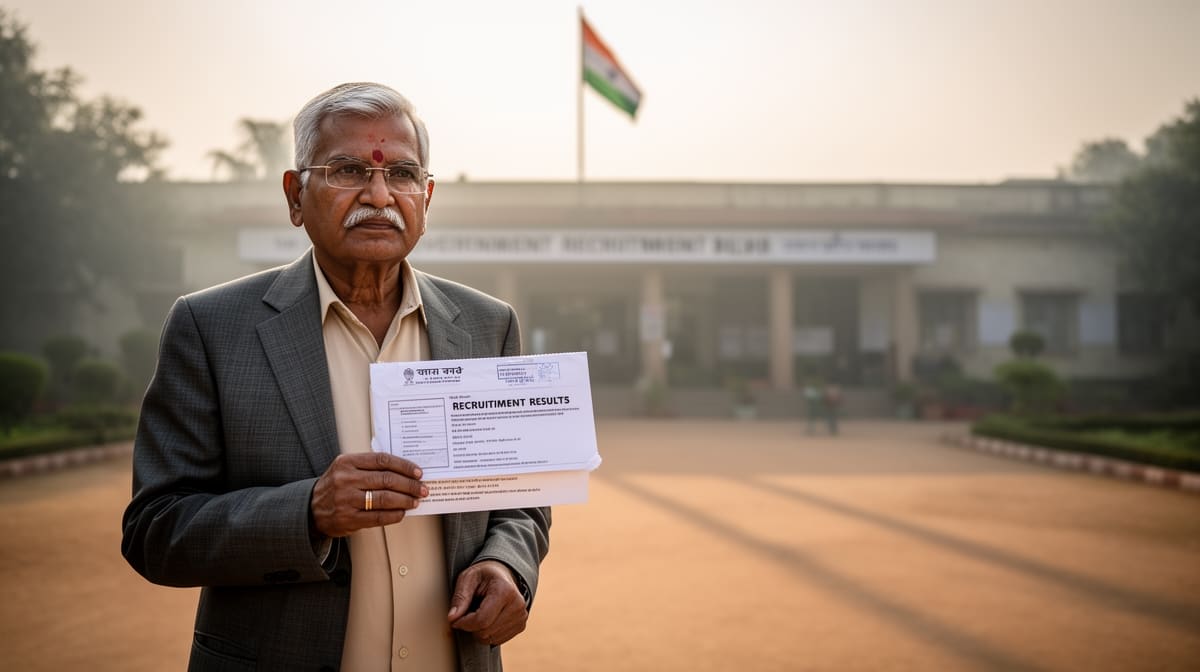
The petitioners, all ex-servicemen, applied for Non-Executive cadre positions at the Airport Authority of India (AAI) under the Ex-Servicemen (ESM) category. They secured marks of 59, 60, and 65 in a computer-based examination. The unreserved (UR) category cut-off was fixed at 59 marks, while the ESM cut-off was 66. Despite scoring above the UR cut-off, the petitioners were not called for document verification because they did not meet the ESM cut-off. They contended that their merit entitled them to be considered in the UR category.
Procedural History
- February 2025: AAI issued Advertisement No. 01/2025/NR for Non-Executive posts, providing horizontal reservation for ex-servicemen.
- June 2025: Results declared; petitioners scored above UR cut-off but below ESM cut-off.
- July 2025: Document verification list published; petitioners excluded.
- September 2025: Writ petition filed in Delhi High Court challenging exclusion.
Relief Sought
The petitioners sought a direction to include them in the UR category list for document verification, arguing that their merit should override category-based restrictions, especially since they scored higher than some UR candidates who were called.
The Legal Issue
The central question was whether an ex-serviceman who avails age relaxation under a horizontal reservation scheme can claim migration to the unreserved category based on merit, when the governing recruitment rules explicitly prohibit such migration.
Arguments Presented
For the Petitioner
The petitioners relied on Jitendra Kumar Singh v. State of U.P. and Union of India v. Sajib Roy, arguing that age relaxation is a concession to ensure equal opportunity, not a barrier to merit. They contended that unreserved vacancies are open to all candidates, and those scoring above the UR cut-off must be considered for UR posts regardless of category. They further cited Rajat Yadav to assert that merit should prevail over category-based exclusion.
For the Respondent
The Respondents relied on DoPT O.M. dated 1st July 1998 and DoPT letter dated 25th September 2025, which explicitly state that ex-servicemen who avail age relaxation cannot be considered for UR vacancies unless they meet all eligibility criteria without relaxation. They also cited Saurav Yadav v. State of U.P. and Rajesh Kumar Daria v. Rajasthan PSC to distinguish between vertical and horizontal reservation mechanics, emphasizing that horizontal reservations operate within defined eligibility boundaries.
The Court's Analysis
The Court undertook a structured analysis of horizontal reservation jurisprudence, distinguishing it from vertical reservation. It affirmed that while horizontal reservations like those for ex-servicemen cut across vertical categories, they do not erase the eligibility conditions attached to those categories. The Court emphasized that the principle of "migration" to the unreserved category is not absolute but contingent on the absence of an explicit statutory or executive embargo.
"The principle of not availing relaxations continues to apply in the unreserved category. An ex-serviceman belonging to the unreserved category can be considered for a UR post only if all eligibility criteria, including age, are met without any relaxation."
The Court held that the DoPT’s 2025 communication constituted a clear, rational, and lawful policy directive. It rejected the petitioners’ argument that horizontal reservation neutralizes eligibility barriers, noting that the very purpose of horizontal reservation is to ensure representation within a defined quota, not to create a mechanism for bypassing eligibility norms. The Court further clarified that the higher ESM cut-off was not a reflection of merit superiority but a consequence of category-wise shortlisting under the 1.5:1 ratio prescribed by AAI’s CHRM Circular No. 34(b)/2019.
The Court also dismissed the petitioners’ claim that exclusion was arbitrary, finding that the policy maintained a rational distinction: candidates who meet UR criteria without concessions compete on one plane; those who rely on concessions compete on another. The policy did not deny ex-servicemen their due - it channeled it to the quota designed for them.
The Verdict
The petitioners lost. The Delhi High Court held that an ex-serviceman who avails age relaxation under a horizontal reservation scheme cannot claim migration to the unreserved category if the governing recruitment rules explicitly prohibit such migration. The petition was dismissed, and the exclusion from document verification was upheld.
What This Means For Similar Cases
Age Relaxation Creates a Separate Eligibility Plane
- Practitioners must now assess whether a candidate entered the recruitment process using a category-linked concession.
- If yes, their eligibility for unreserved vacancies is governed by the express terms of the notification and DoPT guidelines.
- Merit alone, even if superior to UR candidates, cannot override an explicit bar on migration.
Horizontal Reservation Does Not Override Eligibility Conditions
- The "horizontal" nature of reservation pertains to post-selection adjustment, not pre-selection eligibility.
- Candidates availing age, fee, or other relaxations cannot claim parity with unreserved candidates who met all criteria without concessions.
- Recruitment authorities may lawfully maintain separate cut-offs and shortlists for reserved and unreserved streams.
DoPT Guidelines Are Binding in Judicial Review
- DoPT circulars and letters on central recruitment are not mere policy suggestions - they form part of the legal framework.
- Courts will not interfere with such guidelines unless they are manifestly arbitrary or ultra vires.
- Practitioners must cite specific DoPT instructions when challenging recruitment procedures involving ex-servicemen or other horizontally reserved categories.