The Karnataka High Court has clarified that third parties have no legal standing to challenge the validity of an adoption under Hindu law, reinforcing the principle that only natural parents, adoptive parents, or the adopted child may contest such a deed. This judgment resolves a long-standing dispute over ownership and religious rights to a family temple, affirming the primacy of documentary evidence and established succession.
Background & Facts
The Dispute
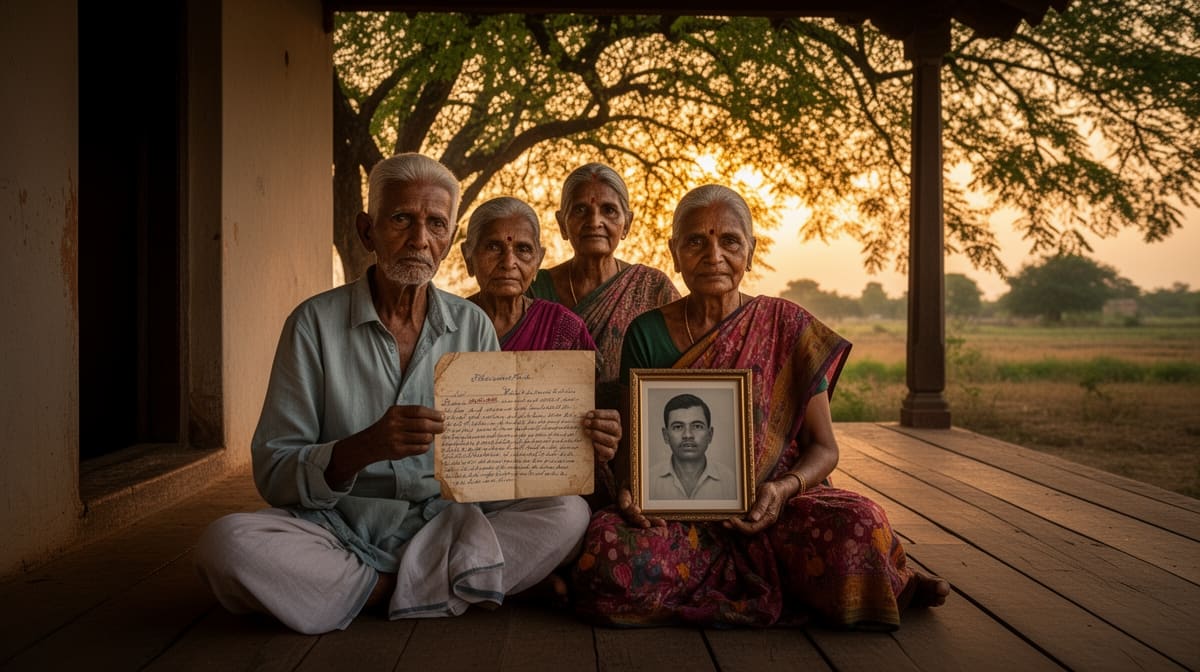
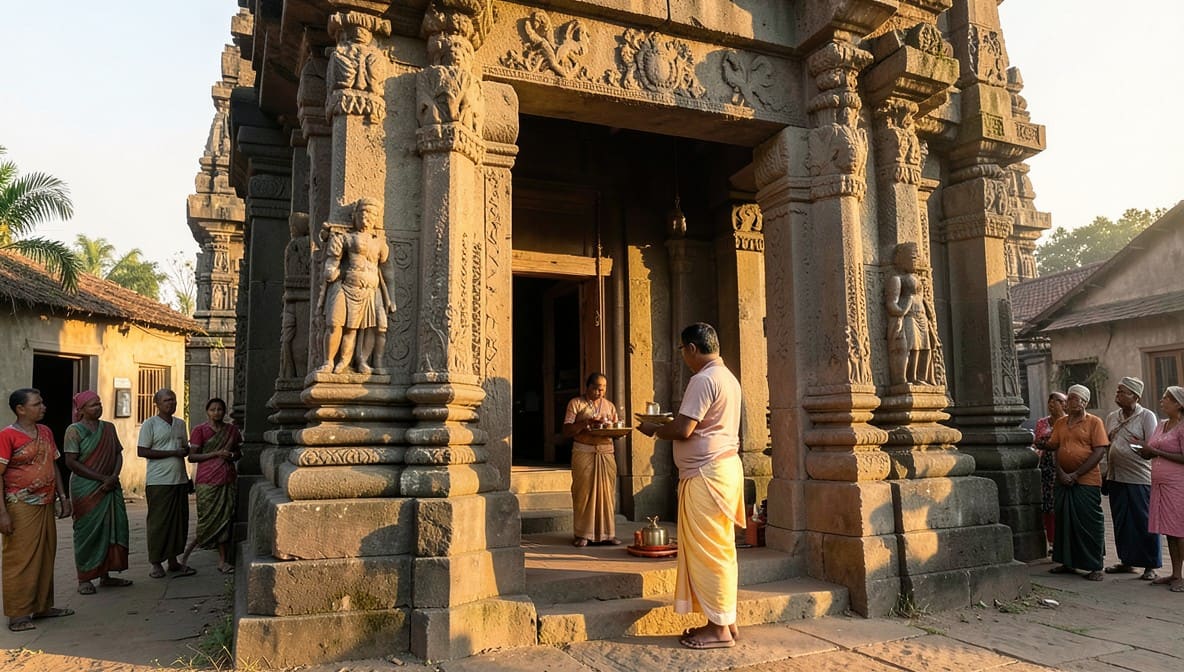
The dispute centers on the ownership, possession, and religious management of the Dyamawwa Devi Temple, located in Konnur village, Gokak Taluk, Belagavi District. The temple, constructed in 1858 by Ningappa Revappa Badiger, has been the subject of competing claims between the plaintiffs - four legal heirs of Narayana Ningappa Badiger - and the defendant, Ratnavva, daughter of Hanamant Badiger, who is unrelated to the adoptive line.
Key Facts
- The temple was built in 1858 by Ningappa Revappa Badiger, who performed Pooja and celebrated Jathra every five years.
- Narayana Ningappa Badiger, father of plaintiffs No.1 to 3, was adopted by Ningappa Revappa Badiger in 1926, as evidenced by a certified adoption deed (Ex.P.26).
- The adoption was admitted by the defendant in her written statement.
- After Narayana’s death in 1995, his legal heirs (plaintiffs) succeeded to the property and continued performing Pooja.
- Revenue records (Ex.P.1 to P.3, M.E. No.719) show successive mutations: Ningappa Revappa Badiger → Narayana Ningappa Badiger → Plaintiffs.
- In 2000, the defendant filed a false varadi alleging her right to the temple. TMC Konnur initially deleted plaintiff No.1’s name and inserted "Dyamawwa Deva Gudi".
- The Divisional Commissioner, Belagavi, set aside this order in 2001 and directed fresh inquiry.
- TMC, in collusion with the defendant, backdated a new resolution (No.53 dated 01.01.2002) reinserting "Dyamawwa Deva Gudi" without notice or consideration of plaintiffs’ documents.
- No villager supported the defendant’s claim. No documentary evidence of her possession or ancestral right was produced.
- Plaintiffs claim exclusive right to perform Pooja, which they assert is traditionally restricted to male lineage members.
Procedural History
- 13.11.2006: Trial Court (O.S. No.302/2002) granted permanent injunction to plaintiffs but dismissed declaration of title.
- 08.01.2010: First Appellate Court (R.A. No.2/2007) set aside the injunction and dismissed the entire suit.
- 22.07.2021: Second Appeal (RSA No.5190/2010) filed before Karnataka High Court, Dharwad Bench.
- 13.03.2026: Arguments heard and reserved.
- 08.04.2026: Judgment delivered.
The Parties' Positions
Plaintiffs (Appellants)
- Assert absolute ownership and possession of the temple property since 1858.
- Rely on adoption deed (Ex.P.26), revenue records (Ex.P.1 - P.3, M.E.719), and survival certificate (Ex.P.11) to establish succession.
- Argue that defendant, as a third party, has no locus standi to challenge the adoption.
- Claim continuous performance of Pooja since 1995.
Defendant (Respondent)
- Admits the adoption of Narayana by Ningappa Revappa Badiger but denies its legal effect on property rights.
- Claims ancestral right through her father, Hanamant, and asserts she and Kalavva (her cousin) are the rightful performers of Pooja.
- Relies solely on oral testimony and revenue entries altered by TMC without due process.
- Does not produce any title deed, will, or proof of possession.
Relief Sought
Appellants seek restoration of the Trial Court’s judgment granting permanent injunction and confirmation of the dismissal of the declaration claim. They seek no monetary relief but insist on exclusive right to manage and perform rituals at the temple.
The Legal Issue
The central question was whether a third party, who is neither the natural nor adoptive parent nor the adopted child, has locus standi to challenge the validity of a Hindu adoption deed under the Hindu Adoption and Maintenance Act, 1956.
Arguments Presented
For the Appellant/Petitioner
Counsel for appellants relied on Veerabhadrayya R. Hiremath v. Irayya A.F. Basayya Hiremath, Smt. Chandamma v. Channaveer, and M.G. Purushotham v. N.K. Srinivasan to argue that only the natural parents, adoptive parents, or the adopted child may question the validity of an adoption. The defendant, being a collateral relative, has no legal standing. The adoption deed (Ex.P.26) was certified, admitted by the defendant, and corroborated by revenue records. The First Appellate Court erred in ignoring this evidence and conflating title with possession.
For the Respondent/State
The respondent’s counsel did not appear despite multiple opportunities. The court took his arguments as heard, but no substantive counter-arguments were presented in writing or orally. The defendant’s position, as per her written statement, was limited to denying plaintiffs’ title and asserting her own right through lineage, without producing any admissible evidence.
The Court's Analysis
The Court undertook a rigorous analysis of the legal principles governing adoption under Hindu law and the doctrine of locus standi. It emphasized that adoption is a personal and solemn sacrament, and its validity can only be challenged by those directly affected by it.
"The adoption can be challenged either by the natural parents of the boy or by the adoptive parents or by the child who has been given in adoption. But in the instant case, the plaintiff is a stranger to the defendant."
The Court cited Veerabhadrayya R. Hiremath to affirm that a third party, even if claiming a remote interest in property, cannot assail an adoption after decades of acquiescence. The defendant’s challenge, filed 42 years after the adoption and 25 years after the death of the adoptive father, was held to be legally untenable.
The Court further held that the First Appellate Court erred in dismissing the permanent injunction on the ground that title was not established. The Trial Court had correctly found that possession and continuous performance of Pooja were established by documentary and oral evidence. The revenue records (Ex.P.1 - P.3) showed unbroken succession from Ningappa Revappa Badiger to Narayana Ningappa Badiger to the plaintiffs. The defendant’s reliance on altered TMC entries was dismissed as void ab initio, having been set aside by the Divisional Commissioner.
The Court also clarified that while the plaintiffs failed to establish title through a will (Ex.P.14), which was not pleaded or properly proved, this did not negate their right to possession and injunction. The law distinguishes between title and possession: possession, if continuous and peaceful, can support an injunction even without absolute title.
The First Appellate Court’s confusion between the names of the grandfather (Ningappa Revappa Badiger) and plaintiff No.1 (Ningappa Narayana Badiger) was held to be a factual error that vitiated its reasoning.
The Verdict
The appeal was partly allowed. The judgment and decree dated 08.01.2010 of the First Appellate Court were set aside. The judgment and decree dated 30.11.2006 of the Trial Court were restored. The permanent injunction restraining the defendant from obstructing the plaintiffs’ use and performance of Pooja at the Dyamawwa Devi Temple is confirmed. The refusal of the declaration of title is upheld. No costs were awarded. The decree is to be drawn accordingly.
What This Means For Similar Cases
Third Parties Cannot Challenge Adoptions
- Practitioners must now argue that any challenge to a Hindu adoption must be limited to natural parents, adoptive parents, or the adopted child.
- Claims by collateral relatives, even if based on property interest, are legally unsustainable.
- Courts must dismiss such challenges at the threshold for lack of locus standi.
Possession Can Sustain Injunction Without Absolute Title
- A plaintiff need not prove absolute title to obtain a permanent injunction if possession is established.
- Continuous, peaceful, and exclusive possession coupled with performance of religious rites is sufficient.
- Revenue records, even if later altered, remain strong evidence of possession if unchallenged for decades.
Documentary Evidence Trumps Oral Testimony and Administrative Errors
-
Certified adoption deeds and revenue mutations carry greater weight than oral claims.
-
Administrative orders (e.g., TMC resolutions) that are set aside by higher authorities cannot be revived.
-
Courts must scrutinize the chain of title and not rely on post-litigation alterations.
-
Always verify the chain of mutation entries in revenue records before filing suits involving ancestral property.
-
In adoption-related disputes, file a preliminary application for dismissal on locus standi grounds.
-
For injunctions, focus on possession and usage history, not just title documents.