The Andhra Pradesh High Court has established a critical precedent in land acquisition jurisprudence by holding that compensation must reflect the actual market potential of land, even when it is classified as agricultural, if its location and surrounding development indicate clear residential use potential. This ruling corrects a long-standing tendency to undervalue land based on outdated classification, ensuring just compensation under the Land Acquisition Act, 1894.
Background & Facts
The Dispute
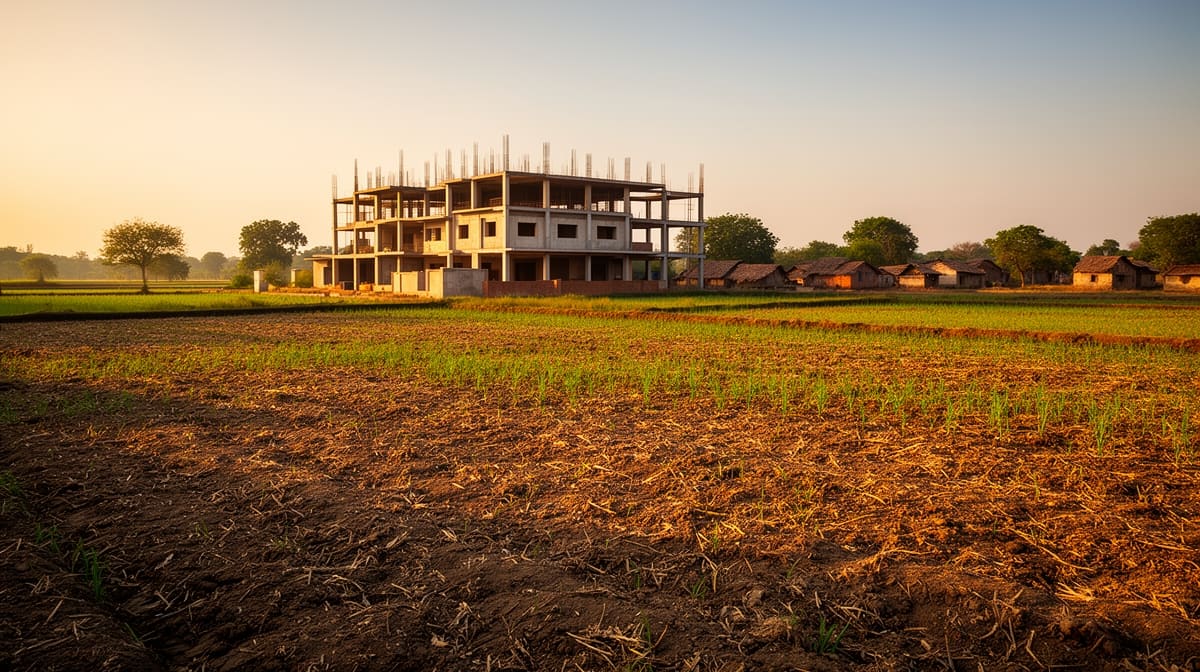
The dispute arose from the acquisition of agricultural land in Veeraghattam Village, Srikakulam District, for the purpose of providing house sites to weaker sections of society. The Land Acquisition Officer (LAO) acquired a total of 6.63 acres across Survey Numbers 313/1, 313/2, 313/3, 319, 320, and 312. The LAO fixed compensation at Rs.37,000 per acre for dry land and Rs.39,000 per acre for wet land, treating the land purely as agricultural despite its proximity to key infrastructure.
Key Facts
- The draft notification under Section 6 of the Land Acquisition Act, 1894, was issued on 22.03.1996 and the declaration on 02.04.1996.
- Possession of the land was taken on 22.05.1996.
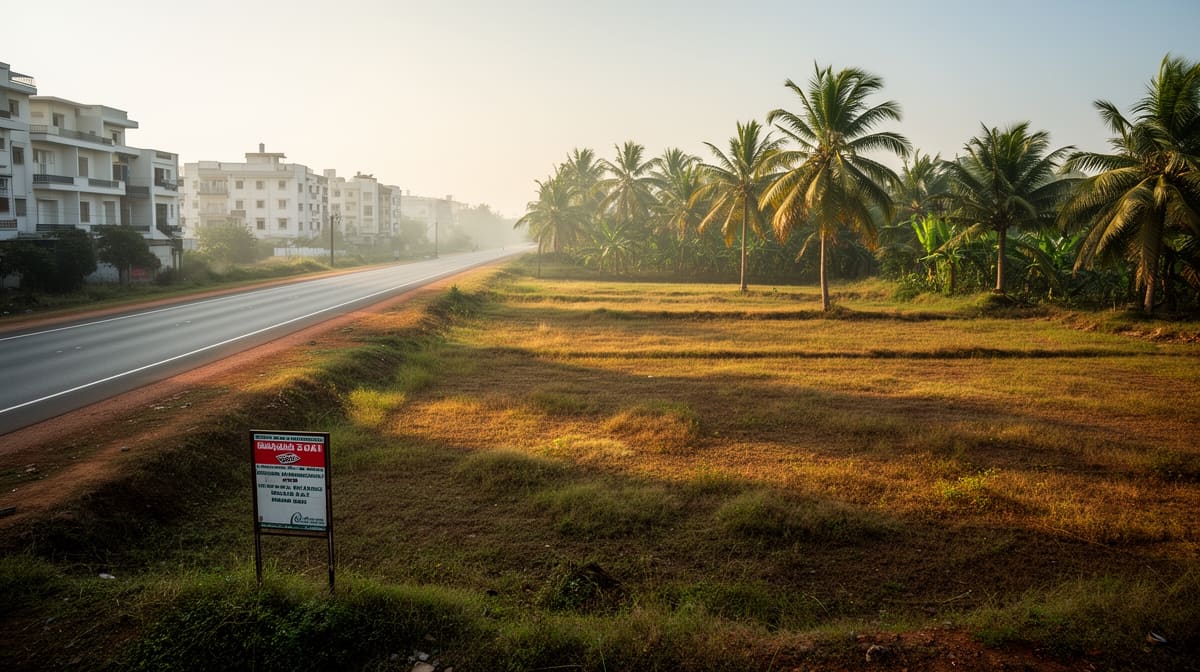
- The acquired land is located approximately 150 yards from the Palakonda-Srikakulam State Highway.
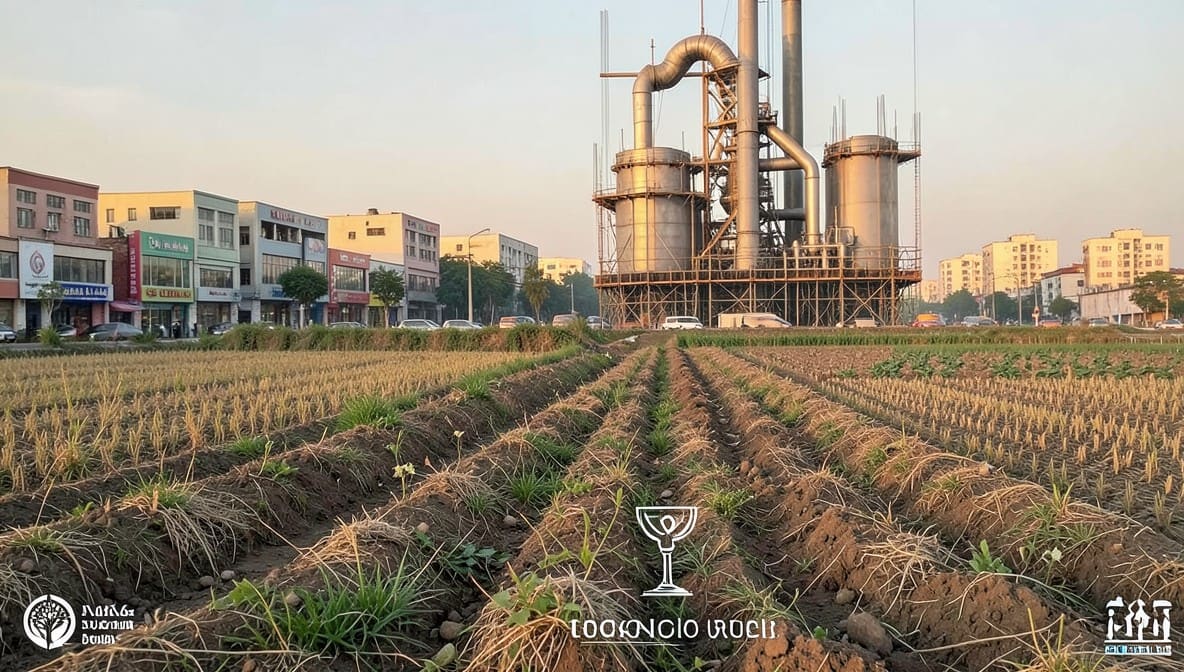
- The area is surrounded by rice mills, cinema halls, an agricultural market committee, a junior college, and multiple industrial units.
- Claimants contended the land had high potential for residential use and sought compensation at Rs.200 per square yard.
- Claimants examined five PWs and marked Exhibits A-1 to A-5 and X-1 to X-2 to prove market value.
- The LAO examined two RWs and marked Exhibits B-1 to B-3.
- A prior award in L.A.O.P. No.13 of 1989 for similar land in the same village had granted Rs.60 per square yard.
Procedural History
- 22.03.1996: Draft notification issued under Section 6 of the Land Acquisition Act.
- 02.04.1996: Draft declaration issued.
- 22.05.1996: Possession taken by the LAO.
- 1999: Landowners filed W.P.No.6615/1999 before the erstwhile High Court of Andhra Pradesh seeking reference under Section 18.
- 19.04.1999: High Court directed reference to the Civil Court under Section 18.
- 1999: Reference case numbered L.A.O.P. No.21 of 1999 before the Senior Civil Judge, Rajam.
- 31.03.2001: Reference Court awarded Rs.60,000 per acre, rejecting square yard basis despite finding residential potential.
- 2004: Appeal filed before the Andhra Pradesh High Court under Section 54 of the Land Acquisition Act, 1894.
- 07.04.2026: Judgment pronounced by the Division Bench.
The Parties' Positions
For the Appellants
The claimants argued that:
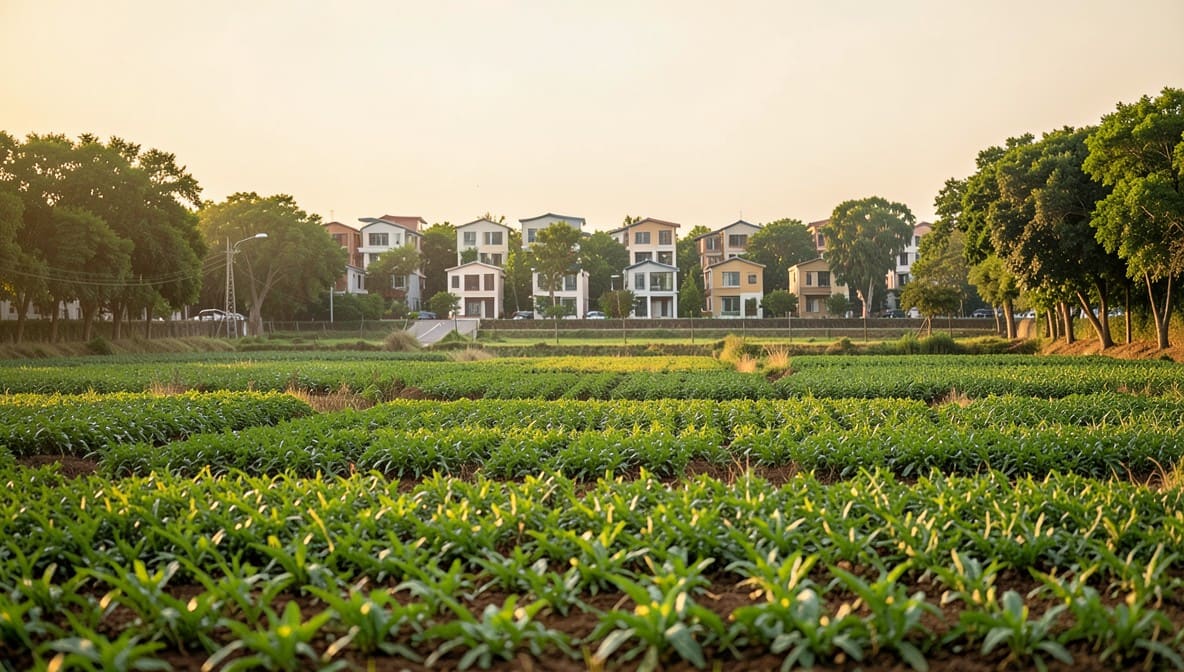
- The land’s location adjacent to a state highway and surrounded by commercial and residential infrastructure rendered it suitable for house sites.
- The LAO’s valuation ignored the principle of highest and best use.
- The Reference Court erred in rejecting Exhibits X-1 and X-2 (pre-notification sales) and the award in L.A.O.P. No.13/1989, which had granted Rs.60 per square yard.
- Precedents from the Supreme Court in Land Acquisition Officer, Kammarapally v. Nookala Rajamallu, Patel Joitaram Kaildas v. Spl. Land Acquisition Officer, and Valliyammal v. Special Tahsildar supported valuation based on potential use.
For the Respondent
The Government Pleader contended:
- The burden lay on the claimants to prove higher market value.
- The land was classified as agricultural and no credible evidence proved it was being used or sold as house sites.
- The Reference Court correctly applied Smt. Indumati Chitaley v. Government of India, holding that no prudent person buys agricultural land on a square yard basis.
- The 150-yard distance from the highway rendered the land less valuable than frontage plots.
Relief Sought
The appellants sought:
- Enhancement of compensation to Rs.200 per square yard.
- Recognition of the award in L.A.O.P. No.13/1989 as binding precedent.
- Statutory solatium and interest under Sections 23 and 30 of the Land Acquisition Act, 1894.
The Legal Issue
The central question was whether land with clear residential potential, despite its classification as agricultural, must be compensated on a square yard basis when surrounding development and prior awards indicate such use, or whether compensation must be confined to agricultural rates based on distance from the main road.
Arguments Presented
For the Appellant
Counsel for the appellants relied on multiple Supreme Court judgments affirming that compensation must reflect the land’s highest and best use, not its current classification. He emphasized that Land Acquisition Officer, Kammarapally v. Nookala Rajamallu held that proximity to urban infrastructure and potential for non-agricultural use must be factored in. He argued that the Reference Court’s rejection of Exhibits X-1 and X-2 was arbitrary, as they were contemporaneous sales of similar land in the same village. He further contended that the prior award in L.A.O.P. No.13/1989, granting Rs.60 per square yard, was binding under the doctrine of consistency and should have been considered.
For the Respondent
The Government Pleader maintained that the land remained classified as agricultural and that the claimants failed to prove a market for house site sales at the subject location. He cited Smt. Indumati Chitaley v. Government of India to argue that agricultural land cannot be valued on a square yard basis merely because it is near a road. He emphasized that the 150-yard distance from the highway rendered the land less valuable than frontage plots and that the Reference Court’s award of Rs.60,000 per acre was reasonable.
The Court's Analysis
The Division Bench conducted a rigorous review of the Reference Court’s reasoning and found it legally flawed. While the Reference Court correctly observed that the LAO had erred in treating the land as purely agricultural without considering its potential for residential use, it then contradicted itself by refusing to award compensation on a square yard basis.
"The learned Judge, although he observed that the subject lands have potential for house site lands, yet disregarded the claim for grant of compensation on square yard basis, on the basis that agricultural lands surround the subject lands, and he fixed the compensation at Rs.60,000/- per acre."
The Court held that the mere fact that the land was not directly abutting the highway did not negate its residential potential. In fact, the Court noted that land located 150 yards from a major highway, surrounded by commercial activity, was often more attractive for residential development than frontage land due to reduced noise and congestion.
The Court further rejected the Reference Court’s reliance on Smt. Indumati Chitaley, distinguishing it on facts: that case involved land with no surrounding development or evidence of residential demand, whereas here, the evidence showed active building activity and prior sales at Rs.60 per square yard in the same village.
The Court emphasized that the principle of just compensation under Section 23 of the Land Acquisition Act, 1894, requires the court to determine the market value based on the land’s highest and best use, not its current use. The Court held:
"Having found fault with the award of the Land Acquisition Officer for treating the subject lands as agricultural lands without considering the potentiality and its usage, the basis for fixing the compensation on acreage is without reason."
The Court also noted that the Reference Court’s refusal to consider the award in L.A.O.P. No.13/1989 was legally untenable. The fact that the claimants in that case were not examined did not invalidate the award’s evidentiary value as a comparable sale in the same locality.
The Verdict
The appeal was allowed. The Court enhanced the compensation by Rs.3,00,000 per acre over the Rs.60,000 per acre awarded by the Reference Court, resulting in a total compensation of Rs.9,00,000 per acre. The appellants are entitled to statutory solatium at 30% of the enhanced compensation and interest at 9% per annum from the date of possession (22.05.1996) until payment. All pending miscellaneous applications are closed.
What This Means For Similar Cases
Residential Potential Overrides Agricultural Classification
- Practitioners must now argue that land with demonstrable residential potential - even if classified as agricultural - must be valued on a square yard basis if surrounding infrastructure, prior sales, or development patterns support such use.
- Merely citing distance from the main road is insufficient to deny higher valuation if the land is within a developing urban fringe.
Prior Awards in Same Village Are Binding Precedents
- Awards granted in identical or similar cases within the same village or revenue block must be considered as comparable sales under Section 23(1A) of the Act.
- Rejection of such awards on technical grounds (e.g., non-examination of claimants) is legally unsustainable if the award reflects market reality.
Courts Must Avoid Contradictory Reasoning
-
If a court finds that land has residential potential, it cannot then deny square yard valuation on the basis of agricultural classification.
-
The principle of highest and best use must prevail over rigid land use categories.
-
Always submit evidence of nearby commercial/residential development, utility access, and comparable sales.
-
Cite Land Acquisition Officer, Kammarapally v. Nookala Rajamallu and Valliyammal v. Special Tahsildar to support valuation based on potential.
-
Challenge awards that fix compensation on acreage after acknowledging residential potential - such reasoning is perverse and liable to be set aside.