The Punjab and Haryana High Court has clarified that housing societies cannot impose penalty or interest on maintenance charges unless explicitly authorized by their approved bye-laws. This ruling reinforces statutory compliance under the Haryana Registration and Regulation of Societies Act, 2012 and protects residents from arbitrary financial demands by unregulated governing bodies.
Background & Facts
The Dispute
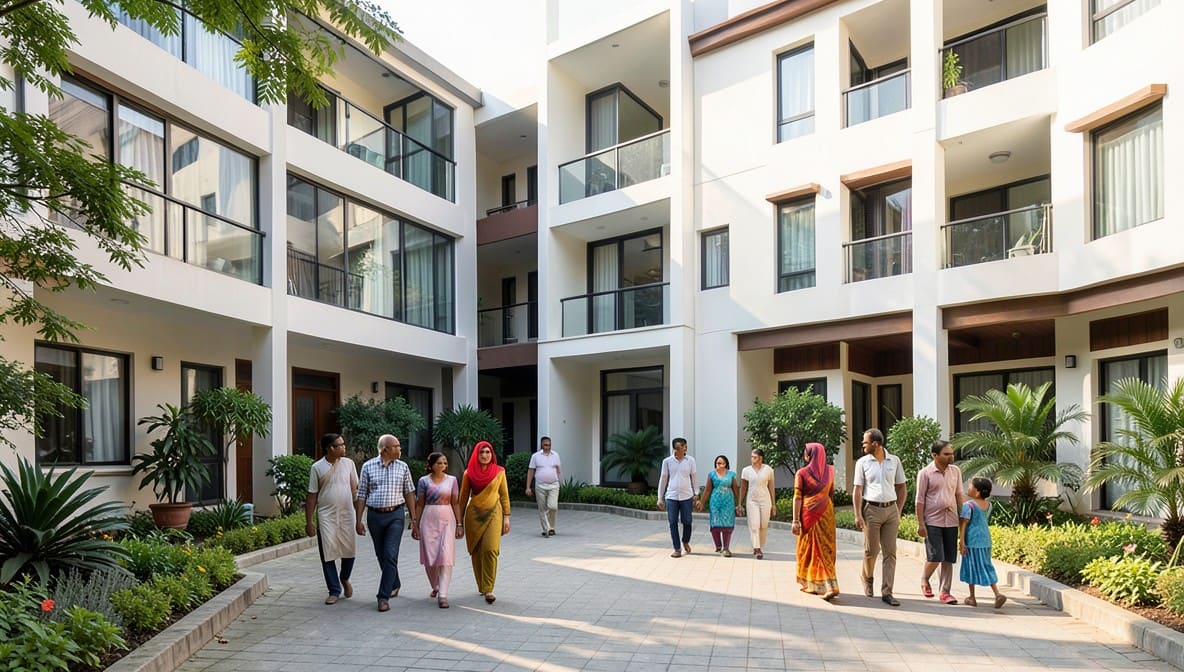
The petitioners, residents of Amravati Enclave in Panchkula, Haryana, challenged the unlawful imposition of maintenance charges and alleged penalties by the Amravati Flats Residents Welfare Association (AFRWA), a registered society. The petitioners contend that the society, through its elected governing body, has demanded Rs. 80,400 for maintenance arrears from May 2022 to February 2026, including interest and penalties not sanctioned by law or the society’s bye-laws.
Key Facts
- The petitioners purchased their flat in October 2018 and have paid monthly maintenance charges up to April 2022
- AFRWA was originally registered in 2009; its governing body was challenged in a complaint dated 04.08.2014
- On 12.08.2014, the tenants re-registered AFRWA under Annexure-3 of the Haryana Registration and Regulation of Societies Act, 2012
- The State Registrar, by order dated 10.01.2019, set aside the elections of the governing body and appointed an Administrator
- The State Government issued Notification dated 22.06.2018 amending Rules 32 and 33 of the 2012 Rules, mandating maintenance charges be fixed based on apartment size
- On 05.08.2021, the State Registrar directed the District Registrar to ensure AFRWA amended its bye-laws in conformity with Model Bye-Laws and the 2018 Notification
- On 17.08.2021, the District Registrar submitted an undertaking before the Court that elections would be withdrawn and bye-laws would be amended as directed
- Despite this undertaking, the District Registrar approved amended bye-laws on 26.08.2021 that deviated from Model Bye-Laws and did not comply with the 2018 Notification
- On 25.02.2026, the Registrar General set aside the election results, finding that the bye-laws were amended without approval of the General Body
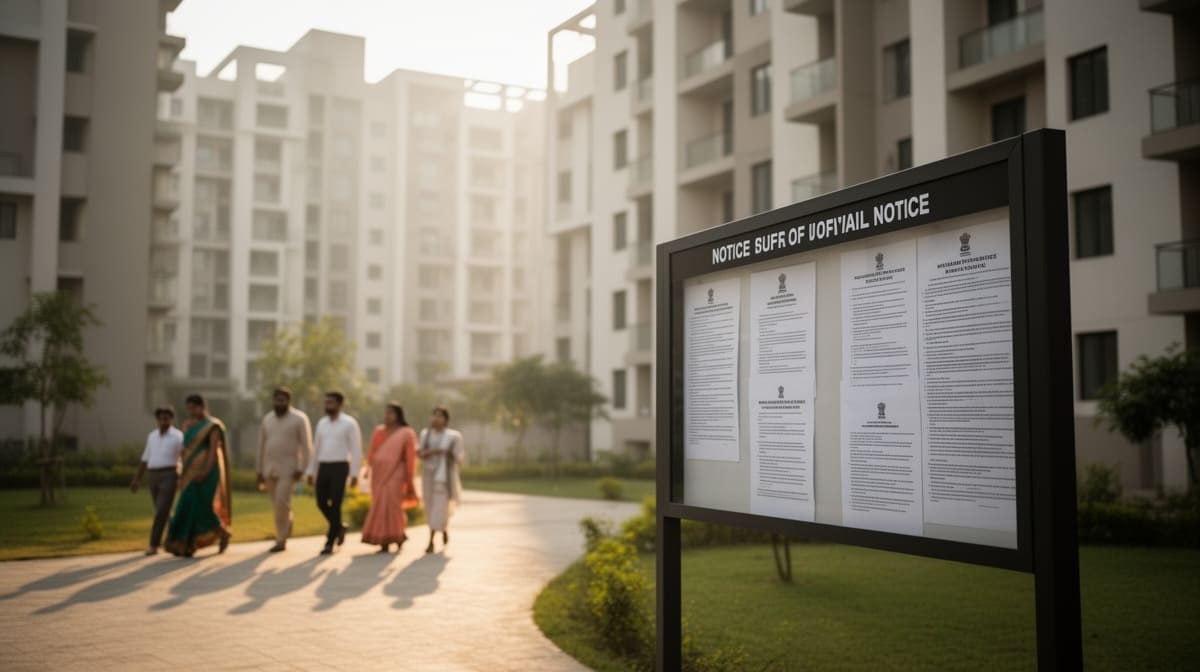
- On 02.02.2026, AFRWA demanded Rs. 80,400 from petitioners for maintenance arrears, including interest and penalty
- On 10.02.2026, petitioners filed a representation seeking disclosure of legal authority for the demand, citing the 2018 Notification and the 2012 Act
- On 23.02.2026, the Registrar General directed the District Registrar to act in accordance with the 2012 Act
Procedural History
- 04.08.2014: Complaint filed against AFRWA’s governing body before District Registrar
- 12.08.2014: AFRWA re-registered under Annexure-3 of the 2012 Act
- 10.01.2019: State Registrar set aside elections and appointed Administrator
- 22.06.2018: State Notification amended Rules 32 and 33 of the 2012 Rules
- 05.08.2021: State Registrar directed amendment of bye-laws per Model Bye-Laws and 2018 Notification
- 17.08.2021: District Registrar gave undertaking before Court to withdraw elections and amend bye-laws
- 26.08.2021: District Registrar approved non-compliant bye-laws
- 25.02.2026: Registrar General set aside elections due to procedural irregularities in bye-law amendment
- 02.02.2026: AFRWA issued demand notice for Rs. 80,400 including interest and penalty
- 10.02.2026: Petitioners filed representation challenging legality of demand
- 23.02.2026: Registrar General directed District Registrar to act under 2012 Act
- 13.09.2019: District Registrar issued order permitting simple interest on default, but no penalty
- 04.05.2026: Writ petition filed under Articles 226 and 227 of the Constitution
The Parties' Positions
The petitioners argue that:
- The demand for Rs. 80,400 includes unauthorized interest and penalty
- The 2018 Notification and 2012 Act mandate maintenance charges be based on apartment size, not arbitrary rates
- The amended bye-laws were not approved by the General Body, rendering them void
- The District Registrar’s undertaking dated 17.08.2021 was breached
- The Registrar General’s order dated 25.02.2026 confirms procedural illegality
The respondents, through the State Counsel, concede that:
- The District Registrar will review the matter
- The society will be directed to comply with the 2012 Act and 2018 Notification
- The petitioners will be given an opportunity to be heard
- Necessary action will be taken within three months
Relief Sought
The petitioners sought:
- Direction to the respondents to deposit pending maintenance amounts without interest or penalty, as no such provision exists in the approved bye-laws
- Compliance with the undertaking dated 17.08.2021 to amend bye-laws per the 05.08.2021 order
- Enforcement of Notification dated 22.06.2018 and Rules 32 and 33 of the 2012 Act
- Direction to the Registrar General to decide the representation dated 10.02.2026 in a time-bound manner
The Legal Issue
The central question was whether a housing society may impose interest or penalty on maintenance charges in the absence of any express provision in its approved bye-laws, and whether the amended bye-laws and maintenance demands comply with the Haryana Registration and Regulation of Societies Act, 2012 and the 2018 Notification.
Arguments Presented
For the Petitioner
The petitioners relied on the principle that societies are bound by their own bye-laws, which are statutory instruments under the 2012 Act. They cited State of Haryana v. Rattan Singh to argue that any financial demand beyond what is authorized by bye-laws is ultra vires. They emphasized that the 2018 Notification explicitly mandates maintenance charges be determined by apartment size, and that the District Registrar’s approval of non-compliant bye-laws violated Section 14(2) of the 2012 Act. They further argued that interest or penalty cannot be inferred by implication and must be expressly provided for.
For the Respondent
The State Counsel did not contest the illegality of the demand but conceded procedural lapses. He submitted that the District Registrar would rectify the non-compliant bye-laws and ensure adherence to the 2018 Notification and 2012 Act. He did not defend the imposition of interest or penalty, acknowledging that the 13.09.2019 order permitted only simple interest and no penalty.
The Court's Analysis
The Court examined the statutory framework under the Haryana Registration and Regulation of Societies Act, 2012, particularly Section 14(2) which requires bye-laws to be approved by the Registrar and Section 17 which mandates that all financial obligations of members be governed by the bye-laws. The Court noted that the 2018 Notification, issued under Rule 32, explicitly prescribes a formula for maintenance charges based on apartment size, leaving no room for arbitrary hikes.
"The bye-laws, once approved, are the charter of the society. Any demand not traceable to them is legally unsustainable."
The Court observed that the District Registrar’s approval of bye-laws on 26.08.2021, despite the 05.08.2021 order and the 17.08.2021 undertaking, constituted a breach of statutory duty. The Registrar General’s order dated 25.02.2026, which set aside the elections due to non-compliance with procedural norms, further confirmed the illegality of the amended bye-laws.
The Court held that interest or penalty cannot be imposed unless expressly authorized by the bye-laws. The 13.09.2019 order, which permitted only simple interest, did not validate the society’s demand for additional penalties. The Court emphasized that the principle of natural justice and statutory compliance must prevail over administrative convenience.
The Verdict
The petition was disposed of on the basis of the State’s undertaking. The Registrar General and District Registrar are directed to ensure compliance with the 2012 Act and the 22.06.2018 Notification within three months. The society must revise its maintenance charges strictly in accordance with apartment size as prescribed. No interest or penalty may be levied unless expressly permitted by the approved bye-laws. The representation dated 10.02.2026 shall be decided within four weeks. The petitioners are entitled to a hearing before any final order is passed.
What This Means For Similar Cases
Maintenance Charges Must Be Statutorily Authorized
- Practitioners must verify that all maintenance charges, including escalation clauses, are explicitly stated in the society’s approved bye-laws
- Any demand beyond the notified formula under Rule 32 of the 2012 Rules is void ab initio
- Residents can challenge arbitrary hikes even if paid voluntarily, as payment under duress does not validate illegality
Bye-Law Amendments Require Strict Procedural Compliance
- Amendments to bye-laws must be passed by the General Body and approved by the Registrar
- Failure to follow due process renders amendments invalid, as confirmed by State Registrar v. AFRWA (2026)
- Courts will not uphold administrative shortcuts, even if the society claims operational necessity
Interest and Penalty Require Express Provision
- No implied power exists to impose interest or penalty under the 2012 Act
- The 13.09.2019 order permitting simple interest was an exception, not a precedent
- Future demands must be grounded in specific bye-law clauses; otherwise, they are unenforceable