The Gujarat High Court rejected a massive condonation plea by the State, clarifying that gross negligence and lack of bona-fide diligence cannot satisfy the “sufficient cause” requirement under Section 5 of the Limitation Act, even where public interest is invoked.
Background & Facts
The Dispute
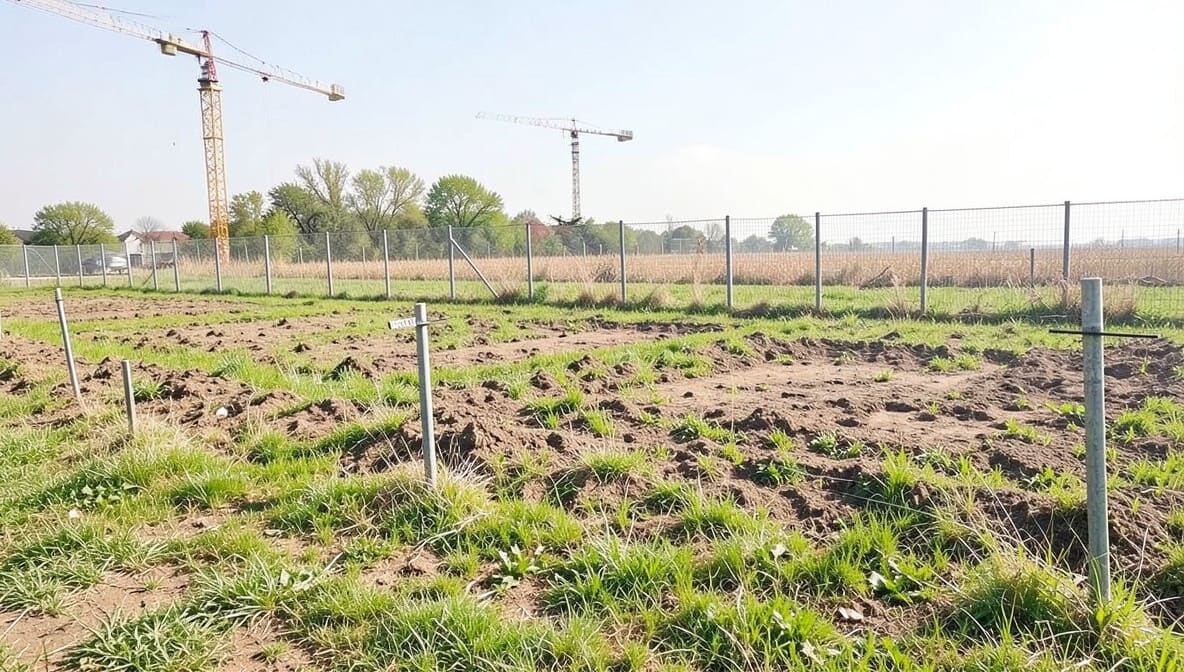
The State Government of Gujarat and its Road & Building (R&B) Department, Rajkot, sought condonation of delay in filing first appeals against the award of the Land Reference Court dated 30 December 2019. The award related to the acquisition of land belonging to respondents-owners in Paddhari village, Rajkot, for the Rajkot-Jamnagar State Highway.
Key Facts
- 28 February 2008: Notification under Section 4 of the Land Acquisition Act issued.
- 8 May 2008: Declaration under Section 6 of the L.A. Act made.
- 1 September 2009: Special Land Acquisition Officer passed Award LAQ No. 5 fixing price Rs 26.50 per sq.mt for agricultural land and Rs 229.75 per sq.mt for non-agricultural land.
- Respondents filed a reference under Section 18 of the L.A. Act; the Reference Court enhanced the price to Rs 5,109 per sq.mt (agri) and Rs 7,107 per sq.mt (non-agri) with statutory benefits and interest.
- 31 December 2019: Judgment and award of the Land Reference Court were passed.
- 15 February 2022: Respondents informed the Deputy Executive Engineer, Rajkot, of the award and requested deposit of the awarded amount.
- 25 February 2022, 12 April 2022, 12 May 2022, 24 May 2022, 7 June 2022, 13 June 2022, 6 August 2022, 30 August 2022, 23 February 2023, 21 March 2023, 5 April 2023, 25 May 2023, 7 July 2023, 20 July 2023, and numerous dates through 18 February 2025: a series of internal communications, sanction requests, and draft preparations were undertaken by the R&B Department and the Special Land Acquisition Officer.
- 19 February 2025: First appeals and the condonation applications were filed before this Court.
- Total delay: 1,790 days (over five years) between the award date and filing of the appeals.
Procedural History
- 30 December 2019: Land Reference Court rendered award.
- 19 February 2025: State filed first appeals (F/First Appeal Nos. 6265/2025, 6273/2025, 6401/2025, 6267/2025, 6430/2025, 6406/2025, 6396/2025, 6393/2025, 6410/2025, 6390/2025, 6269/2025) together with condonation applications (C/CA/1690/2025).
- 3 August 2026: Judgment delivered by Hon’ble Justices Ilesh J. Vora and R.T. Vachhani.
The Parties' Positions
- State (Applicant): Argued that COVID-19 pandemic, bureaucratic procedures, and the collective public interest justified condonation. Relied on University of Delhi v. Union of India (2020) and State of Nagaland v. Lipok (2005) to claim a more lenient approach for governmental litigants.
- Respondents (Land Owners): Contended that the State’s officers displayed gross negligence, failed to obtain certified copies of the award, ignored statutory communication duties under Rules 51-53 of the Law Officers Rules, 2009, and therefore no “sufficient cause” existed.
Relief Sought
The State sought condonation of the 1,790-day delay so that the first appeals could be entertained. The respondents sought dismissal of the condonation applications and enforcement of the award.
The Legal Issue
Whether the State Government can demonstrate “sufficient cause” under Section 5 of the Limitation Act, 1963 to condone a delay of 1,790 days in filing first appeals against the Land Reference Court’s award.
Arguments Presented
For the Applicant
- The State relied on the Supreme Court’s observations in University of Delhi v. Union of India and State of Nagaland v. Lipok that governmental decision-making involves multiple approvals and may warrant a pragmatic approach.
- Cited the COVID-19 pandemic as a force-majeure event that suspended the limitation period from 15 March 2020 to 28 February 2022, thereby creating a fresh 90-day window from 1 March 2022.
- Emphasised that denying condonation would prejudice public interest because the State represents the collective cause of the community.
For the Respondent
- Asserted that the delay stemmed from negligent inaction of the Deputy Executive Engineer and the Assistant Government Pleader, who failed to obtain certified copies of the judgment and did not communicate the award as required by Rules 51-53.
- Highlighted that the officers continued to raise non-material queries and sought multiple opinions, resulting in a five-year lapse despite the award being known to them.
- Relied on Shivamma (Dead) by Lrs. v. Karnataka Housing Board (2025) to argue that “sufficient cause” must be bona-fide, free of negligence, and cannot be reduced to a mere excuse.
The Court's Analysis
The Court began by reiterating the language of Section 5 of the Limitation Act, 1963, which permits condonation of delay only when the applicant satisfies the court that “sufficient cause” existed. The term, the Court noted, is “elastic” but not a charter for indolence.
“The phrase ‘sufficient cause’ is an expression of elastic import, incapable of precise definition, yet not without boundaries… The burden to establish the sufficient cause lies upon the parties seeking condonation and court must be satisfied that the cause is real, bonafide and free of negligence.”
The Court examined the Supreme Court’s pronouncements in Shivamma (Dead), emphasizing that the test is contextual, focusing on the applicant’s conduct, the prejudice to the opposite party, and the presence of genuine inability to act within time. Merits of the underlying land acquisition dispute were held irrelevant at this preliminary stage.
Applying these principles, the Court found:
- The State’s reliance on COVID-19 was unconvincing because internal communications continued unabated during the pandemic, and the officers could have used electronic means to expedite the process.
- The statutory duties under Rules 51-53 were flagrantly ignored; the Assistant Government Pleader neither obtained certified copies nor informed the Special Land Acquisition Officer, constituting gross negligence.
- The series of letters and sanction requests reveal a pattern of “unnecessary communications” and “technical queries” that delayed filing without any substantive justification.
- The explanations offered amounted to “lame excuses” rather than bona-fide causes, failing the Supreme Court’s requirement that the explanation be plausible and consistent with ordinary human conduct.
Consequently, the Court concluded that the delay could not be condoned. The State, despite representing a public cause, was not entitled to a preferential standard; governmental litigants are subject to the same discipline of limitation as private parties.
The Verdict
The applications for condonation of delay filed under Section 5 of the Limitation Act, 1963 are dismissed. The Court held that the 1,790-day delay was caused by gross negligence and lack of bona-fide diligence, and therefore does not constitute “sufficient cause”. No monetary relief is granted. The Court directs the Secretary, R&B Department, State of Gujarat, to initiate appropriate action against the negligent officer responsible for the delay.
What This Means For Similar Cases
Sufficient Cause Must Be Bona-Fide
- Applicants must produce concrete, contemporaneous evidence of why the delay occurred; generic references to bureaucratic inertia are insufficient.
- The explanation must be free of negligence and must demonstrate that the litigant acted with reasonable diligence.
Government Litigants Are Not Exempt From Discipline
- The Court reaffirmed that the State cannot rely on its “collective cause” to escape the rigour of limitation law.
- Officers must comply with statutory communication duties (e.g., Rules 51-53 of the Law Officers Rules) to avoid being deemed negligent.
Burden of Proof Lies With the Applicant
- The onus remains on the party seeking condonation to prove “sufficient cause” on a balance of probabilities.
- Courts will scrutinise internal communications, sanction timelines, and any use of modern technology to assess diligence.
Practical Takeaways for Practitioners
- Preserve all correspondence and timestamps when invoking force-majeure or bureaucratic delay.
- Ensure statutory duties of communication and certified copy procurement are fulfilled promptly.
- Anticipate rigorous judicial scrutiny of any delay, especially when the applicant is a governmental body.